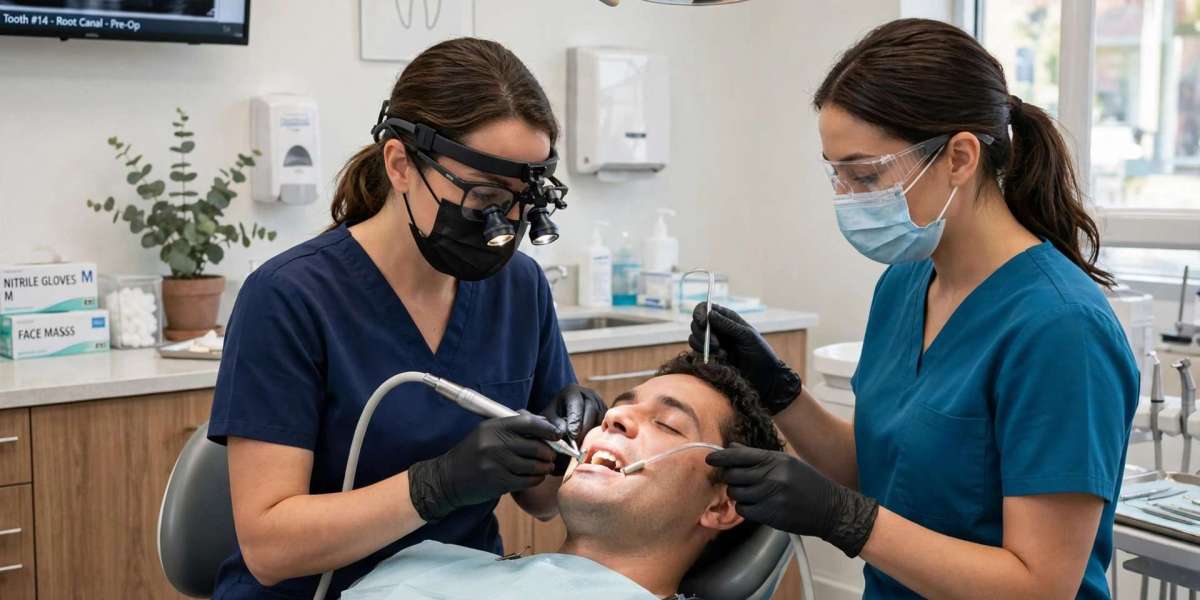

A toothache that will not go away, pain when you drink something hot or cold, or swelling near a tooth are all reasons patients in Murphy start searching for root canal treatment in Murphy. If your dentist has told you that you need a root canal, it is natural to have questions. This guide explains what a root canal is, when it is needed, what the procedure feels like, and how to find root canal care in Murphy, TX.
What Is a Root Canal?
Inside every tooth is a soft tissue called the pulp. It contains nerves and blood vessels. When the pulp becomes infected or inflamed — usually because of deep decay, a crack in the tooth, or an injury — it can cause serious pain and, if left untreated, an abscess.
A root canal is a treatment that removes the infected pulp, cleans the inside of the tooth, and seals it. The goal is simple: stop the pain, remove the infection, and save your natural tooth. A root canal does not remove the tooth. In most cases, the treated tooth can work normally for many years after the procedure.
Signs You May Need a Root Canal
Not every toothache means a root canal is needed. Only an examination and an X-ray can confirm it. But these are the most common signs that patients in Murphy report before a root canal diagnosis:
- Persistent tooth pain — pain that lasts for hours or keeps coming back, especially when chewing or putting pressure on the tooth.
- Sensitivity that lingers — sharp pain from hot or cold food and drinks that does not fade quickly after you stop eating or drinking.
- Swollen or tender gums — swelling near the painful tooth, sometimes with a small bump on the gum.
- A darkened tooth — a tooth that has turned grey or darker than the teeth around it, which can signal damage inside the tooth.
- Pain that spreads — pain that moves into the jaw, ear, or other teeth on the same side.
- A chipped or cracked tooth — a crack that lets bacteria reach the pulp.
- A loose tooth — in advanced cases, infection can weaken the bone that holds the tooth.
If you notice one or more of these signs, do not wait. An infected tooth does not heal on its own, and delaying treatment usually means more pain and a more complex procedure later.
Root Canal Procedure: Step by Step
A root canal at a Murphy dental office usually takes one or two visits. Here is what happens:
Step 1: Examination and X-ray. The dentist examines the tooth and takes an X-ray to see the shape of the root canals and check for infection in the surrounding bone.
Step 2: Numbing the area. Local anesthesia numbs the tooth and the surrounding gum. Most patients say the numbing injection is the only uncomfortable part.
Step 3: Cleaning the tooth. The dentist makes a small opening in the top of the tooth, removes the infected pulp, and cleans and shapes the root canals with small instruments.
Step 4: Filling and sealing. The cleaned canals are filled with a rubber-like material and sealed so bacteria cannot get back inside.
Step 5: Protecting the tooth. A tooth that has had a root canal often needs a crown to protect it, because it can become more brittle over time. The dentist will advise whether a crown is needed in your case.
Most root canals take 60 to 90 minutes. You can usually go back to work or normal activities the same day.
Does a Root Canal Hurt?
This is the question almost every patient asks. The honest answer: a root canal is not the painful procedure many people imagine. Modern anesthesia numbs the area well, and most patients say the procedure feels similar to getting a filling. The severe pain people associate with root canals usually comes from the infection itself — the treatment is what stops that pain.
After the anesthesia wears off, some soreness or tenderness for a few days is normal. It is usually manageable with over-the-counter pain relief as advised by your dentist. If pain gets worse instead of better after a few days, contact your dentist.
Root Canal Recovery and Aftercare
Recovery is usually straightforward. A few simple steps help the tooth heal well:
- Avoid chewing on the treated tooth until any soreness fades and a permanent crown is placed, if one is planned.
- Brush and floss normally, being gentle around the treated area for the first day or two.
- Take any prescribed or recommended medication exactly as advised.
- Keep your follow-up appointment. Skipping the crown or the follow-up visit is the most common reason a treated tooth fails later.
- Call the clinic promptly if you notice swelling, severe pain, or a bad taste in your mouth.
With good care, a root canal treated tooth can last as long as your natural teeth.
Root Canal vs. Tooth Extraction
When a tooth is badly damaged, patients sometimes wonder whether it is better to simply remove it. In most cases, dentists recommend saving the natural tooth when possible. A root canal keeps your tooth in place, which protects your bite and prevents neighboring teeth from shifting. Extraction, by contrast, leaves a gap that usually needs a bridge, denture, or implant to restore function — which means more treatment, more visits, and higher overall cost.
There are cases where extraction is the better option, for example when a tooth is too damaged to be restored. Your dentist will explain both options and help you decide based on your tooth, not on a general rule.
How Much Does a Root Canal Cost in Murphy, TX?
The cost of a root canal depends on several factors: which tooth is treated (front teeth usually have one root canal, molars can have three or four), how severe the infection is, whether a crown is needed afterward, and your dental insurance coverage.
Beautiful Smiles in Murphy accepts all major dental insurance plans, including Medicare and Medicaid. Because every case is different, the clinic does not publish a fixed price. For an exact estimate for your tooth, call the clinic at 469-969-0169 and ask about a root canal consultation. The team can check your insurance and explain your options before any treatment begins.
Why Patients Choose Beautiful Smiles for Root Canal Treatment in Murphy
Beautiful Smiles is a family dental clinic in Murphy, TX, serving Murphy, Wylie, Sachse, Richardson, and Plano. The dental team includes Dr. Mona, Dr. Hassan Asghar, and Dr. Humaira Azeem, and the clinic provides general dentistry, family dentistry, cosmetic dentistry, dental implants, teeth whitening, root canal treatment, tooth extractions, wisdom tooth removal, orthodontics, dentures, restorative dentistry, and emergency dental care.
- Experienced dental team — Dr. Mona, Dr. Hassan Asghar, and Dr. Humaira Azeem
- All major dental insurance plans accepted, including Medicare and Medicaid
- Emergency dental care for urgent tooth pain and swelling
- Easy to reach in Murphy, serving Wylie, Sachse, Richardson, and Plano
- Saturday appointments available for busy schedules
The clinic is located at 619 W Farm To Market 544 Ste 1B, Murphy, TX 75094. Office hours are Monday to Friday, 9:00 AM to 5:00 PM, and Saturday, 10:00 AM to 3:00 PM. Sunday is closed. To book a root canal consultation, call 469-969-0169 or book online at bestdentistintexas.com/appointment/.
Book Your Root Canal Consultation in Murphy, TX
If you are in Murphy, TX and need a root canal, Beautiful Smiles can help. Our dental team — Dr. Mona, Dr. Hassan Asghar, and Dr. Humaira Azeem — provides root canal treatment for patients of all ages.
Beautiful Smiles
619 W Farm To Market 544 Ste 1B, Murphy, TX 75094
Phone: 469-969-0169
Hours: Monday–Friday 9:00 AM–5:00 PM, Saturday 10:00 AM–3:00 PM, Sunday Closed
Call today to book your root canal consultation and take the first step toward a pain-free smile.
Frequently Asked Questions About Root Canals in Murphy, TX
How long does a root canal take?
Most root canals take 60 to 90 minutes in a single visit. A more complex tooth, such as a molar with several canals, may need a second visit.
Can I drive myself home after a root canal?
Yes, in most cases. Local anesthesia does not affect your ability to drive. If sedation is used, you will need someone to drive you home — your dentist will tell you in advance.
How long does a root canal last?
With a proper crown and good oral hygiene, a treated tooth can last many years, often for life.
Is a root canal an emergency?
Severe, constant pain, swelling of the face or gum, or a fever with tooth pain should be treated urgently. If you are in Murphy and need an emergency root canal, call the clinic the same day and explain your symptoms.
Can a root canal be avoided?
Sometimes. Early treatment of decay with a filling can prevent infection from reaching the pulp. Regular check-ups and cleanings every six months are the best way to catch problems before a root canal is needed.
This article is general information about root canal treatment. It is not medical advice. Only a dentist who examines your tooth can tell you whether a root canal is right for you.