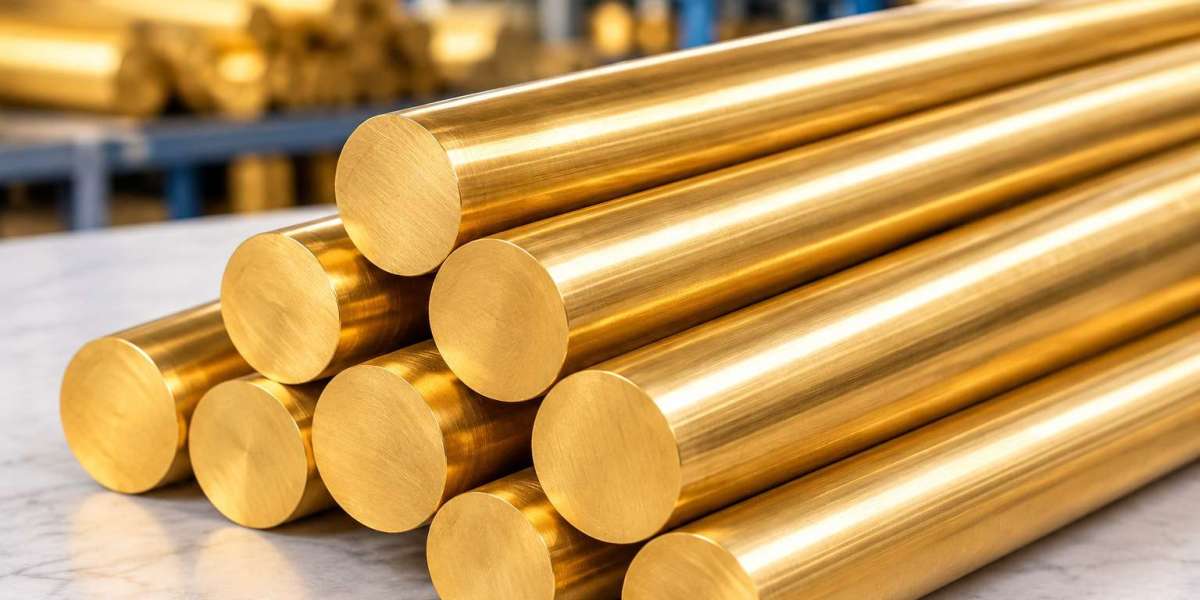

Brass is a widely used metal in manufacturing because of its excellent machinability, corrosion resistance, and attractive appearance. Made primarily from copper and zinc, this alloy offers a useful combination of strength, durability, and flexibility. Its properties make it suitable for producing components used in several industrial and commercial applications.
Among the many brass products available, brass extrusion rods are valued for their consistent dimensions, smooth surface finish, and ease of machining. They are manufactured by pushing heated brass material through a specially designed die to create rods with specific shapes and sizes. Depending on the alloy composition and manufacturing requirements, these rods can serve different purposes across various industries.
Round Brass Extrusion Rods
Round brass rods are among the most commonly used shapes in industrial manufacturing. Their circular cross-section makes them suitable for turning, drilling, cutting, and other machining operations. Manufacturers often use these rods to produce fasteners, connectors, bushings, valves, and threaded components.
Their uniform structure allows machinists to achieve accurate dimensions and smooth finishes. Round rods are also used in plumbing fittings and automotive components where reliable performance and corrosion resistance are important.
Hexagonal Brass Extrusion Rods
Hexagonal brass rods have six flat sides, making them particularly useful for manufacturing components that require a firm grip during installation or assembly. Their shape allows easy handling with standard tools and supports efficient machining processes.
These rods are commonly used to manufacture nuts, bolts, electrical connectors, threaded fittings, and specialised hardware. Their practical shape also helps reduce material waste during certain machining operations. Industries that require precision-made fasteners often prefer hexagonal brass profiles.
Square Brass Extrusion Rods
Square brass rods feature four equal sides and are suitable for applications where a flat surface or angular profile is required. Their shape makes them useful for producing mechanical parts, decorative fittings, brackets, and specialised industrial components.
They can be cut, drilled, milled, and shaped according to specific manufacturing needs. Square rods are also selected for architectural hardware and furniture fittings because brass provides an appealing finish along with functional properties.
Flat Brass Extrusion Rods
Flat brass rods, sometimes called rectangular brass bars, have a wider surface compared to their thickness. This shape makes them suitable for applications that require flat contact areas, accurate dimensions, and easy fabrication.
They are frequently used in electrical components, switchgear parts, decorative trims, connectors, and machinery fittings. Their excellent electrical conductivity also makes suitable brass grades useful in selected electrical applications.
Hollow Brass Extrusion Rods
Hollow brass rods contain an opening through their centre, making them useful for applications where a tubular structure is required. They offer the benefits of brass while reducing material weight compared with solid rods of similar external dimensions.
These rods are commonly used in plumbing fittings, pipe connectors, sleeves, spacers, and specialised mechanical components. Their corrosion resistance and machinability make them suitable for manufacturing parts that require accurate internal and external dimensions.
Special Profile Brass Extrusion Rods
Not every industrial requirement can be fulfilled with standard shapes. Special profile brass rods are manufactured using customised dies to achieve specific cross-sections and dimensions. These profiles may include different geometric designs depending on the intended application.
They are useful in specialised machinery, automotive assemblies, electrical equipment, architectural fittings, and precision engineering. Custom profiles help manufacturers reduce additional machining work and produce components that match their design requirements.
How to Select the Right Brass Rod
Selecting the appropriate brass rod depends on the final application, required dimensions, and machining process. Alloy composition is another important consideration because different brass grades offer different levels of strength, hardness, corrosion resistance, and machinability.
Manufacturers should also consider dimensional accuracy, surface quality, and applicable industry standards before selecting a material. Understanding these factors helps ensure that the finished components meet their intended functional requirements.
Final Thoughts
Brass extrusion products are available in several shapes, each designed to meet different manufacturing needs. From round and hexagonal rods to hollow and customised profiles, every type offers practical advantages for specific applications.
Understanding their shapes, properties, and uses makes material selection easier for manufacturers and engineering professionals. With the right brass grade and suitable dimensions, these rods can support reliable production across automotive, plumbing, electrical, construction, and general engineering industries.