
The landscape of corporate energy management is undergoing a paradigm shift. For decades, businesses operated as passive consumers, entirely dependent on the centralized utility grid and vulnerable to its price fluctuations and reliability issues. That era is ending. Today, forward-thinking enterprises are seizing control of their power supply by deploying Commercial Energy Storage Systems (CESS).
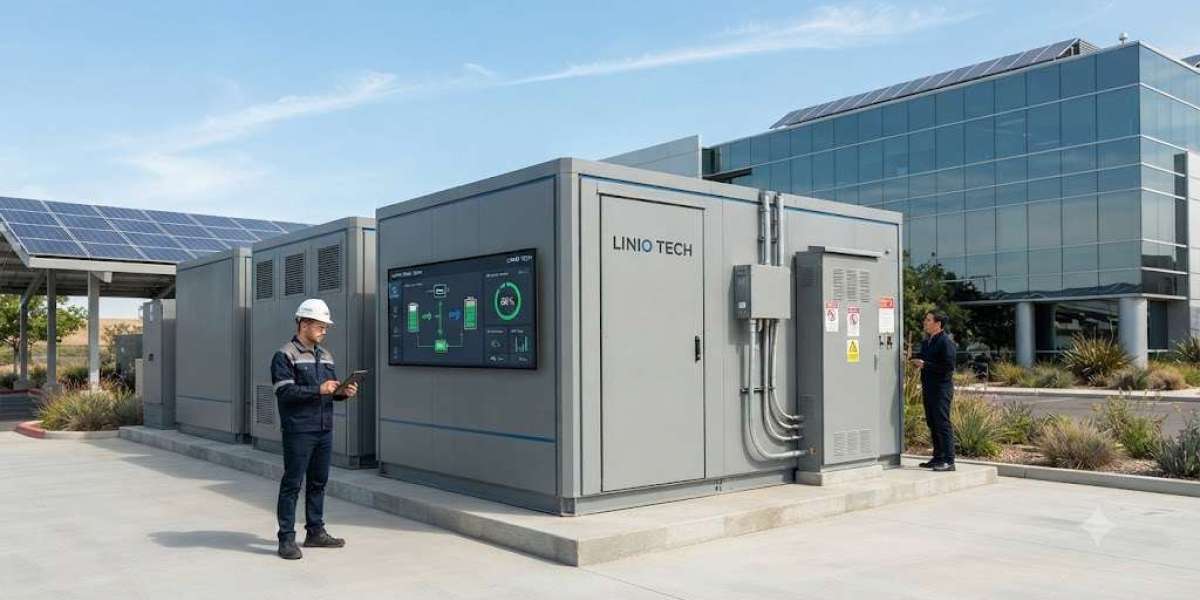
A commercial energy storage system is far more than just a large-scale battery cluster. It is a sophisticated, digitally controlled hub that collects, retains, and intelligently dispatches electricity—whether sourced from the grid or generated on-site from renewable sources like solar—precisely when it is needed most. For industries ranging from manufacturing and data centers to retail hubs and healthcare facilities, CESS has transitioned from a sustainability luxury to a strategic operational necessity.
How Commercial Energy Storage Systems Unlock ROI
The primary driver behind the explosive adoption of energy storage in the commercial sector is its direct, measurable impact on the bottom line. These systems transform energy from a static overhead cost into a dynamic asset that can be optimized for financial return.
Peak Shaving: Defeating Demand Charges
For many commercial and industrial utility customers, demand charges can constitute 30% to 70% of their total electricity bill. These charges are calculated based on the single highest interval of power usage during a billing cycle (measured in kilowatts, kW), rather than total energy consumed.
A commercial energy storage system enables peak shaving. When the facility’s power draw threatens to spike—due to heavy machinery starting up or peak air conditioning load—the battery intelligently discharges to supply that increment of power, keeping the grid draw below a pre-set threshold. This results in immediate, substantial reductions in monthly utility bills.
Time-of-Use (TOU) Arbitrage
Many utilities utilize Time-of-Use rate structures, where electricity prices skyrocket during periods of high demand (usually afternoon/evening) and drop significantly during off-peak hours (overnight).
CESS units are engineered to leverage this spread through energy arbitrage. The system automatically charges its batteries from the grid when rates are lowest and discharges them to power the business during the most expensive "peak" windows.
Integrating Solar: Creating Commercial Solar Energy Storage
While CESS can provide a robust return on investment when connected solely to the grid, its potential is truly unlocked when paired with on-site renewable generation, usually solar PV. This combination creates a powerful, synergistic commercial solar energy storage solution.
Enhancing Self-Consumption
Without storage, a standard grid-tied solar system exports surplus energy generated during the sunny middle of the day back to the grid, often at low feed-in tariff rates. Meanwhile, the business must purchase grid power at night. Adding storage allows the facility to store that daytime solar surplus and use it during evening peak hours, ensuring that every kilowatt-hour generated is maximized for self-consumption, which offers a much higher financial value than exporting it.
Grid Independence and Sustainability
For corporations with aggressive Environmental, Social, and Governance (ESG) goals or carbon neutrality targets, commercial solar energy storage provides a clear path to achievement. It significantly reduces the facility’s carbon footprint by decreasing reliance on fossil fuel-peaker plants and maximizes the utilization of clean, locally generated energy.
The Foundation of Business Continuity: Reliable Backup Power
Beyond cost optimization, a commercial energy storage system provides an invaluable shield against grid instability. In an increasingly digital and automated economy, even a momentary power disruption can result in catastrophic operational losses, damaged equipment, lost data, and compromised safety.
Seamless Microgrids
CESS units can be configured to operate in "island mode." During a grid outage, the system instantaneously disconnects from the main utility line and creates a local microgrid, using its stored energy to keep critical loads running smoothly. For factories, cold storage facilities, telecommunications hubs, or healthcare centers, this seamless backup power capability ensures business continuity when competitors without storage are forced to shut down.
Technical Components of an Industrial and Commercial Energy Storage System
To achieve these multifaceted operational goals, modern CESS utilize a suite of integrated technologies.
The Battery Chemistry: Lithium-Ion Dominance
The heart of the system is the battery cells. While other technologies exist, Lithium-ion (specifically Lithium Iron Phosphate or LFP) has become the CESS industry standard due to its exceptional energy density, rapid charge/discharge capabilities, long cycle life (often exceeding 6,000–8,000 cycles), and falling costs.
The Power Conversion System (PCS)
Batteries store energy as Direct Current (DC), but businesses operate on Alternating Current (AC). The PCS (or bidirectional inverter) acts as the bridge, converting AC grid power into DC for storage and DC back into AC for consumption. The efficiency and responsiveness of the PCS are crucial for effective peak shaving.
The Energy Management System (EMS)
The EMS is the brain of the CESS. It is a sophisticated software platform that monitors grid rates, solar generation, facility load patterns, and weather forecasts. Using predictive analytics, the EMS automatically decides when to charge, discharge, or hold energy to maximize the business's predefined objectives, whether that be lowest cost, lowest carbon, or maximum backup reserve.
Choosing the Right Commercial Energy Storage Suppliers
Investing in a commercial energy storage system is a decade-plus commitment. The success of the project depends heavily on selecting the right technology and the right partners.
Leading commercial energy storage companies are no longer just component manufacturers; they are turnkey solution providers. When evaluating commercial energy storage suppliers, businesses should look for:
Modular and Scalable Designs: Systems should be able to grow alongside the facility’s energy needs.
Comprehensive Safety Certifications: Adherence to standards like UL9540 and UL1973 is non-negotiable for insurance and regulatory compliance.
Performance Guarantees: Robust warranties covering energy capacity retention over 10 or more years.
Integrated EMS: Seamless synchronization between the hardware and the operational software.
Sizing and ROI: A Customized Approach
There is no one-size-fits-all commercial energy storage system. Effective sizing requires a detailed analysis of the facility's unique load profile (captured through 15-minute interval utility data), local utility tariff structures, and generation potential of any existing solar assets.
Sizing a system too small will fail to capture the full peak shaving potential, while sizing it too large will extend the payback period unnecessarily. Working with an experienced engineering team is essential to ensure the CESS is optimized for the highest possible return on investment and the fastest simple payback period—which typically ranges from 3 to 7 years in favorable markets.
Conclusion
The transition toward a decentralized, digitalized, and decarbonized energy grid is unstoppable. For commercial and industrial enterprises, deploying a high-performance commercial energy storage system is the most effective way to navigate this transition actively rather than passively. It provides immediate relief from rising demand charges, optimizes renewable energy assets, insures critical operations against outages, and demonstrates concrete commitment to sustainability. At Linio Tech, we are dedicated to empowering businesses with the advanced energy storage solutions required to future-proof their operations, take control of their power, and unlock new levels of efficiency and resilience in an evolving energy market.