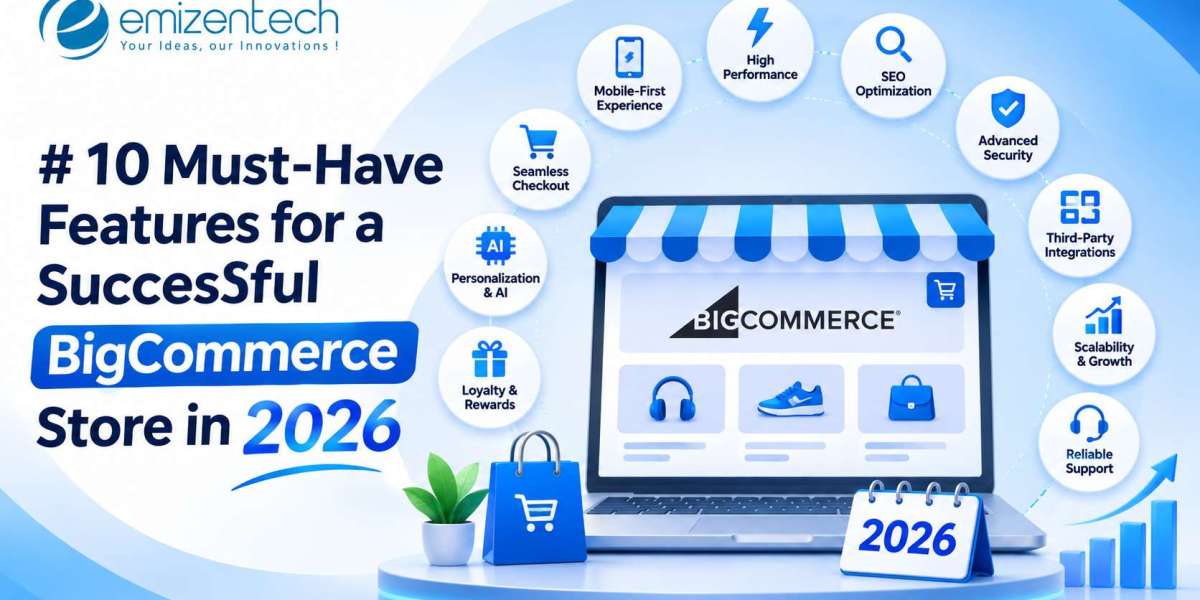

Running a successful online store in 2026 requires more than an attractive design and a wide product catalog. Customers expect fast-loading pages, simple navigation, personalized recommendations, secure payments, and a checkout process that makes purchasing easy. If a store fails to meet these expectations, shoppers can quickly move to competitors.
BigCommerce provides a flexible platform for building online stores, but its effectiveness depends on how well the storefront is designed, configured, and optimized. Businesses need to focus on features that improve customer experience while supporting daily operations and future growth.
Here are 10 essential features to consider when building or improving a BigCommerce store in 2026.
1. Mobile-First Responsive Design
Most online shoppers browse products and complete purchases through smartphones. Therefore, a BigCommerce store should provide a consistent shopping experience across mobile phones, tablets, and desktops.
A responsive design automatically adjusts the storefront layout to different screen sizes without compromising usability. Important elements include:
Easy-to-use navigation menus and search options.
Readable product descriptions and pricing.
High-quality images optimized for mobile screens.
Clearly visible add-to-cart buttons.
Simple cart and checkout navigation.
Businesses should also test product filters, account pages, and checkout forms on different devices. A mobile-friendly storefront helps customers browse products comfortably and complete purchases without unnecessary steps.
2. Fast Page Loading and Performance Optimization
Website speed plays a major role in the shopping experience. Slow-loading product pages, delayed images, and unresponsive buttons can frustrate visitors, interrupt browsing, and increase cart abandonment.
A fast and responsive storefront requires careful attention to page load times, image optimization, and script performance. These factors should be addressed at every stage of BigCommerce development to ensure the store delivers a smooth shopping experience and handles sudden increases in traffic efficiently.
Important optimization practices include:
Compressing product images without reducing visual quality.
Using browser caching and content delivery networks (CDNs).
Reducing unnecessary scripts and third-party applications.
Optimizing storefront code and page elements.
Monitoring Core Web Vitals regularly.
Businesses should also evaluate performance during seasonal sales and promotional campaigns when website traffic can increase significantly.
3. Smart Product Search and Advanced Filters
Customers should be able to find relevant products without navigating through multiple category pages. An effective search feature makes product discovery faster and reduces the effort required to locate specific items.
A smart search system should support autocomplete suggestions, typo tolerance, relevant product results, and filters based on product attributes.
For example, a clothing store can allow customers to filter products by size, color, brand, price, and availability.
AI-powered search can further improve this experience by understanding natural-language queries and customer preferences. It can also recommend alternative products when specific items are unavailable.
These capabilities help shoppers find products more efficiently and make large product catalogs easier to navigate.
4. Personalized Product Recommendations
Product recommendations help customers discover relevant items based on their interests, browsing activity, and previous purchases.
Instead of showing the same products to every visitor, a store can display personalized suggestions across different shopping stages.
Useful recommendation features include:
Frequently bought together products.
Recently viewed items.
Related product suggestions.
Personalized homepage recommendations.
Complementary product suggestions on product pages.
AI-powered recommendation engines can analyze customer behavior and identify purchasing patterns. For example, someone browsing smartphones might receive suggestions for compatible accessories, protective cases, or wireless chargers.
These recommendations can improve product discovery, encourage additional purchases, and increase average order value.
5. Detailed Product Pages With Essential Information
Product pages play an important role in purchasing decisions because customers rely on them to understand what they are buying.
A well-structured product page should provide accurate information and answer common questions before customers contact support.
Essential product page elements include:
Clear product titles and descriptions.
High-resolution images and product videos.
Product specifications and available variants.
Pricing and stock availability.
Customer ratings and reviews.
Shipping estimates and return information.
Clearly visible add-to-cart buttons.
For stores managing large catalogs, generative AI can help create product descriptions, summarize customer reviews, and organize product information. However, all generated content should be reviewed for accuracy before publication.
6. Simple and Convenient Checkout Process
A complicated checkout process is one of the common reasons customers abandon their shopping carts. Too many form fields, unexpected charges, and unclear delivery information can interrupt the purchasing journey.
Businesses should prioritize a checkout experience that allows customers to complete orders with minimal effort.
Important checkout features include:
Guest checkout options.
Fewer form fields and address autocomplete.
Clear order summaries.
Transparent shipping costs and delivery estimates.
Multiple payment methods.
Easy access to discount codes.
Cart recovery functionality is another useful addition. Automated email or messaging reminders can encourage customers to return and complete unfinished purchases.
Through BigCommerce development, businesses can evaluate checkout customization opportunities based on their customer journey, payment requirements, and operational needs.
7. Multiple Payment Options and Secure Transactions
Customers prefer payment methods they already recognize and trust. Offering limited payment options can create unnecessary barriers, particularly when selling to customers across different regions.
A BigCommerce store should support payment methods relevant to its target audience, including:
Credit and debit cards.
Digital wallets.
Bank transfers.
Region-specific payment methods.
Buy Now, Pay Later options, where appropriate.
Payment gateways such as Stripe, PayPal, and Razorpay can support different transaction requirements depending on regional availability and integration compatibility.
Businesses should also test successful transactions, failed payments, refunds, and order confirmation workflows before launching the store.
8. Strong Store Security and Data Protection
Customers share personal information, account credentials, and payment details when purchasing online. Protecting this information is essential for maintaining trust and reducing security risks.
A secure BigCommerce storefront should include appropriate safeguards across customer accounts, payment processing, and administrative access.
Key security considerations include:
SSL encryption for secure communication.
Secure authentication and access controls.
PCI-compliant payment processing.
Regular security reviews and vulnerability assessments.
Data backup and recovery procedures.
Monitoring suspicious login and transaction activity.
AI-based fraud detection can provide additional protection by identifying unusual purchasing patterns, repeated payment failures, and potentially suspicious transactions.
Businesses should also review third-party applications and integrations regularly to ensure they do not introduce unnecessary security risks.
9. AI-Powered Shopping Assistance and Customer Support
Customers often need immediate answers about product specifications, order status, shipping, and return policies. Delayed responses can affect their shopping experience and purchasing decisions.
An AI-powered shopping assistant can handle common questions and guide customers throughout their buying journey.
Useful capabilities include:
Product recommendations based on customer requirements.
Answers to frequently asked questions.
Order tracking assistance.
Shipping and return information.
Product availability checks.
Basic support through website chat.
For accurate responses, the assistant should connect with relevant product catalogs, order information, and business policies. Customers should also have the option to contact a human support representative when their queries require additional assistance.
10. Third-Party Integrations and Scalable Architecture
An eCommerce store depends on several business systems to manage products, customers, orders, inventory, and marketing activities. Without proper integration, teams may need to update information manually across multiple platforms.
A BigCommerce store should connect with the tools required to support its business operations.
Common integration requirements include:
ERP systems for business and financial operations.
CRM platforms for customer relationship management.
Inventory management systems for stock updates.
Shipping solutions for order fulfillment.
Marketing platforms for campaign management.
Analytics tools for tracking store performance.
Businesses should also consider future expansion when planning their store architecture. Headless commerce and API-based integrations can provide additional flexibility when introducing new sales channels or custom storefront experiences.
AI can further improve connected operations through demand forecasting, customer segmentation, and inventory planning. However, these capabilities depend on accurate and consistent business data.
How to Choose the Right Features for Your BigCommerce Store
Not every store needs all advanced features from the beginning. The right selection depends on business requirements, product catalog size, customer expectations, budget, and future expansion plans.
Start by identifying the main challenges affecting your current shopping experience. If customers struggle to find products, prioritize search and filtering improvements. If cart abandonment is high, review checkout usability, payment options, and delivery information.
Businesses should also evaluate integration requirements, performance expectations, and security considerations before introducing additional functionality. An experienced BigCommerce development team can help assess these requirements and prioritize features according to the store's technical needs and business objectives.
A phased implementation approach makes it easier to prioritize essential features, measure their impact, and introduce advanced capabilities as the business grows.
Conclusion
A successful BigCommerce store in 2026 needs to combine usability, performance, personalization, security, and operational flexibility. Features such as responsive design, smart search, optimized checkout, AI-powered recommendations, and third-party integrations help businesses create a better shopping experience while supporting long-term growth.
Implementing these capabilities requires the right technical planning and platform expertise. With 12+ years of experience, EmizenTech provides eCommerce development expertise to help businesses build, customize, and optimize online stores. Its 4.9 Clutch rating and customer reviews on GoodFirms further reflect its experience in delivering digital solutions.
FAQs
1. What are the most important features of a BigCommerce store?
The most important features include responsive design, fast loading speed, product search, detailed product pages, secure payments, simple checkout, and third-party integrations.
2. Can AI features be integrated into a BigCommerce store?
Yes. AI capabilities can support personalized recommendations, intelligent product search, customer support, fraud detection, and inventory forecasting through suitable integrations and custom implementations.
3. Why is mobile responsiveness important for BigCommerce stores?
Mobile responsiveness ensures customers can browse products, compare options, and complete purchases across different screen sizes. It also supports a consistent shopping experience across devices.
4. How can I improve the performance of my BigCommerce store?
Optimize product images, reduce unnecessary scripts, use caching and CDN solutions, review third-party applications, and monitor Core Web Vitals to identify performance issues.
5. Can a BigCommerce store integrate with ERP and CRM systems?
Yes. BigCommerce supports integrations with external business systems through available applications, APIs, and custom integration solutions, helping businesses synchronize customer, product, inventory, and order information.