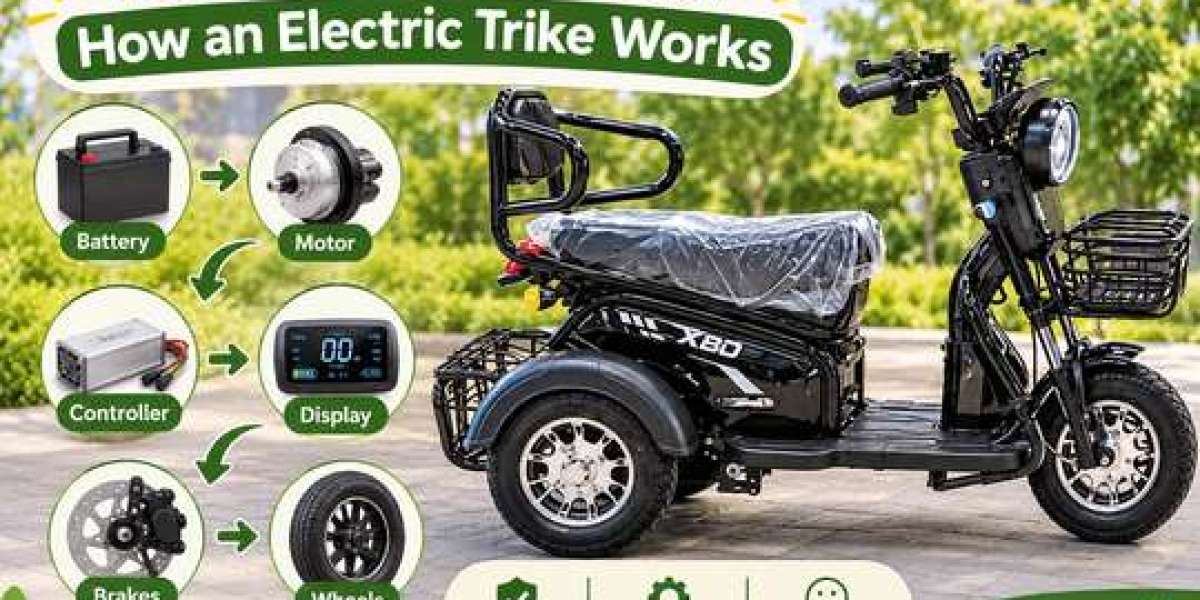

From Battery to Wheels: How an E-Trike Works
Electric trikes are becoming a popular choice for adults who want a comfortable and convenient way to travel. But have you ever wondered how these vehicles actually work? How does battery power turn into wheel movement? What role does the motor play, and how does the rider control speed? Understanding these basic parts makes it easier to know what happens when you start the vehicle. Let's look at how the different components work together to make every ride possible.
1. The Battery: Where the Power Starts
The battery is the main source of energy. It stores electricity and provides the power needed to operate the motor and other electrical components.
Most models use rechargeable batteries, which means you can connect them to a charger when the battery level becomes low.
The battery's capacity affects how much energy it can store. A larger capacity may provide a longer riding range, although the actual distance also depends on several factors, including rider weight, road conditions, speed, and motor usage.
Some important things to understand about the battery include:
Capacity: Shows how much energy the battery can store.
Voltage: Helps determine the electrical power supplied to the system.
Charging time: Indicates how long the battery needs to recharge.
Battery condition: Affects how well the vehicle performs over time.
Taking proper care of the battery helps maintain its performance and supports reliable operation.
2. The Controller: Managing the Power
The controller is an important part of the electrical system. It works like a control centre between the battery, motor, and rider's controls.
When the rider uses the throttle or another power control, the controller receives the signal and manages how much electrical power reaches the motor.
For example, when you gently press the throttle, the controller responds by supplying the required power. When you release it, the power supply changes according to the system's design.
The controller also helps manage different electrical functions and may include protection features against problems such as excessive current or overheating.
Without this component, the battery and motor would not work together in a properly managed way.
3. The Motor: Turning Electricity into Movement
The motor is the component that converts electrical energy into mechanical movement. It receives power from the battery through the controller and uses that energy to help turn the wheels.
Depending on the model, the motor may be fitted inside a wheel or connected through a different drive system.
When the rider activates the throttle, the motor begins producing movement. The amount of power supplied affects how quickly the vehicle accelerates and how it handles different riding conditions.
Motor power is usually measured in watts (W). A higher watt rating can provide more power, but it does not automatically mean better performance in every situation. The vehicle's weight, battery, gearing, and design also matter.
4. The Throttle: Controlling Speed
The throttle allows the rider to control how much power is requested from the motor.
It is usually located near the handlebar, where it can be reached easily while riding. Depending on the model, it may operate through a twist grip, thumb control, or another type of switch.
Here is how it generally works:
The rider activates the throttle.
The controller receives the signal.
The controller supplies the required power to the motor.
The motor produces movement.
Releasing the throttle reduces or stops the power request.
Some models also offer different riding modes. These modes may adjust acceleration or speed limits, depending on the manufacturer's design.
5. The Wheels and Drivetrain: Creating Movement
Once the motor produces mechanical power, the drivetrain transfers that movement to the wheel or wheels, depending on the vehicle's design.
In an electric tricycle, the motor may drive one wheel or use a system that transfers power through other mechanical components.
The wheels then move the vehicle forward. Their size, tyre type, and condition can affect grip, comfort, and stability.
The drivetrain may include components such as:
Motor and drive mechanism
Axles
Gears, where fitted
Bearings
Wheel connections
All these parts need to work properly to provide smooth movement. Regular inspection can help identify loose fittings, unusual sounds, or signs of wear.
6. The Braking System: Controlling and Stopping
Movement is only one part of the process. A reliable braking system is equally important because it allows the rider to slow down or stop safely.
Many models use mechanical or hydraulic disc brakes, although the exact system depends on the design. When the rider presses the brake lever, the braking mechanism creates friction that slows the wheel.
Some models also include electrical power cut-off features that reduce or stop motor assistance when the brakes are applied.
Always check the braking system regularly. Worn brake pads, loose cables, or damaged components can affect stopping performance.
7. The Display and Other Controls
The display provides useful information while riding. Depending on the model, it may show:
Current speed
Battery level
Distance travelled
Selected riding mode
Error or warning indicators
Some displays also provide information about power usage and other vehicle settings.
Lights, indicators, and a horn may also be included to improve visibility and communication with other road users.
Understanding these controls helps riders use the vehicle more confidently and notice possible problems early.
8. How Everything Works Together
Now that we understand the main components, let's look at the complete process.
When you switch on the vehicle, the electrical system becomes ready for operation. The battery supplies energy to the controller, while the display provides information about the system.
When you activate the throttle, the controller receives your input and sends the required power to the motor. The motor converts that electrical energy into movement, which is transferred to the wheels.
When you release the throttle, the power request decreases. If you apply the brakes, the braking system slows the vehicle and helps bring it to a stop.
Each component has a different responsibility, but all of them work together to provide a controlled and comfortable riding experience.
Online stores such as toysuae allow customers to explore different mobility products and compare their features before choosing an option that suits their needs.
Understanding how these systems work also makes it easier to recognise the importance of battery care, regular inspections, and proper maintenance. With basic knowledge of the main components, riders can make better decisions and take care of their vehicles more effectively.
Frequently Asked Questions (FAQs)
1. What provides power to an electric vehicle?
A rechargeable battery provides the electrical energy needed to operate the motor and other electrical components.
2. What does the controller do?
The controller manages the flow of electricity from the battery to the motor based on the rider's input and the system's requirements.
3. Does a more powerful motor always mean higher speed?
Not necessarily. Speed also depends on the controller settings, battery, vehicle design, gearing, and other factors.
4. What happens when the battery runs out?
When the battery becomes empty, electrical assistance may stop. Whether the vehicle can still move manually depends on its design and drivetrain.
5. Why is the display important?
The display provides useful information such as speed, battery level, distance, and selected riding mode, depending on the model.
6. What is the role of the braking system?
The braking system helps reduce speed and bring the vehicle to a controlled stop. Regular checks are important for safe operation.
7. Can I maintain the vehicle myself?
You can perform basic tasks such as cleaning, checking tyre pressure, and inspecting visible fittings. Electrical repairs and major mechanical adjustments should be handled by a qualified technician.