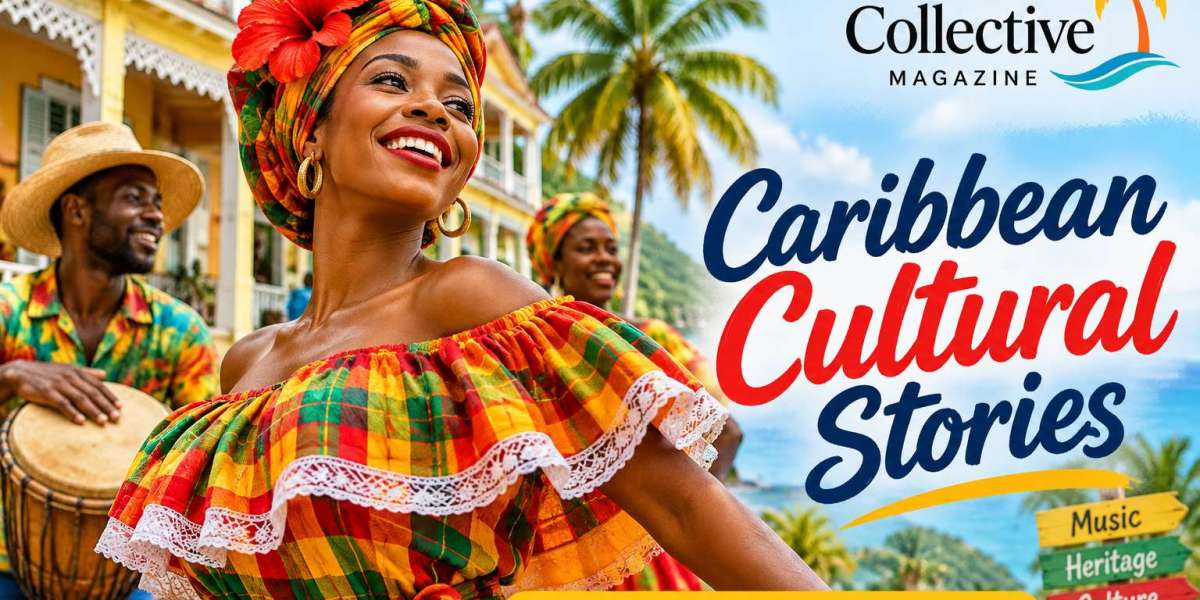

A familiar song can bring back memories of home. The smell of a dish cooking in the kitchen can remind someone of their grandmother. Even a single Creole expression can make a person feel connected to a place they have not visited in years.
For many Caribbean families living outside the islands, culture is not something they experience only during holidays or visits home. It is part of everyday life, carried through family conversations, food, music, celebrations and shared memories.
These Caribbean cultural stories reveal how heritage continues to grow across generations. They also show how Caribbean women, families and communities preserve traditions while creating new identities in the countries they now call home.
1. Why Caribbean Cultural Stories Matter to the Diaspora
Caribbean identity is rich, diverse and shaped by different histories. Jamaica, Trinidad and Tobago, Guyana, Barbados, Grenada, Haiti and other Caribbean nations each have their own traditions, languages, food and cultural expressions.
Yet many families share a common experience: migration.
A parent may grow up in the Caribbean, move to London or Toronto, and raise children who experience the culture differently. The children might know the music, enjoy traditional food and celebrate Carnival, but have fewer everyday connections to the island where their parents grew up.
This is where storytelling becomes valuable.
A family story about growing up in rural Jamaica, attending Carnival in Trinidad or celebrating a traditional holiday in Guyana gives younger generations more than historical information. It helps them understand the people, experiences and values behind their identity.
Caribbean cultural stories also make room for experiences that are often overlooked, including women's contributions, migration journeys, mixed identities and the challenges of belonging to more than one culture.
2. How Food Keeps Caribbean Heritage Alive
Food is one of the most familiar ways families maintain a connection to their roots.
Think about a Sunday afternoon when relatives gather around a table filled with rice and peas, curry, roti, callaloo, pelau, fried plantain or a traditional soup. The meal may look simple, but every dish can carry a family memory.
Recipes often travel with people when they migrate. Some ingredients are easy to find abroad, while others require substitutes or a visit to a Caribbean grocery store.
Over time, families develop their own versions of traditional dishes.
A daughter might learn to prepare her mother's curry chicken but adjust the seasoning to suit her household. A grandson might discover a favourite dish through a family gathering and later learn how to cook it himself.
These changes do not necessarily weaken cultural traditions. They show how heritage adapts to new environments.
Why family recipes deserve to be recorded
Many traditional recipes are passed down through observation rather than written instructions. Someone learns by watching a relative cook, tasting the food and remembering the steps.
That knowledge can disappear when it is not shared.
Families can preserve it by:
Writing down recipes and ingredient measurements.
Recording older relatives explaining how they prepare traditional meals.
Photographing family cooking traditions.
Collecting the stories behind special dishes.
Teaching children to prepare at least one family recipe.
A recipe becomes even more meaningful when the person sharing it explains where it came from and why the family continues to prepare it.
3. Music, Dance and Carnival Tell Stories Beyond Entertainment
Caribbean music is recognised around the world, but its cultural value goes much deeper than entertainment.
Reggae, dancehall, calypso, soca, zouk, kompa and other musical traditions reflect different histories, communities and creative influences.
Music can express celebration, political awareness, social struggles, love, humour and resistance. It also gives people living far from their home islands a familiar connection to their culture.
Carnival offers another powerful example.
For many Caribbean communities, Carnival is not simply a parade. It brings together costume design, music, dance, craftsmanship, performance and community participation.
People in the diaspora continue these traditions through Caribbean festivals and Carnival celebrations in cities such as London, Toronto and New York.
These events allow younger generations to experience cultural practices beyond photographs and family conversations.
The cultural value of passing music to younger generations
Parents and grandparents can introduce children to traditional songs, explain the meaning behind lyrics and share the artists they grew up listening to.
This creates a natural opportunity to discuss history and identity without making cultural education feel like a classroom lesson.
It also helps younger people understand that Caribbean music is not one single sound. It is a collection of creative traditions with distinct regional influences.
4. Creole Languages and Expressions Carry Family History
Language is one of the strongest connections between people and their cultural background.
Across the Caribbean, communities use different Creole languages, dialects and forms of expression. Jamaican Patois, Haitian Creole, Trinidadian English Creole and other language varieties carry distinctive histories and ways of communicating.
A phrase used by an older relative may contain humour, affection, advice or a cultural reference that is difficult to translate directly into standard English.
For children raised in the United States, Canada or the United Kingdom, these expressions can become an important part of understanding their family background.
However, language transmission can become difficult when children grow up in places where their parents' language is rarely spoken outside the home.
Simple ways to keep Caribbean language alive
Families can make language learning part of everyday life.
Teach children common family expressions and greetings.
Explain the meaning and history of familiar sayings.
Encourage conversations with grandparents and relatives.
Share Caribbean books, songs and children's stories.
Avoid treating Creole expressions as incorrect versions of English.
Language is more than grammar. It carries humour, memory, identity and a sense of belonging.
5. The Role of Caribbean Women in Preserving Cultural Heritage
Women often play an important role in passing traditions between generations.
A mother may teach her daughter a traditional recipe. A grandmother may explain the meaning of a family celebration. An aunt may introduce younger relatives to Caribbean music, religious customs or stories about migration.
These contributions do not always receive public recognition, but they help keep cultural knowledge alive.
Caribbean women also preserve heritage through creative and professional work.
Writers document family histories. Artists explore identity through paintings and photography. Entrepreneurs introduce Caribbean products to new markets. Musicians and performers bring regional influences to international audiences.
Their work shows that cultural preservation is not limited to repeating the past. It can also involve creating something new while remaining connected to one's roots.
For younger Caribbean women, seeing these stories represented can be especially meaningful. It provides examples of people who embrace their heritage while building careers, communities and lives across different countries.
6. How Caribbean Heritage Changes Across Generations
Cultural identity is not always experienced in the same way by parents and children.
Someone born and raised in Trinidad may have a different relationship with their heritage from a child born in Canada to Trinidadian parents.
The parent may remember school traditions, local celebrations and everyday island life. The child may experience Caribbean culture mainly through family gatherings, music, food and visits to relatives.
Neither experience is less authentic. They are different expressions of identity.
The challenge of feeling connected to two cultures
Some young people in the diaspora feel pressure to choose between their Caribbean background and the culture of the country where they grew up.
They may feel different at school or work, while also feeling disconnected from certain traditions within their own families.
Open conversations can help.
Parents and relatives should give younger generations space to ask questions, explore their heritage and develop their own relationship with it.
Cultural identity becomes stronger when it is shared with understanding rather than treated as a fixed set of rules.
7. Caribbean Travel and Lifestyle: Experiencing Heritage Beyond the Beach
Caribbean travel is often associated with beaches, resorts and beautiful landscapes. Those experiences are part of the region's appeal, but they do not tell the whole story.
For travellers interested in heritage, a visit can also be an opportunity to understand local communities, traditions, food and creative culture.
A trip to Jamaica might include exploring local music history, visiting cultural sites or learning about traditional food. In Trinidad and Tobago, visitors may want to understand Carnival preparations, local cuisine and the country's musical traditions. In Guyana, cultural experiences can include exploring its diverse food traditions and historic communities.
Make cultural experiences part of your travel plans
If you want a deeper connection with a destination, consider:
Local food experiences: Visit local markets, learn about traditional dishes and support independent food businesses.
Community festivals: Check the dates of cultural events and understand their meaning before attending.
Arts and crafts: Explore local galleries, studios, markets and work by Caribbean artists.
Historic locations: Learn about the people and events that shaped the destination.
Community-led experiences: Where available, choose knowledgeable local guides and businesses that share their communities' stories.
Good travel experiences should respect the people and places being visited. Ask before photographing individuals, follow local guidance and support local businesses when possible.
The best Caribbean travel and lifestyle experiences often come from understanding the communities behind the destination.
8. Digital Storytelling Is Giving Caribbean Voices More Space
Cultural stories no longer depend only on books, newspapers or family gatherings.
Digital magazines, podcasts, interviews, social media and online communities give Caribbean writers, artists, entrepreneurs and cultural advocates new ways to share their experiences.
A short interview with an elder can preserve a memory that might otherwise be lost. A podcast can introduce listeners to a Caribbean artist they have never heard before. A digital magazine can connect women across different countries through shared experiences.
However, visibility alone is not enough.
Good cultural storytelling requires accuracy, context and respect. Stories should represent people as individuals rather than relying on stereotypes about Caribbean life.
Writers should also make room for the differences between islands, communities and generations. A story about Jamaican heritage should not automatically be presented as representative of the entire Caribbean.
Caribbean voices deserve to be heard in their own words.
9. Practical Ways to Preserve Caribbean Stories in Your Family
You do not need to be a historian, journalist or professional writer to preserve family heritage.
Small actions can create a valuable record for future generations.
Start a family story archive
Ask older relatives about their childhood, first jobs, favourite celebrations, migration experiences and the traditions they remember.
Record their answers with permission. Save photographs, recipes, letters and other family materials with dates and names where possible.
Create a family recipe collection
Invite relatives to contribute traditional recipes and personal notes. Include the name of the person who shared each recipe and the place or family occasion connected to it.
Share cultural experiences with children
Take children to Caribbean festivals, introduce them to regional music and let them participate in family traditions.
Explain why a celebration matters instead of expecting them to understand its meaning automatically.
Support Caribbean creators and businesses
Read Caribbean writers, attend cultural events, discover local artists and support independent businesses.
This helps cultural knowledge reach new audiences while supporting the people who continue to create and share it.
Keep the stories accurate
Family memories are valuable, but details can become mixed over time. When possible, check dates, locations and historical claims using reliable sources. Keep personal memories separate from verified historical facts.
Frequently Asked Questions
1. What are Caribbean cultural stories?
Caribbean cultural stories are accounts and experiences that reflect the region's history, traditions, languages, music, food, beliefs and communities. They can include family memories, migration experiences, folklore, artistic expression and stories about cultural identity.
2. Why is Caribbean heritage important to the diaspora?
Heritage helps people living outside the Caribbean understand their family background and maintain connections with their roots. It can strengthen identity, encourage relationships between generations and help preserve traditions in new communities.
3. What are some examples of Caribbean cultural traditions?
Examples include Carnival, calypso and soca music, reggae, traditional cooking, storytelling, Creole languages, folk dances, religious celebrations and community festivals. Traditions vary across Caribbean countries and communities.
4. How can parents teach Caribbean culture to children abroad?
Parents can share family stories, prepare traditional meals together, introduce children to Caribbean music and books, attend cultural events and encourage conversations with older relatives. Everyday experiences often make cultural learning more meaningful.
5. How does Caribbean travel and lifestyle connect with culture?
Travel can introduce visitors to local food, music, art, festivals, history and community traditions. Exploring these experiences alongside the natural attractions gives travellers a fuller understanding of Caribbean life.
6. How can Caribbean women help preserve cultural heritage?
Women can preserve heritage by sharing family histories, teaching recipes and traditions, supporting local creators, writing, creating art and passing cultural knowledge to younger generations. Their professional and creative work can also introduce Caribbean experiences to wider audiences.
7. Where can I discover more Caribbean stories and cultural perspectives?
Readers can explore Caribbean writers, artists, cultural organisations, community events and digital publications. Caribbean Collective Magazine also shares stories about West Indian women, culture, identity, fashion, business and lifestyle across the diaspora.
Conclusion: Keeping Caribbean Stories Alive for the Next Generation
Caribbean heritage is not preserved by memory alone. It continues through the people who cook traditional meals, speak familiar expressions, share family histories, create music and pass cultural knowledge to younger generations.
For Caribbean communities across the United States, Canada and the United Kingdom, these connections can make distance feel smaller. They also remind younger generations that their identity can hold more than one place, language or experience.
The most meaningful Caribbean cultural stories are often found in everyday moments: a family recipe, an old photograph, a familiar song or a conversation with someone who remembers life on the islands.