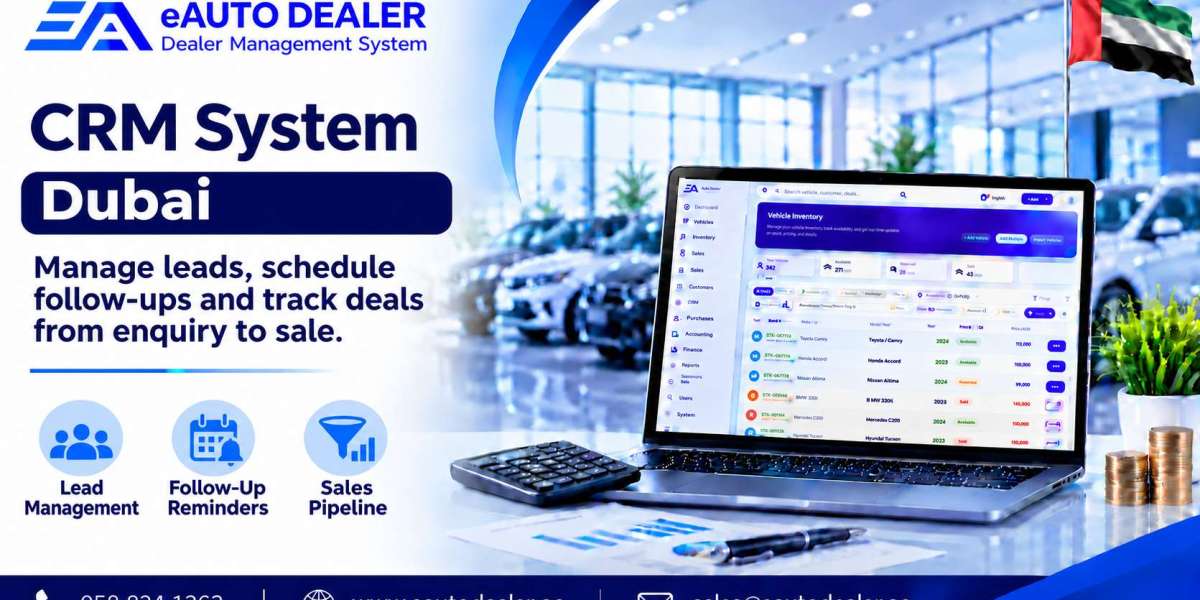

Businesses in Dubai operate in a competitive environment where maintaining strong customer relationships and managing sales activities efficiently are important for long-term growth. From handling customer enquiries to tracking sales opportunities and managing daily communication, businesses need organized processes to stay connected with their customers.
A reliable CRM system Dubai solution helps businesses bring customer information, sales activities, and communication records together in one platform. It allows teams to manage customer relationships more effectively, improve coordination, and gain better visibility into their business operations.
What Is a CRM System?
A Customer Relationship Management (CRM) system is software that helps businesses manage interactions with existing customers and potential buyers. It provides a centralized platform for storing customer details, tracking enquiries, managing sales activities, and maintaining communication records.
Instead of relying on spreadsheets, separate documents, or manual records, employees can use a CRM to access updated customer information and manage their responsibilities.
For businesses operating in Dubai, a CRM can support different departments, including sales, marketing, and customer service, by keeping important customer information organized and accessible.
Why Do Businesses in Dubai Need a CRM System?
Dubai has businesses across industries such as automotive, real estate, retail, trading, and professional services. Although their operations differ, many share the need to manage customer enquiries, sales activities, and ongoing communication.
A CRM system can help address these requirements through several capabilities.
1. Better Customer Data Management
Businesses often collect customer information through websites, phone calls, social media, and direct enquiries. Managing these records separately can create duplicate entries and make information difficult to find.
A CRM provides a centralized database where teams can maintain:
Customer names and contact details.
Previous enquiries and interactions.
Purchase history.
Customer preferences.
Communication records.
Follow-up requirements.
This gives employees a clearer understanding of customer relationships.
2. More Organized Sales Activities
Managing multiple sales opportunities requires proper planning and coordination. CRM software helps businesses organize their sales pipeline and monitor the progress of individual enquiries.
Sales representatives can update opportunity stages, record discussions, and manage pending activities. Managers can also review sales progress and identify opportunities that require attention.
3. Consistent Customer Follow-Ups
Delayed communication can affect customer relationships and sales opportunities. A CRM allows employees to schedule reminders and organize follow-up activities.
For example, when a customer requests a quotation, the responsible employee can schedule a reminder to contact them again. This helps maintain communication throughout the sales process.
4. Improved Team Collaboration
When different employees handle customer enquiries, maintaining consistent information becomes important.
A CRM allows authorized team members to access relevant customer records and review previous interactions. Lead assignments and activity tracking also help managers understand employee responsibilities.
5. Useful Business Reports
CRM reporting helps business owners understand how their teams manage customer relationships and sales opportunities.
Depending on the software, reports may include:
Total customer enquiries.
New and existing leads.
Sales conversion rates.
Employee activity.
Pending follow-ups.
Sales pipeline performance.
These insights can support better business planning and decision-making.
Important Features to Look for in a CRM System in Dubai
Choosing a CRM requires understanding which features support your business operations. The following capabilities are useful for businesses looking to organize customer management.
Contact and Customer Management
A CRM should provide structured customer profiles containing relevant contact information, enquiry history, communication records, and other business-related details.
This makes it easier for employees to manage customer relationships without searching through multiple files.
Lead Management and Tracking
Lead management helps businesses capture incoming enquiries, assign responsibilities, and monitor potential sales opportunities.
An effective lead management process should support:
Enquiry collection from different channels.
Lead categorization.
Employee assignment.
Status updates.
Follow-up scheduling.
Opportunity tracking.
Sales Pipeline Management
A sales pipeline provides an overview of where each potential customer stands in the buying process.
Businesses can organize their sales stages according to their workflow, such as new enquiry, initial contact, interested customer, quotation shared, negotiation, and completed sale.
This helps managers identify delays and monitor sales activities.
Workflow Automation
Automation features can reduce repetitive administrative tasks. Depending on the platform, businesses may automate lead assignments, task reminders, notifications, and routine sales activities.
This allows employees to spend more time on customer communication and important business responsibilities.
Reporting and Analytics
Reporting tools help management review customer enquiries, sales activities, and employee performance.
Businesses should look for customizable dashboards that present relevant information in an understandable format.
Mobile and Cloud Accessibility
Cloud-based CRM software allows authorized employees to access business information through supported devices and locations.
Mobile accessibility can be particularly useful for sales representatives who communicate with customers outside the office or attend meetings across Dubai.
CRM System Requirements for Businesses in Dubai
Selecting software for a Dubai-based business involves considering more than basic customer management features. Businesses should evaluate whether the system fits their local operations and communication requirements.
Some important considerations include:
Arabic and English support: Useful for teams communicating with customers in different languages.
AED currency support: Helps businesses maintain clear sales records and financial information.
Communication integration: Consider whether the CRM supports the channels your customers actually use, such as email, telephone, and WhatsApp Business through available integrations.
Data protection: Review access permissions, data security, storage arrangements, and applicable UAE data protection requirements.
VAT and accounting connectivity: Businesses that connect CRM with financial operations should evaluate how customer quotations and completed sales interact with accounting records.
Multi-branch access: Companies operating from different locations may require centralized reporting and branch-level permissions.
Scalability: The platform should support additional users, customers, and workflows as the business grows.
The right combination of features depends on the company's industry, team structure, and daily requirements.
CRM System for Different Industries in Dubai
CRM software is used across different industries, but the way businesses apply it depends on their operations.
CRM for Real Estate Businesses
Real estate companies manage property enquiries, client preferences, viewing appointments, negotiations, and sales opportunities.
A CRM can help agents organize buyer and seller information, track property-related enquiries, and maintain communication records.
CRM for Automotive Businesses
Car dealerships handle enquiries about vehicle availability, specifications, pricing, test drives, and quotations.
An automotive-focused CRM can connect customer information with vehicle records and help sales teams manage enquiries throughout the purchasing journey.
CRM for Retail Businesses
Retail companies interact with customers through physical stores and online channels. CRM software helps maintain customer profiles, record interactions, and organize communication for future sales activities.
CRM for Trading Companies
Trading businesses often manage multiple customers, suppliers, quotations, and sales opportunities. CRM software can help organize customer enquiries and improve coordination between sales employees.
CRM for Professional Services
Consulting firms and service providers need to manage client enquiries, meetings, proposals, and ongoing communication.
A CRM provides a structured way to maintain client records and track business opportunities.
Benefits of Integrating CRM with Business Management Software
A standalone CRM helps businesses organize customer relationships, but some companies need additional tools to manage their daily operations.
Integrating CRM with broader business management software can connect customer information with other important activities.
For example, a business may connect customer enquiries with quotations, sales transactions, inventory records, and accounting information. This reduces repeated data entry and helps departments work with more consistent records.
For automotive businesses, this connection can be especially useful because customer management is closely related to vehicle stock, purchasing, imports, and sales accounting.
eAuto Dealer offers connected dealership management capabilities for UAE automotive businesses, bringing sales, CRM, inventory, purchasing, imports, accounting, and garage operations into a unified business environment.
This type of integration helps dealerships manage customer relationships alongside their wider operational requirements.
How to Choose the Right CRM System in Dubai
Before selecting a CRM platform, businesses should understand their current challenges and identify the features they actually need.
Consider the following points:
Understand your requirements: Identify whether your priority is lead management, customer service, sales tracking, or overall business integration.
Check available features: Compare customer databases, automation, reporting, and communication capabilities.
Evaluate usability: Choose a platform employees can understand and use consistently.
Review integration options: Check whether the CRM connects with your existing website, accounting software, or other business applications.
Consider business growth: Make sure the platform can accommodate additional users, branches, and customer records.Review security: Understand how customer information is stored, accessed, and protected.
Compare total costs: Consider subscriptions, implementation, customization, training, and ongoing support.
A practical software demonstration can help you evaluate whether the CRM matches your actual business workflow.
Common CRM Implementation Mistakes Businesses Should Avoid
Even a feature-rich CRM may not deliver the expected value if the implementation process is poorly managed.
Businesses should avoid these common mistakes:
Choosing software without identifying business requirements.
Importing incomplete or duplicate customer records.
Ignoring employee training.
Not defining clear lead management responsibilities.
Failing to update customer information regularly.
Selecting software without checking integration requirements.
Not reviewing CRM reports and performance indicators.
A successful implementation requires clear processes, accurate information, and consistent employee participation.
Final Thoughts
Managing customer relationships effectively is important for businesses operating in Dubai's competitive business environment. A reliable CRM system helps organize customer information, track sales opportunities, manage follow-ups, and improve coordination between employees.
However, choosing the right platform requires understanding your business requirements, industry workflows, integration needs, and future growth plans. Whether you operate in automotive, real estate, retail, or professional services, the most suitable CRM is one that supports your daily activities and makes customer management easier.
Businesses should evaluate software based on practical functionality, usability, security, and scalability rather than selecting a platform simply because it offers more features.
Frequently Asked Questions
1. What is a CRM system in Dubai?
A CRM system in Dubai is software that helps businesses manage customer information, sales enquiries, communication records, and follow-up activities. It supports organized customer relationship management across different industries.
2. Why do businesses need CRM software in Dubai?
Businesses use CRM software to organize customer records, manage sales opportunities, improve team coordination, and maintain consistent communication with existing and potential customers.
3. Which industries can use CRM systems in Dubai?
CRM systems are useful for automotive, real estate, retail, trading, financial services, consulting, and other businesses that regularly manage customer relationships.
4. What are the most important CRM features?
Important features include contact management, lead tracking, sales pipeline management, workflow automation, follow-up reminders, reporting, and integration capabilities.
5. Is cloud-based CRM software suitable for Dubai businesses?
Yes. Cloud-based CRM software can allow authorized employees to access customer information from supported devices and locations. Businesses should evaluate security, data hosting, access controls, and connectivity before selecting a platform.
6. Can CRM software integrate with accounting systems?
Yes. Depending on the platform, CRM software can integrate with accounting applications to connect customer records, quotations, sales information, and relevant financial activities.
7. How much does a CRM system cost in Dubai?
CRM costs depend on the software provider, number of users, available features, subscription plan, customization, and implementation requirements. Businesses should compare the total cost rather than considering subscription fees alone.
8. How can I choose the best CRM system for my business?
Start by identifying your business requirements, then compare CRM features, usability, integrations, reporting, security, scalability, and customer support before making a decision.