
Modern businesses need efficient technology to manage sales, process payments, and improve customer service. Retail stores, restaurants, supermarkets, and service providers increasingly use touchscreen point-of-sale (POS) systems to simplify daily transactions.
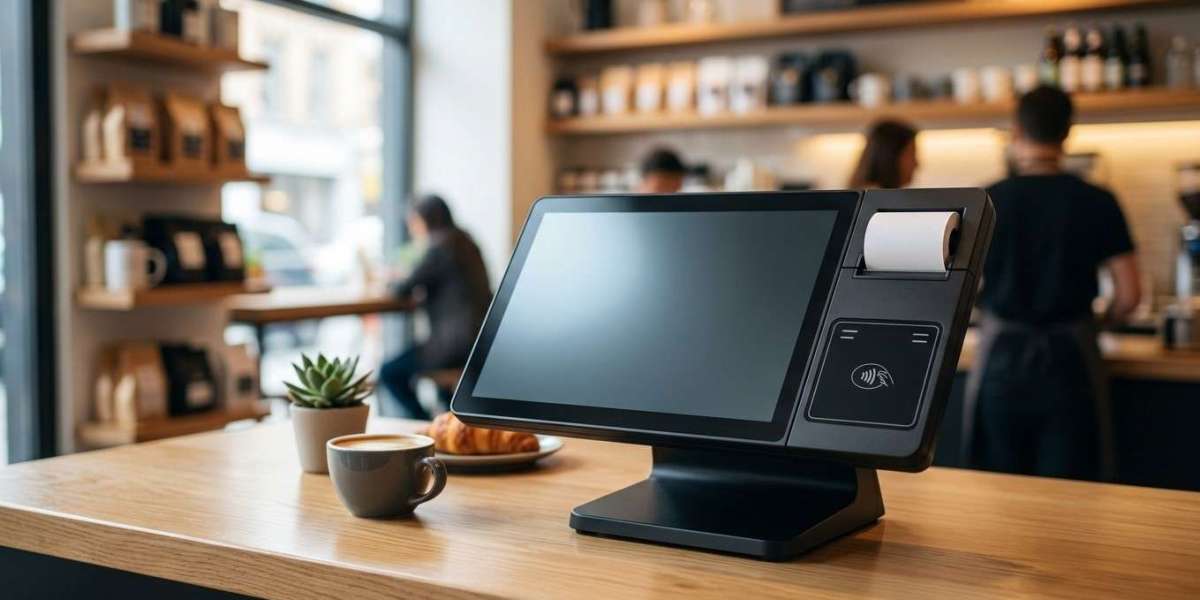
An all-in-one touch POS terminal combines essential computing and touchscreen functionality into a single unit. It can help businesses organize checkout operations while reducing the need for multiple separate devices.
However, choosing the right system requires careful evaluation of hardware, software, connectivity, compatibility, and long-term costs. Businesses researching all in one touch pos terminal buy kuwait should understand these factors before making an investment.
Pointus Solutions helps businesses explore technology solutions for modern retail and commercial environments. This guide covers the key considerations before purchasing an all-in-one touch POS terminal.
Table of Contents
Understand How an All-in-One Touch POS Terminal Works
Evaluate Hardware Specifications
Check POS Software Compatibility
Consider Connectivity and Peripheral Support
Review Display Quality and User Experience
Compare Security and Payment Features
Understand Pricing and Maintenance
Frequently Asked Questions
Conclusion and Call to Action
1. Understand How an All-in-One Touch POS Terminal Works
An all-in-one touch POS terminal combines a computer and touchscreen display into one device. Depending on the model, it may support retail billing, restaurant order management, inventory tracking, sales reporting, and customer transactions.
These systems can help businesses organize checkout activities without requiring a traditional desktop computer and separate monitor.
Before purchasing, identify the tasks you want the terminal to perform. A retail store may prioritize barcode scanning and inventory integration, while a restaurant may need order management and kitchen communication features.
2. Evaluate Hardware Specifications
Hardware performance directly affects how smoothly POS applications operate.
Consider these important specifications:
Processor: Choose processing power suitable for your POS software and daily workload.
RAM: Sufficient memory helps applications run smoothly, particularly when multiple tasks are performed.
Storage: Ensure enough capacity for the operating system, software, and required business data.
Build quality: Select a terminal designed for regular commercial use.
Operating system: Confirm that the device supports your preferred POS applications.
Choosing suitable hardware can help prevent performance problems as business requirements grow.
3. Check POS Software Compatibility
A POS terminal is only useful when its software supports your business processes.
Before buying, confirm whether the system supports the applications you currently use. Depending on the software, useful functions may include:
Sales and billing management
Inventory monitoring
Product and barcode management
Employee access controls
Sales reports
Customer information management
Businesses should also check whether the software receives regular updates and supports integration with accounting, inventory, or other management systems.
4. Consider Connectivity and Peripheral Support
Many businesses need additional devices to complete their POS setup. Therefore, check the terminal's available ports and supported wireless connections.
Common POS peripherals include:
Barcode scanners
Thermal receipt printers
Cash drawers
POS keyboards
Payment terminals
Customer displays
Businesses planning to buy pos cash drawer and keyboard kuwait should confirm that these accessories are compatible with the selected all-in-one terminal.
Also check whether the device supports the required USB, Ethernet, Wi-Fi, Bluetooth, or other connection options. Not every model includes all interfaces.
5. Review Display Quality and User Experience
The touchscreen is one of the most important parts of an all-in-one POS terminal because employees interact with it throughout the working day.
Consider the following features:
Screen size: Choose a display that provides enough space for product information and transaction details.
Touch responsiveness: A responsive screen helps employees navigate menus and complete transactions efficiently.
Resolution: Clear display quality improves readability.
Viewing angle: A suitable viewing angle makes the screen easier to use in different checkout environments.
Ease of cleaning: Retail and restaurant environments benefit from displays that can be cleaned conveniently.
A user-friendly interface can reduce training time and help employees handle transactions more comfortably.
6. Compare Security and Payment Features
POS terminals may handle sensitive business and customer information. Security should therefore be an important purchasing consideration.
Look for suitable user permissions, secure software updates, network protection, and data-handling controls.
If the terminal supports payment processing, confirm that the payment hardware and software meet applicable security requirements. Also check whether the system supports your preferred payment methods through compatible payment equipment.
7. Understand Pricing and Maintenance
The all in one touch pos terminal buy kuwait market includes different configurations and specifications. Prices can vary depending on screen size, processor, memory, storage, operating system, connectivity, software, and additional peripherals.
Before purchasing, compare the total investment, including:
Initial hardware cost
Software licensing or subscription fees
Installation and configuration
Additional POS accessories
Maintenance and technical support
Warranty and replacement components
Businesses should also ask about software updates, repair arrangements, and the availability of replacement parts. A suitable terminal should meet current requirements while supporting future business needs.
Frequently Asked Questions
1. What is an all-in-one touch POS terminal?
It is a touchscreen computer designed for point-of-sale operations, combining computing hardware and a display in one device.
2. What businesses can use all-in-one touch POS terminals?
Retail stores, supermarkets, restaurants, cafés, and service businesses can use these systems for billing and other POS operations.
3. Can an all-in-one POS terminal connect to a cash drawer?
Yes. It can connect to a compatible cash drawer directly or through a supported receipt printer, depending on the terminal's configuration.
4. What should I check before buying a touch POS terminal in Kuwait?
Compare hardware specifications, screen quality, software compatibility, connectivity, peripheral support, security, warranty, and maintenance costs.
5. Can an all-in-one POS terminal manage inventory?
Yes. Inventory management is possible when the terminal runs compatible POS software with the required inventory features.
Conclusion: Choose the Right POS Terminal for Your Business
An all-in-one touch POS terminal can help businesses simplify checkout operations, organize sales activities, and improve transaction management. However, selecting the right device requires attention to hardware performance, software compatibility, display quality, connectivity, security, and long-term support.
Businesses planning an all in one touch pos terminal buy kuwait should compare available configurations carefully and ensure that the selected system supports their existing POS accessories and business applications.
Pointus Solutions provides a starting point for exploring technology solutions that support modern business operations.
Call to Action
Looking for a suitable all-in-one touch POS terminal or compatible POS accessories? Visit Pointus Solutions to explore technology solutions and discuss your business requirements.