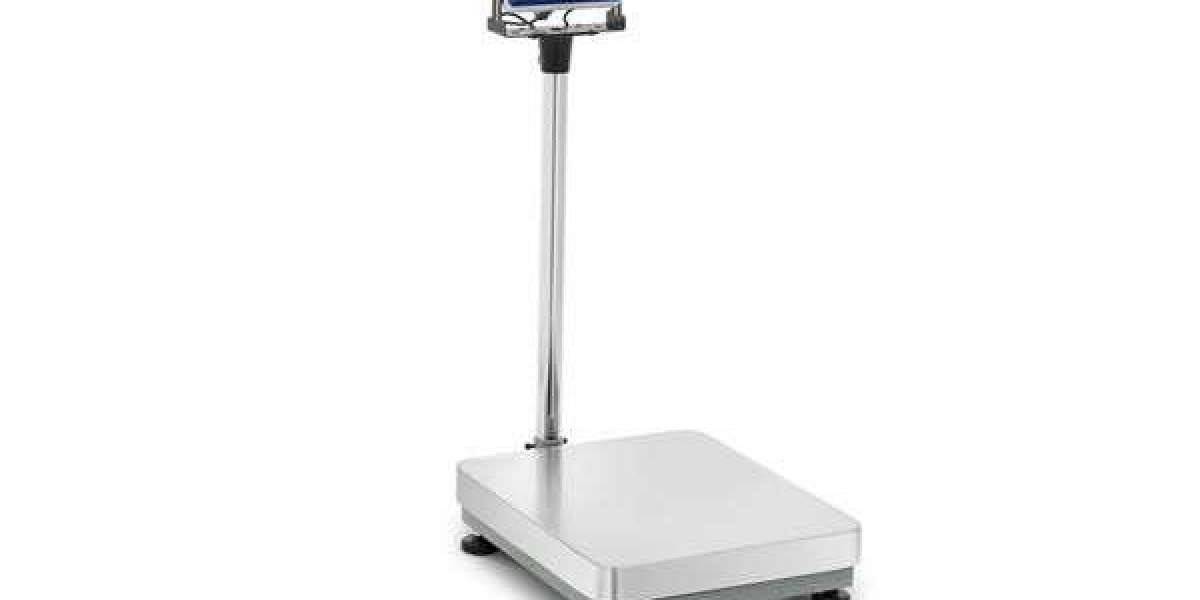

Accurate weight measurement is essential for businesses that handle heavy products, packaged goods, raw materials, and industrial supplies. Warehouses, factories, distribution centres, and logistics companies need dependable equipment to measure different loads and maintain organized operations. A platform weighing scale provides a practical solution for weighing medium-sized and heavy items that may be difficult to measure using smaller weighing machines.
Across the UAE, businesses operate in industries where product handling and material movement are part of everyday activities. Selecting appropriate weighing equipment can help improve stock management, support packaging procedures, and maintain consistent measurement records. Understanding platform scale designs, applications, and important features can help businesses make better purchasing decisions.
What Is a Platform Weighing Scale?
A platform weighing scale is a weighing instrument with a flat, strong surface designed to hold products, containers, boxes, or other materials during measurement. It generally uses electronic load cells to detect the weight placed on the platform and transfers the measurement to a connected indicator or digital display.
These scales are available in different sizes and capacities depending on their intended applications. Smaller models can be used for packages and individual products, while heavy-duty versions are designed for pallets, industrial materials, and larger loads.
Some models include additional functions such as tare weighing, piece counting, data output, and printing compatibility. The availability of these functions depends on the specific model and configuration.
How Platform Scales Support Industrial Operations
Platform weighing equipment plays an important role in workplaces where materials must be measured before storage, processing, packaging, or transportation.
One major advantage is convenience. Employees can place suitable items directly onto the weighing surface instead of using equipment designed for smaller objects. This makes platform scales useful at receiving stations, packing areas, and warehouse workstations.
They can also support inventory procedures. Businesses that record the weight of incoming and outgoing materials can use measurement information to maintain internal records and monitor stock movement.
In manufacturing environments, platform scales may help measure raw materials and finished goods. Consistent weighing procedures can support production planning and internal quality-control activities.
Different Types of Platform Weighing Scales
Not every platform scale is designed for the same working conditions. Businesses should understand the available categories before selecting equipment.
1. Digital Platform Scales
Digital platform scales display weight readings electronically. They are commonly used in warehouses, retail operations, workshops, and production facilities.
Their digital indicators make measurements easy to read. Depending on the model, they may also include tare functions, unit selection, and other operating features.
2. Heavy-Duty Industrial Platform Scales
Heavy-duty platform scales are designed for workplaces that regularly handle larger loads. They may be used for weighing industrial materials, machinery components, bulk goods, and loaded containers.
Their capacity, platform dimensions, and structural design should match the weight and size of the materials being handled.
3. Stainless Steel Platform Scales
Stainless steel models may be suitable for environments where hygiene, moisture resistance, and regular cleaning are important considerations.
Food-processing facilities and certain production areas may consider these scales, depending on their cleaning procedures and environmental conditions. Buyers should check the actual protection rating and manufacturer specifications before purchasing.
4. Portable Platform Scales
Portable platform scales are designed for businesses that need flexibility when weighing products at different workstations. Their suitability depends on their weight, dimensions, power arrangement, and maximum capacity.
They may be useful in workshops, small warehouses, and operations where a fixed weighing station is not always practical.
5. Low-Profile Platform Scales
Low-profile designs provide a relatively low weighing surface, which can make loading and unloading more convenient. Depending on the configuration, ramps or other loading arrangements may be available.
These models can be considered for applications involving trolleys, containers, and other items that need to be moved onto a weighing platform.
Industries That Use Platform Weighing Equipment
Platform scales support many commercial and industrial activities throughout the UAE.
Warehousing and Storage: Warehouses receive, store, and dispatch products of different sizes. Platform scales can help employees measure cartons, containers, and suitable palletized loads during stock-handling activities.
Manufacturing and Production: Factories may use platform weighing equipment to measure raw materials, production batches, and finished products. Reliable measurements help maintain internal records and monitor material usage.
Transportation and Logistics: Logistics companies handle shipments that require accurate weight information. Platform scales can support package checking and dispatch preparation, depending on the size and capacity of the equipment.
Food Processing: Food businesses may require weighing machines for ingredients, containers, and packaged products. Stainless steel or appropriately protected equipment may be considered where cleaning and moisture are important factors.
Construction and Industrial Supply: Businesses handling building materials, equipment parts, and industrial supplies may use heavy-duty platform scales to measure suitable loads before storage or distribution.
Important Factors Before Buying a Platform Scale
Choosing a suitable machine requires understanding the actual working conditions rather than focusing only on maximum capacity or purchase price.
Weight capacity: Identify the typical and maximum loads that the machine will need to measure.
Platform dimensions: Select a surface that comfortably accommodates the products, containers, or pallets being weighed.
Measurement readability: Check the displayed increments to ensure the scale provides the required level of detail.
Construction material: Consider painted steel or stainless steel according to the working environment.
Display arrangement: A clearly visible indicator can make daily weighing activities more convenient.
Environmental protection: Review dust, moisture, and water-resistance specifications where relevant.
Additional functions: Tare, counting, printing, and connectivity may be useful for particular business operations.
It is also important to consider how products will be loaded. If employees use forklifts, pallet trucks, or trolleys, the weighing station should provide suitable access and enough surrounding space.
Maintaining Accuracy and Equipment Performance
Regular care is necessary to keep platform weighing equipment operating reliably. Poor positioning, overloading, dirt accumulation, and uneven surfaces can affect measurement results.
Businesses should place the machine on a stable, level foundation and distribute loads properly across the platform. Operators should avoid sudden impacts and ensure that objects do not exceed the rated capacity.
Cleaning should follow the manufacturer's instructions, particularly for equipment used in food-related or moisture-sensitive environments. The weighing platform, cables, indicator, and visible components should also be inspected periodically.
Calibration and verification should be arranged according to the manufacturer's guidance and the intended application. Where equipment is used for commercial transactions, businesses should confirm that it meets applicable UAE legal metrology requirements.
Why Consider Al Falah Scales?
Choosing a suitable weighing equipment provider is an important part of purchasing reliable machinery. Al Falah Scales is a relevant option for businesses exploring weighing solutions for commercial and industrial applications in the UAE.
Before selecting a platform scale, customers should consider the type of materials they handle, expected load capacity, platform dimensions, and workplace conditions. Discussing these requirements with Al Falah Scales can help customers understand available equipment options and compare specifications.
A suitable weighing solution should support everyday operations while meeting the measurement requirements of the business. Careful equipment selection can help improve weighing procedures and contribute to better workplace organization.
Conclusion
Platform weighing equipment provides a practical way to measure products, materials, and heavy loads across different industries. From warehouse operations and manufacturing facilities to logistics and food processing, these machines support organized material handling and reliable weight records. Businesses considering a platform weighing scale in the UAE should evaluate capacity, platform dimensions, readability, construction, and operating conditions before making a purchase. Selecting equipment that matches actual workplace requirements can support accurate measurements and efficient daily operations.
Frequently Asked Questions
1. What is a platform weighing scale used for?
A platform weighing scale is used to measure products, packages, containers, raw materials, and other items that require a larger weighing surface. It is commonly used in warehouses, factories, logistics facilities, and commercial businesses.
2. What capacity is suitable for an industrial platform scale?
The appropriate capacity depends on the maximum load, typical working weight, and size of the materials being measured. Businesses should select a model that comfortably accommodates their expected loads.
3. How can I maintain a platform weighing scale?
Keep the weighing surface clean, avoid overloading, use the machine on a stable surface, and follow the manufacturer's maintenance instructions. Regular calibration and inspection can also help maintain dependable measurements.