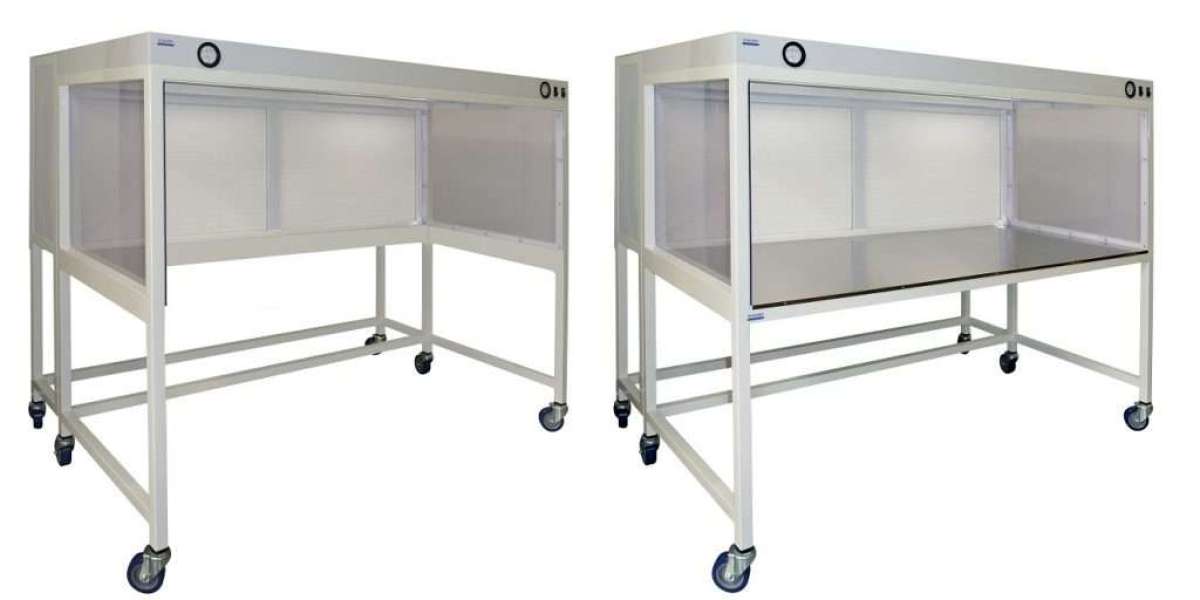

Optical components require careful handling because even microscopic dust particles, fibers, and surface contaminants can affect their performance. Whether you work with precision lenses, mirrors, filters, prisms, or optical sensors, maintaining a controlled environment is essential for consistent results. A horizontal laminar flow hood provides a localized clean workspace by directing HEPA-filtered air horizontally across the work surface.
However, simply installing a clean bench does not guarantee effective contamination control. You must configure the airflow, organize equipment, establish proper handling procedures, and maintain the filtration system. With the right setup, you can create a cleaner working environment for optical inspection, assembly, and precision manufacturing.
1. Select the Right Horizontal Laminar Flow Hood
Start by evaluating the size, sensitivity, and handling requirements of your optical components. Your workstation should provide enough space for the largest optical assemblies without obstructing filtered airflow.
Consider these factors when selecting a unit:
Work surface dimensions: Choose sufficient width and depth for lenses, optical fixtures, inspection instruments, and accessories.
HEPA filtration: Select an appropriate HEPA filtration system to reduce airborne particulate contamination.
Airflow uniformity: Ensure filtered air moves consistently across the working area.
Workspace visibility: Choose a design that allows comfortable inspection and precise component positioning.
Material compatibility: Select work surfaces that withstand your cleaning agents and laboratory procedures.
A properly selected Horizontal Laminar Flow Hood can help you establish a localized clean environment for sensitive optical applications.
2. Position the Hood Away From Airflow Disturbances
Installation location directly affects contamination control. External air currents from doors, windows, ceiling diffusers, and nearby ventilation equipment can interfere with the hood's airflow.
Position your workstation in a low-traffic area where surrounding disturbances are minimized.
Follow these installation practices:
· Maintain the manufacturer's recommended clearance around air intake areas.
· Avoid positioning the hood directly beneath strong HVAC supply vents.
· Keep doors and windows away from the immediate working zone.
· Place the workstation on a stable, level surface.
· Ensure adequate electrical access for the blower and inspection equipment.
Allow sufficient space behind and around the unit for maintenance and filter replacement. Always follow the manufacturer's installation specifications.
3. Configure HEPA Filtration and Airflow
Airflow quality is one of the most important considerations when configuring a horizontal clean bench for optical work.
In a horizontal laminar flow system, room air passes through the prefiltration stage and HEPA filter before moving from the rear of the enclosure toward the front opening. This continuous stream of filtered air helps carry airborne particles away from the working area.
To maintain effective airflow:
· Verify that the installed filter matches your cleanliness requirements.
· Check the filter condition and installation integrity.
· Keep the rear filter face unobstructed.
· Avoid placing large instruments directly in the airflow path.
· Have qualified personnel verify airflow velocity and uniformity.
Do not assume that installing a HEPA filter automatically guarantees a particular cleanroom classification. Actual cleanliness depends on the complete system, installation, airflow performance, and operating conditions.
4. Organize the Optical Workstation Strategically
Proper workstation organization helps prevent contamination and improves handling efficiency.
Arrange your optical components according to the direction of airflow. Position the cleanest and most contamination-sensitive items closer to the filtered-air supply. Place supporting tools and accessories downstream without blocking the airflow.
Consider dividing your workspace into three functional zones:
Clean Component Zone: Reserve this area for cleaned lenses, mirrors, filters, and other sensitive optical elements.
Assembly Zone: Position precision tools, alignment fixtures, and inspection equipment where they remain accessible without obstructing airflow.
Supporting Materials Zone: Keep approved cleaning supplies and other accessories organized away from critical optical components.
Avoid overcrowding the workspace. Large objects can create turbulent regions downstream, potentially allowing particles to accumulate near sensitive surfaces.
5. Establish Proper Optical Handling Procedures
Even with effective filtration, improper handling can introduce contamination.
Your technicians should follow consistent procedures before and during optical operations.
· Wear cleanroom-compatible garments and powder-free gloves when required.
· Handle lenses and mirrors using approved edge-gripping tools.
· Avoid touching optical surfaces directly.
· Use approved lint-free wipes and optical cleaning materials.
· Keep components covered when they are not being handled.
· Minimize unnecessary hand movements across exposed optical surfaces.
Remember that gloves and cleaning materials can also introduce particles if they are unsuitable or improperly handled. Establish clear procedures for changing gloves and cleaning tools between operations.
6. Control Lighting and Inspection Equipment
Optical inspection requires suitable lighting to identify dust, scratches, fingerprints, and surface defects.
Configure your workstation with appropriate inspection lighting that does not interfere with airflow or generate excessive heat.
Use suitable magnification equipment, optical microscopes, and non-contact inspection instruments where appropriate.
Position lighting fixtures outside critical airflow paths whenever possible. Avoid installing bulky equipment that blocks filtered air from reaching the optical components.
For temperature-sensitive optical assemblies, monitor environmental conditions and allow components to stabilize before conducting precision measurements.
7. Maintain and Validate the Workstation
Regular maintenance helps preserve consistent performance and reduce contamination risks.
Develop a documented maintenance schedule covering:
· Pre-filter inspection and replacement.
· HEPA filter integrity testing.
· Airflow velocity and uniformity verification.
· Work surface cleaning and disinfection where appropriate.
· Blower and electrical system inspection.
· Particle monitoring based on process requirements.
Use qualified service personnel for filter integrity testing and performance validation. Establish acceptance criteria based on your application and applicable cleanroom requirements.
Record maintenance activities, inspection results, and corrective actions to support consistent laboratory operations.
8. Avoid Common Configuration Mistakes
Several setup mistakes can compromise optical cleanliness even when you use a high-quality laminar flow system.
Avoid these common problems:
· Blocking the HEPA filter with oversized equipment.
· Placing uncleaned materials upstream of sensitive optical components.
· Introducing cardboard, paper, or shedding materials into the workspace.
· Ignoring airflow disturbances caused by operator movements.
· Using unsuitable cleaning chemicals on optical surfaces.
· Delaying filter inspections and scheduled maintenance.
Most importantly, remember that a horizontal laminar flow hood primarily protects the product or workpiece. It does not provide operator protection against hazardous chemicals, fumes, or biological agents. Choose an appropriate containment system if your process involves these hazards.
Conclusion
Configuring a horizontal laminar flow hood for optical work requires more than selecting a filtration system. You must consider installation location, airflow performance, component positioning, handling procedures, inspection lighting, and regular maintenance.
By organizing your workstation around clean-air delivery and contamination prevention, you can create a more consistent environment for precision optical assembly and inspection.
Explore laboratory and cleanroom solutions from CleaTech LLC to identify equipment suitable for your optical workspace.
If you need assistance selecting or configuring a suitable workstation, Contact us today to discuss your application requirements.
Frequently Asked Questions
Why is a horizontal laminar flow hood suitable for optical work?
A horizontal laminar flow hood directs HEPA-filtered air across the work surface toward the operator. This helps reduce airborne particles around exposed lenses, mirrors, filters, and other contamination-sensitive optical components.
Which filter should you use for optical assembly?
A HEPA filter is commonly used for particle control in optical workstations. Your selection should depend on the required cleanliness level, particle-size requirements, and equipment specifications. ULPA filtration may be appropriate for more demanding applications.
Where should you position optical components inside the hood?
Position sensitive optical components in the clean airflow path, generally closer to the rear filter supply. Arrange tools and supporting equipment downstream without creating significant airflow obstructions.
How often should you inspect a horizontal laminar flow hood?
Inspection frequency depends on operating hours, environmental conditions, manufacturer recommendations, and application requirements. Establish a documented schedule for airflow checks, filter integrity testing, and routine cleaning.
Can a horizontal laminar flow hood prevent scratches on optical lenses?
No. It primarily helps reduce airborne particulate contamination. Preventing scratches also requires proper handling tools, suitable storage, clean gloves, and approved optical cleaning procedures.
Original Source: https://laboratoryquipment.blogspot.com/2026/11/how-to-configure-horizontal-laminar.html