
Hair loss is a common problem that affects millions of people worldwide. It can impact both men and women, causing changes in physical appearance and sometimes affecting confidence and self-esteem. Hair loss may occur due to genetics, hormonal changes, aging, nutritional deficiencies, medical conditions, stress, or certain medications. While some forms of hair loss are temporary, others can lead to permanent baldness or thinning hair.
With advancements in modern cosmetic and medical treatments, hair transplantation has become one of the most effective options for restoring hair in areas affected by permanent hair loss. It is a surgical procedure that involves transferring healthy hair follicles from a donor area, usually the back or sides of the scalp, to bald or thinning areas.
Modern hair transplant techniques, including Follicular Unit Extraction (FUE), Follicular Unit Transplantation (FUT), and Direct Hair Implantation (DHI), allow specialists to restore hair with natural-looking results.
In this comprehensive guide, we will discuss everything you need to know about hair transplantation, including its types, procedure, benefits, eligibility, recovery, side effects, cost, and expected results.
What Is a Hair Transplant?
A hair transplant is a surgical hair restoration procedure designed to treat hair loss by relocating healthy hair follicles from one part of the body to another. The area from which hair follicles are extracted is called the donor area, while the area receiving the transplanted follicles is known as the recipient area.
In most cases, hair follicles are taken from the back or sides of the scalp because they are generally more resistant to the hormonal effects responsible for hereditary hair loss.
These follicles are carefully extracted, prepared, and implanted into areas experiencing hair thinning or baldness. Once the transplanted follicles establish themselves, they can produce new hair that grows naturally.
Hair transplantation is commonly used to treat:
Male pattern baldness.
Female pattern hair loss in selected patients.
Receding hairlines.
Thinning crown areas.
Frontal hair loss.
Hair loss caused by scars or injuries.
Beard and moustache hair loss.
Eyebrow hair loss.
Hair loss following certain surgical procedures.
It is important to understand that a hair transplant does not create new hair follicles. Instead, it redistributes existing healthy follicles to areas where hair growth is needed.
What Causes Hair Loss?
Before choosing a hair transplant, it is important to understand the underlying cause of hair loss. Different conditions require different treatment approaches, and not everyone experiencing hair thinning is a suitable candidate for surgery.
1. Genetic Hair Loss
Genetic hair loss, medically known as androgenetic alopecia, is one of the most common causes of permanent hair loss.
It occurs due to inherited genetic factors and sensitivity to dihydrotestosterone (DHT), a hormone derived from testosterone.
In men, genetic hair loss commonly begins with a receding hairline, thinning temples, or hair loss around the crown. In women, it generally appears as gradual thinning across the scalp, particularly around the central parting.
2. Hormonal Changes
Hormonal changes can influence the natural hair growth cycle. Thyroid disorders, hormonal imbalances, and certain reproductive or metabolic conditions may contribute to excessive hair shedding or thinning.
Identifying and treating the underlying hormonal problem may help improve hair health.
3. Stress and Lifestyle Factors
Physical and emotional stress can sometimes trigger temporary hair shedding. This condition is known as telogen effluvium.
It may occur following illness, surgery, significant emotional stress, rapid weight loss, or major lifestyle changes.
4. Nutritional Deficiencies
Hair follicles require adequate nutrients to maintain healthy growth. Deficiencies in iron, protein, vitamin B12, and other essential nutrients may contribute to hair thinning in some individuals.
Correcting nutritional deficiencies may improve hair growth without requiring surgery.
5. Medical Conditions
Certain autoimmune diseases, scalp infections, inflammatory skin conditions, and other medical problems can cause hair loss.
Some conditions may permanently damage hair follicles, making early diagnosis and appropriate treatment particularly important.
6. Aging
As people grow older, hair follicles may gradually become smaller, and hair growth may slow down. This can lead to reduced hair density and increased scalp visibility.
Types of Hair Transplant Techniques
There are several hair transplant techniques available today. The most suitable method depends on the patient's hair loss pattern, donor hair availability, scalp condition, desired results, and the surgeon's recommendations.
1. FUE Hair Transplant
Follicular Unit Extraction (FUE) is one of the most commonly performed hair transplant techniques.
In this method, individual hair follicular units are extracted from the donor area using a specialized small punch instrument. The extracted follicles are then prepared and implanted into the recipient area.
The procedure generally involves local anesthesia, individual follicle extraction, recipient-site preparation, and careful implantation.
Benefits of FUE Hair Transplant:
Does not require a long linear incision.
Leaves small dot-like scars in the donor area.
Offers relatively quick donor-area healing.
Suitable for many individuals experiencing hair loss.
Can provide natural-looking hair restoration.
Can also be used for beard and eyebrow transplantation.
FUE is particularly popular among individuals who prefer shorter hairstyles because it avoids the long linear scar associated with traditional FUT surgery. However, very short hairstyles may still reveal small extraction scars.
2. FUT Hair Transplant
Follicular Unit Transplantation (FUT), also known as the strip method, is an established hair restoration technique.
In this procedure, a narrow strip of scalp containing healthy hair follicles is surgically removed from the donor area. The strip is then carefully divided into individual follicular units under magnification.
These grafts are subsequently implanted into the recipient area.
Benefits of FUT Hair Transplant:
Can provide a large number of grafts in one session.
Allows careful microscopic preparation of follicular units.
May be suitable for patients requiring extensive hair restoration.
Can provide effective coverage in appropriately selected patients.
The main disadvantage of FUT is that it leaves a linear scar in the donor area. Recovery may also involve more discomfort and restrictions than FUE.
3. DHI Hair Transplant
Direct Hair Implantation (DHI) is an implantation approach commonly associated with specialized implanter pens.
In this method, hair follicles are generally extracted individually, similar to FUE, and then implanted into the recipient area using specialized instruments.
The implantation technique allows the medical team to control the placement angle, direction, and depth of individual grafts.
Benefits of DHI Hair Transplant:
Precise placement of hair follicles.
Greater control over implantation angles and directions.
Useful for certain hairline restoration procedures.
Can be suitable for smaller or targeted treatment areas.
Does not require a linear donor-area incision.
DHI and FUE are not necessarily completely separate extraction methods. The main difference is generally the approach used to implant the extracted follicles.
Who Is an Ideal Candidate for Hair Transplant?
Hair transplantation can provide excellent results for suitable candidates, but it is not appropriate for everyone.
A person may be considered a good candidate if they:
Experience permanent or stable hair loss.
Have sufficient healthy donor hair.
Are in generally good health.
Have realistic expectations about hair density and coverage.
Do not have an untreated scalp condition affecting hair follicles.
Understand the procedure, recovery period, and possible complications.
A detailed consultation is necessary to determine suitability.
Younger patients may require additional assessment because hair loss can continue progressing over time. Performing a transplant without considering future hair loss may result in an unnatural appearance later.
Individuals with extensive baldness and limited donor hair may also have restricted restoration options.
Hair Transplant Procedure: Step-by-Step Guide
A hair transplant is generally performed under local anesthesia. The duration depends on the number of grafts, selected technique, and complexity of the procedure.
Step 1: Initial Consultation
The first step involves a detailed consultation with a qualified hair transplant specialist.
The doctor evaluates the patient's hair loss pattern, scalp condition, donor hair density, medical history, and expectations.
The assessment may include:
Examination of the scalp.
Evaluation of donor hair quality.
Identification of the hair loss pattern.
Estimation of required grafts.
Discussion of suitable techniques.
Review of medical history.
Planning of the hairline.
Step 2: Hairline Design
The surgeon designs a hairline according to the patient's facial structure, age, hair characteristics, and future hair loss possibilities.
A natural hairline should have an appropriate shape and gradual transition rather than appearing excessively straight or artificially low.
Proper hairline planning is essential for achieving long-term aesthetic results.
Step 3: Preparation of the Donor Area
The donor area is cleaned and prepared for the procedure. Depending on the selected technique, the hair may be shaved or trimmed.
Local anesthesia is administered to minimize discomfort during extraction.
Step 4: Hair Follicle Extraction
In FUE-based procedures, individual hair follicles are extracted using specialized instruments.
The medical team must carefully extract the grafts while minimizing follicle damage and preserving the appearance of the donor area.
Step 5: Graft Preparation
After extraction, the follicles are carefully inspected and prepared for implantation.
Grafts naturally contain different numbers of hair follicles, commonly one, two, or three hairs.
Single-hair grafts are often used along the frontal hairline to create a natural transition, while multi-hair grafts may be placed behind the hairline to improve density.
Step 6: Recipient Area Preparation
Small openings or recipient sites are created in the areas requiring hair restoration.
The surgeon considers the natural direction, angle, depth, and distribution of existing hair to achieve a balanced appearance.
Step 7: Hair Follicle Implantation
The prepared hair follicles are implanted into the recipient area using suitable surgical instruments.
Careful placement is important because the direction and angle of hair growth influence the final appearance.
Step 8: Post-Procedure Care
After the procedure, the patient receives instructions regarding scalp washing, medication, sleeping position, physical activity, and follow-up appointments.
Following these instructions helps protect the transplanted follicles during the early healing period.
Benefits of Hair Transplant
Hair transplantation offers several benefits for individuals experiencing permanent hair loss.
1. Natural-Looking Hair Growth
Modern hair transplant techniques allow specialists to place individual follicles according to natural hair growth patterns.
When properly performed, transplanted hair can blend with existing hair and create a natural appearance.
2. Long-Lasting Results
Hair follicles extracted from suitable donor areas are generally resistant to the hormonal factors responsible for hereditary hair loss.
These follicles can continue producing hair for many years.
However, surrounding non-transplanted hair may continue thinning over time.
3. Improved Confidence and Appearance
Hair loss can affect how people feel about their appearance. Hair restoration may help improve confidence and make individuals more comfortable with their overall look.
4. Permanent Restoration in Transplanted Areas
Transplanted follicles can provide long-lasting hair growth. Unlike temporary cosmetic solutions, a successful transplant relocates living hair follicles that continue producing hair.
5. Easy Hair Maintenance
Once the transplanted hair has fully grown, it can generally be washed, trimmed, styled, and maintained like natural hair.
6. Customized Treatment
Hair transplantation can be tailored to different areas, including:
Frontal hairline.
Temples.
Crown.
Beard.
Moustache.
Eyebrows.
Scarred areas.
Hair Transplant for Men
Male pattern baldness is one of the leading reasons for hair transplantation.
It commonly affects the frontal hairline, temples, and crown. In some individuals, hair loss may gradually progress to extensive baldness.
A hair transplant for men may help restore:
Receding hairlines.
Frontal baldness.
Temple areas.
Crown thinning.
Hair density in selected areas.
The surgeon must consider the possibility of future hair loss when designing the hairline.
An excessively low hairline may consume too many donor grafts and may not look natural as the patient ages.
Hair Transplant for Women
Women may also experience hair thinning and hair loss due to genetics, hormonal changes, medical conditions, nutritional deficiencies, or aging.
Hair transplantation may be an option for selected women with localized or stable hair loss.
It may help address:
Frontal hairline recession.
Localized thinning.
Hair loss caused by scars.
Certain stable forms of hair loss.
However, women with diffuse thinning across the scalp may not be suitable candidates because their donor areas may also be affected.
A detailed medical assessment is necessary before considering surgery.
Beard and Moustache Hair Transplant
Beard transplantation is a cosmetic procedure designed to improve facial hair density or fill areas where beard growth is sparse.
Hair follicles are usually taken from the scalp donor area and implanted into the beard or moustache region.
Beard transplantation may be suitable for individuals experiencing:
Patchy beard growth.
Sparse cheeks.
Uneven beard density.
Facial hair loss due to scars.
Weak moustache growth.
An uneven beard shape.
The angle and direction of implantation are especially important because facial hair grows in different directions across the cheeks, chin, and moustache area.
Eyebrow Hair Transplant
Eyebrow transplantation is performed to restore eyebrow fullness, shape, or density.
It may be considered for individuals with sparse eyebrows due to genetics, trauma, scars, or certain stable medical conditions.
During the procedure, hair follicles are carefully implanted according to the natural direction and pattern of eyebrow growth.
Transplanted eyebrow hairs may grow longer than normal eyebrow hairs, so regular trimming may be necessary.
Hair Transplant Recovery Timeline
Hair transplant recovery occurs gradually. The transplanted follicles require time to heal and establish themselves in the recipient area.
First 1–3 Days
Patients may experience:
Mild swelling.
Scalp tenderness.
Redness.
Small crusts around grafts.
Discomfort in the donor area.
Following post-operative instructions is important during this period.
Days 4–10
The scalp continues healing, and small scabs gradually begin falling off.
Patients should avoid scratching, rubbing, or pulling on the transplanted area.
Weeks 2–4
Transplanted hair shafts commonly begin shedding. This is a normal part of the hair transplant process and does not necessarily mean that the follicles have been lost.
Months 2–3
Some patients experience temporary shedding of existing hair, known as shock loss.
Visible new hair growth may still be limited during this stage.
Months 3–4
Early new hair growth may begin. Newly growing hairs can initially appear thin, soft, or uneven.
Months 5–6
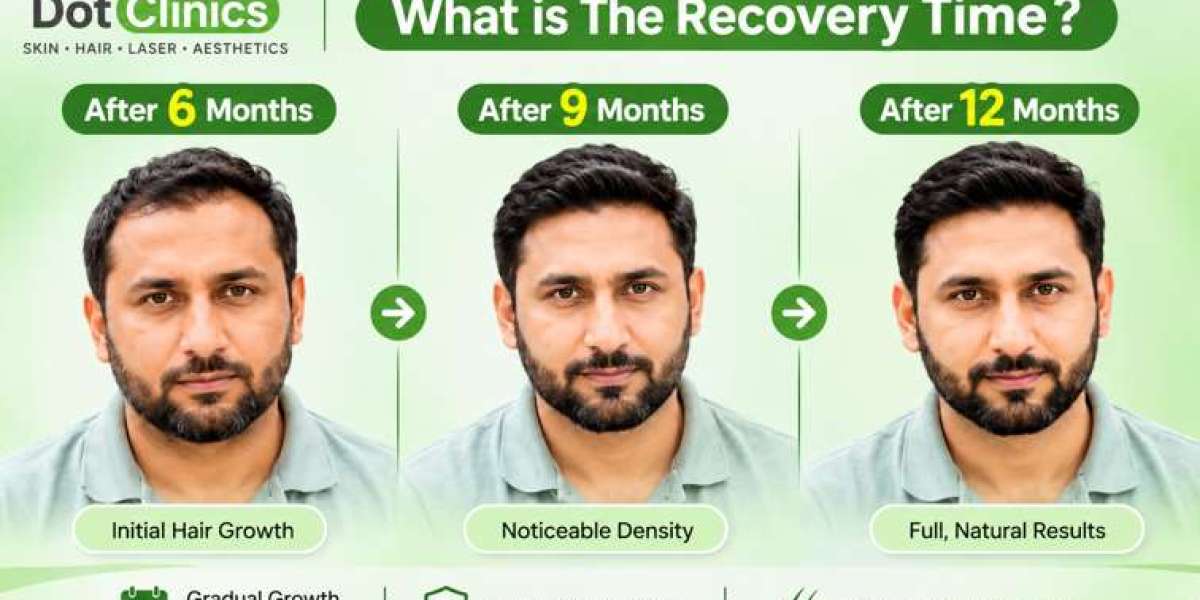
Hair growth becomes more noticeable, and density gradually improves.
Months 7–9
More substantial hair growth may become visible. The transplanted hair starts blending with the surrounding hair.
Months 10–12
Many patients experience significant improvement in hair coverage and appearance.
Months 12–18
Additional thickening and maturation may occur, especially in the crown area.
The final timeline varies depending on individual healing, hair characteristics, graft survival, and the size of the treatment area.
Hair Transplant Before and After Results
Hair transplant results vary from one patient to another.
Several factors influence the final appearance, including:
Number of transplanted grafts.
Quality of donor hair.
Hair thickness.
Hair color.
Scalp characteristics.
Hair loss pattern.
Surgical technique.
Graft survival.
Post-operative care.
Results are not immediate because transplanted hair commonly sheds during the first few weeks.
New hair growth generally begins around three to four months after the procedure, while substantial improvement may take approximately 10 to 12 months.
Patients should maintain realistic expectations and allow sufficient time for the transplanted follicles to mature.
Is Hair Transplant Painful?
Hair transplantation is generally performed under local anesthesia, which helps minimize pain during the procedure.
Patients may experience mild discomfort during the administration of anesthesia. Once the scalp becomes numb, extraction and implantation are usually much more comfortable.
After surgery, temporary pain, swelling, tenderness, itching, or tightness may occur.
These symptoms can generally be managed with medications and instructions provided by the surgeon.
Hair Transplant Side Effects and Risks
Although hair transplantation is generally considered safe when performed by qualified professionals, it is still a surgical procedure and may involve certain risks.
Possible side effects include:
Temporary swelling.
Redness.
Pain or tenderness.
Itching.
Small scabs.
Temporary numbness.
Infection.
Bleeding.
Folliculitis.
Temporary shock loss.
Poor graft survival.
Uneven hair growth.
Visible scarring.
Unnatural hairline.
Donor-area thinning.
Rare complications related to anesthesia.
Most common side effects are temporary, but complications may require medical attention.
Patients should select a qualified surgeon and follow all pre-operative and post-operative instructions.
Hair Transplant Aftercare Tips
Proper aftercare is essential for protecting transplanted follicles and supporting recovery.
1. Follow Scalp Washing Instructions
The scalp should be washed according to the surgeon's instructions.
Gentle washing is important during the early recovery period. Avoid rubbing or scratching the recipient area.
2. Avoid Scratching
Itching is common during healing, but scratching can damage the recipient area and increase the risk of complications.
3. Sleep Carefully
Patients are often advised to sleep with their heads elevated during the first few nights to help reduce swelling.
Avoid unnecessary pressure on the transplanted area.
4. Avoid Intense Exercise
Strenuous exercise, heavy lifting, and activities that cause excessive sweating may need to be avoided temporarily.
The surgeon will advise when normal physical activities can resume.
5. Protect the Scalp From Sun Exposure
Excessive sunlight and heat may irritate the healing scalp.
Patients should follow their surgeon's recommendations regarding sun protection and outdoor activities.
6. Avoid Smoking
Smoking can negatively affect blood circulation and wound healing. Avoiding smoking during the recovery period is strongly recommended.
7. Take Prescribed Medication
Patients should use prescribed medications as directed and avoid taking additional medication without consulting their medical provider.
8. Attend Follow-Up Appointments
Regular follow-up visits help the surgeon monitor healing, evaluate hair growth, and identify any complications.
Hair Transplant Cost
The cost of a hair transplant depends on several factors, including the number of grafts, selected technique, surgeon's experience, clinic facilities, and complexity of the procedure.
Important factors affecting hair transplant cost include:
Number of required grafts.
FUE, FUT, or DHI technique.
Experience of the surgeon.
Medical team expertise.
Location of the clinic.
Size of the recipient area.
Additional treatments or services.
In Pakistan, hair transplant prices vary between clinics and are often calculated according to the number of grafts or treatment package.
A consultation is the best way to determine the estimated number of grafts and overall treatment cost.
Patients should not choose a clinic based on price alone. Surgical expertise, hygiene standards, graft handling, donor-area management, and post-operative care are equally important.
Hair Transplant in Pakistan
Hair transplantation has become increasingly popular in Pakistan as more people seek effective solutions for hair loss and baldness.
Major cities, including Lahore, Multan, Islamabad, Karachi, and Faisalabad, offer different hair restoration options.
Patients considering hair transplantation in Pakistan should carefully evaluate the clinic and surgeon before making a decision.
Important considerations include:
Qualifications and experience of the surgeon.
Proper medical consultation.
Hygiene and sterilization standards.
Appropriate surgical facilities.
Transparent graft estimates.
Realistic expectations.
Genuine before-and-after patient results.
Proper post-operative care.
Clear information about possible risks.
Selecting an experienced medical professional is an important step toward achieving safe and satisfactory hair restoration results.
Hair Transplant at Dot Clinics
Dot Clinics provides aesthetic and hair-related treatment services in Lahore and Multan, Pakistan.
Individuals experiencing hair loss can seek professional consultation to discuss suitable hair restoration options and determine whether hair transplantation is appropriate for their condition.
A hair transplant consultation may help patients understand:
The underlying cause of hair loss.
Donor hair availability.
Estimated number of required grafts.
Suitable hair transplant techniques.
Hairline design.
Expected results.
Recovery and aftercare.
Potential complications.
Treatment costs.
Every hair restoration plan should be customized according to the patient's age, hair loss pattern, donor hair condition, and long-term goals.
Individuals interested in hair transplantation should undergo a proper medical assessment before proceeding with treatment.
Frequently Asked Questions About Hair Transplant
1. Is a hair transplant permanent?
Hair transplanted from suitable donor areas is generally resistant to the hormonal factors responsible for hereditary hair loss. These follicles can continue growing for many years. However, surrounding non-transplanted hair may continue thinning.
2. How many grafts are required for a hair transplant?
The number of grafts depends on the size of the bald area, hair loss pattern, donor hair density, hair thickness, and desired coverage. Some patients may need approximately 1,500 grafts, while others may require 3,000 or more.
3. How long does a hair transplant procedure take?
A hair transplant procedure may take approximately four to eight hours. However, the duration depends on the number of grafts, surgical technique, and complexity.
4. When does transplanted hair start growing?
New hair growth commonly begins around three to four months after surgery. More noticeable growth generally develops over the following months.
5. Does transplanted hair fall out?
Yes. Transplanted hair shafts commonly shed during the first few weeks. This is a normal stage of the hair transplant process. The follicles generally remain in the scalp and can produce new hair later.
6. Can a hair transplant fail?
Yes. Some transplanted grafts may not survive or grow as expected. Graft survival depends on surgical technique, follicle handling, patient health, scalp condition, and aftercare.
7. Can women undergo hair transplantation?
Yes. Some women are suitable candidates for hair transplantation, particularly those with localized or stable hair loss. Women with diffuse thinning may require alternative treatments.
8. Can a hair transplant be performed on the beard?
Yes. Beard transplantation can improve facial hair density, fill patchy areas, and create a more uniform beard appearance.
9. Can I wear a cap after a hair transplant?
Patients may be allowed to wear a loose, clean cap after a specific period, depending on their surgeon's instructions. Tight headwear should be avoided during early recovery.
10. When can I return to work after a hair transplant?
Many patients return to desk-based work within a few days. However, the recovery period depends on swelling, discomfort, and the nature of their job.
11. Can transplanted hair be cut and styled?
Yes. Once the transplanted hair has fully healed and grown, it can generally be cut, styled, washed, and maintained like natural hair.
12. Which hair transplant technique is best?
FUE, FUT, and DHI all have advantages and limitations. The most appropriate technique depends on donor hair availability, the patient's hair loss pattern, treatment goals, and the surgeon's recommendation.
13. Can I undergo a second hair transplant?
Yes. Some patients may undergo another hair transplant to improve density or address additional hair loss. However, donor hair availability and long-term planning must be considered.
14. Do I need medication after a hair transplant?
Some patients may benefit from medication to help manage ongoing hair loss and protect existing hair. However, medication is not necessary for every patient. Treatment should be individualized by a qualified medical professional.
15. How long does it take to see final hair transplant results?
Many patients see substantial results within 12 months, although additional hair maturation and thickening may continue for 18 months or longer.
Conclusion
Hair transplantation is an effective hair restoration option for individuals experiencing permanent hair loss, receding hairlines, thinning crowns, beard gaps, or certain forms of hair loss caused by scars.
Modern techniques such as FUE, FUT, and DHI allow surgeons to restore hair by transferring healthy follicles from donor areas to areas requiring additional coverage.
A successful hair transplant depends on proper patient selection, experienced surgical planning, natural hairline design, careful graft handling, and appropriate aftercare.
Although hair transplantation can provide long-lasting and natural-looking results, it is not suitable for everyone. A professional consultation is essential to evaluate the cause of hair loss, donor hair availability, treatment options, possible risks, and expected outcomes.
With proper planning and medical care, hair transplantation can help restore hair coverage, improve appearance, and increase confidence.