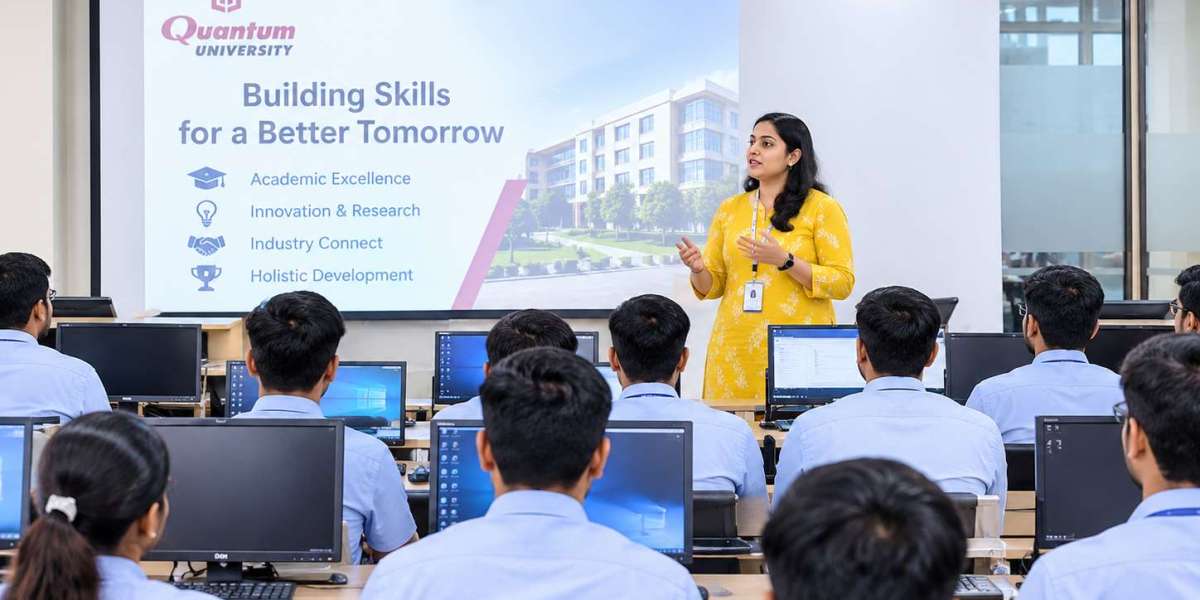

Choosing a postgraduate programme requires students to think about their interests, strengths, and long-term professional goals. For graduates interested in computers, software development, and emerging technologies, advanced computer application education can open the door to several specialised career paths.
Artificial Intelligence is one of the most exciting developments in the technology sector. It combines computer science, mathematics, statistics, and data analysis to create systems capable of performing intelligent tasks. From voice recognition to predictive analytics, AI applications are becoming increasingly important in modern industries.
Students planning to specialise in this area can consider an MCA in Artificial Intelligence as an academic pathway to understand intelligent computing, software development, machine learning, and advanced data technologies.
Understanding the Academic Scope of Artificial Intelligence
Artificial Intelligence involves developing computer systems that can process information and perform tasks such as learning, reasoning, prediction, and decision support.
Students exploring this subject may encounter several important areas:
Machine Learning and Predictive Modelling
Machine learning enables computer systems to identify patterns and make predictions using historical information. It is commonly applied in recommendation systems, financial analysis, and customer behaviour forecasting.
Computer Vision
Computer vision allows machines to interpret images and videos. Applications include facial recognition, object detection, medical imaging, and automated quality inspection.
Robotics and Automation
Robotics combines software, hardware, and intelligent algorithms to develop systems capable of performing physical tasks. AI helps robots respond to changing environments and make decisions.
Natural Language Processing
This area focuses on enabling computers to understand and generate human language. It supports conversational applications, virtual assistants, and language translation systems.
Data Science and Analytics
Data Science involves collecting, organising, and analysing information to identify useful insights. It plays an important role in developing effective AI applications.
Why Should Students Develop Technical Skills?
A degree provides academic knowledge, but practical abilities help students apply that knowledge in professional environments.
Students should focus on developing the following skills:
Python programming and coding fundamentals.
Database management and data processing.
Machine learning concepts and algorithms.
Statistical analysis and mathematical reasoning.
Software testing and application development.
Communication and teamwork.
Critical thinking and technical problem-solving.
Working on personal projects and participating in technical competitions can help students improve these abilities.
How AI Is Creating Opportunities Across Different Industries
Artificial Intelligence is influencing a wide range of professional sectors.
Finance: Banks use intelligent systems for fraud detection, customer analysis, and risk management.
Healthcare: AI supports medical research, image interpretation, and healthcare data analysis.
Agriculture: Intelligent tools help monitor crops, analyse soil conditions, and improve resource management.
Retail: Businesses use AI to understand customer preferences and improve inventory planning.
Hospitality: Hotels use automated booking platforms, digital customer support, and data-driven revenue management.
Students exploring a hotel management college in Uttarakhand can also understand how technology is changing hospitality operations. Quantum University provides details about its hospitality-related educational offerings through its Hospitality and Tourism department.
Choosing the Right Academic Institution
Before selecting a university, students should understand the course eligibility requirements, curriculum, teaching methods, laboratory facilities, and practical exposure.
It is equally important to evaluate the academic environment. A university that encourages innovation, teamwork, extracurricular participation, and research can contribute to students' overall development.
Prospective students can explore Quantum University to learn about its academic programmes, campus environment, student activities, and educational opportunities. They should also verify programme-specific details, including availability, eligibility, fees, and admission requirements, through official university sources.
Future Career Opportunities After MCA
An MCA graduate with relevant AI knowledge and practical experience may explore opportunities in several roles:
Career option | Main area of work |
|---|---|
AI Developer | Developing intelligent software applications |
Machine Learning Engineer | Designing and implementing ML models |
Data Analyst | Analysing and interpreting information |
Software Engineer | Building and maintaining software |
NLP Developer | Creating language-based applications |
Computer Vision Engineer | Developing image-processing systems |
AI Research Assistant | Supporting technical research projects |
Students can improve their career prospects by building a portfolio, gaining practical experience, and learning industry-relevant technologies.
Conclusion
Artificial Intelligence offers exciting possibilities for students interested in advanced computing and software development. An MCA in Artificial Intelligence can provide an academic foundation in machine learning, data analytics, programming, and intelligent application development. Students should carefully compare universities and focus on practical learning, research opportunities, and professional development. Exploring Quantum University can be a useful step towards understanding available higher education opportunities and planning a technology-focused career.