
Every youth football season starts with the same headache: jerseys that ride up over the pads, sleeves that won't cover the shoulder caps and a pile of returns two weeks before the first game. Most of these problems come down to one simple mistake. Parents and coaches size football jerseys like t-shirts, when they're really designed to fit over protective gear.
This guide explains how youth football jersey sizing works, how to measure your player correctly and how to check the fit before the season begins.
Why Football Jersey Sizing Is Different
A football jersey has one job that a regular shirt doesn't: it has to stretch over shoulder pads and stay in place through tackles, blocks and falls. That changes everything about sizing.
- Pads add width and depth. Shoulder pads add several inches around the chest and shoulders.
- Jerseys are cut to fit over gear. A jersey that fits perfectly over a bare chest will be too tight once pads go on.
- Brands size differently. A youth large from one supplier can be very different from another, so always check the specific size chart for the jersey you're ordering.
Step 1: Get the Shoulder Pads First
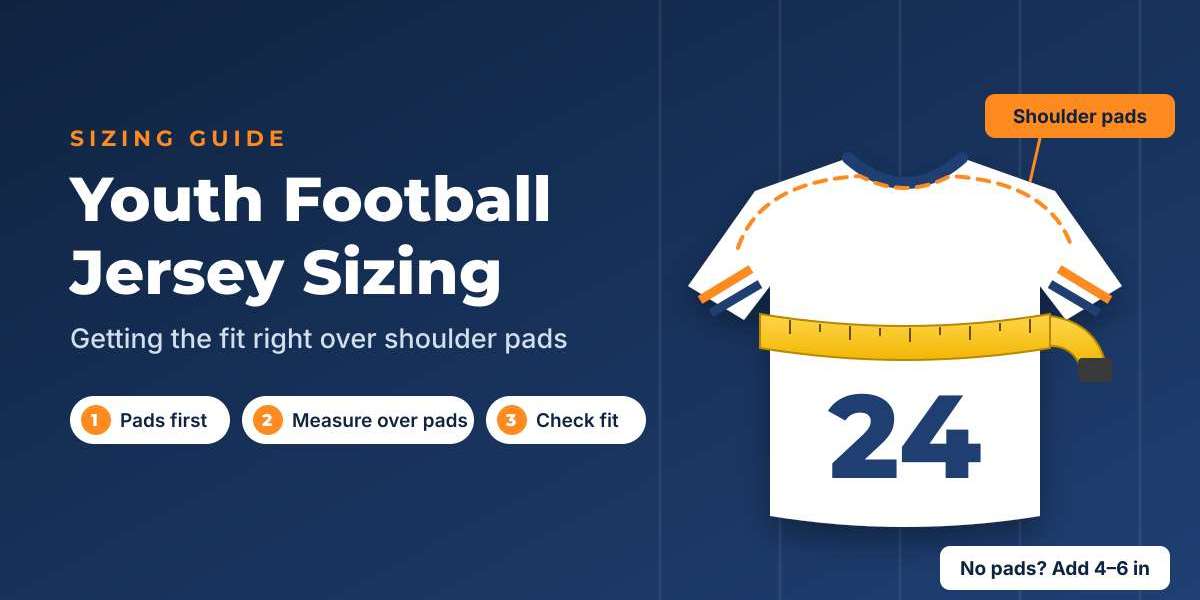
Size the shoulder pads before you size the jersey. The pads determine how much room the jersey needs, so ordering jerseys first is like buying a coat before you know what sweater goes under it.
Youth shoulder pads are usually sized by a mix of weight, chest size and shoulder width. Once the pads fit properly and cover the shoulder joint, you're ready to measure for the jersey.
Step 2: Measure Over the Pads
The most accurate way to size a youth football jersey is to measure with the shoulder pads on.
- Put the pads on and fasten them exactly as they'll be worn on game day.
- Measure the chest by wrapping a soft tape measure around the widest part of the pads, under the arms.
- Note the player's height and weight, since many size charts use these too.
- Compare the measurements with the supplier's size chart for that specific jersey.
No pads yet? A common rule of thumb is to add about 4 to 6 inches to the player's bare chest measurement. It's not as accurate as measuring over pads, but it's far better than guessing.
Step 3: Choose the Right Cut
The cut you choose affects which size you order.
Fitted Jerseys
Fitted jerseys sit close to the pads. They look sharp and give opponents less fabric to grab, but they leave less room for error. Measure carefully and size up if the player is between sizes.
Loose or Flex Jerseys
Loose and flex cuts offer more room and are easier to size for younger players, flag football and rosters with a wide mix of body types. Players can usually wear their measured size.
Linemen Jerseys
Linemen often wear larger pads. If your supplier offers a linemen cut, use it for those players rather than simply ordering a bigger standard size, which can leave the jersey too long.
Step 4: Check the Fit
When the jerseys arrive, have each player try one on over full pads and run through this checklist.
Fit point | What a good fit looks like |
|---|---|
Shoulders | The jersey stretches over the pads without bunching or pulling. |
Sleeves | Sleeves cover the shoulder pad caps and stay in place when arms are raised. |
Chest | There's no tight pulling across the chest, and the numbers lie flat. |
Length | The jersey is long enough to tuck into the pants and stay tucked. |
Movement | The player can raise both arms, crouch and twist without the jersey riding up. |
Ask players to do a few quick movements: a three-point stance, arms overhead and a short sprint. If the jersey rides up or restricts movement, go up a size.
Common Youth Football Jersey Sizing Mistakes
- Measuring without pads. This is the number one cause of jerseys that are too tight.
- Using a size from another brand. Always use the size chart for the exact jersey you're ordering.
- Ordering "room to grow" that's too big. A jersey that's far too large flaps around, catches on equipment and gives opponents something to grab. One size up is plenty.
- Forgetting about growth spurts. If the season is long, ordering at the top of a size range can help.
- Collecting sizes too late. Late sizes delay the whole team order.
Tips for Coaches Collecting Sizes
Collecting sizes for an entire roster is easier with a little structure:
- Hold a sizing night at the first equipment handout, when players have their pads on.
- Use one shared spreadsheet with columns for name, number, jersey size and pants size.
- Ask the supplier if they have sample jerseys you can try on before ordering.
- Order a few extras in the most common sizes for late sign-ups.
When you're ready to order, choose a supplier that lets you enter player-specific sizes on the roster and has no order minimum, so you can add a late player without a penalty. Gear Team Apparel, for example, lets coaches add each player's name, number and size to one team order, and its custom jerseys football range includes fitted, loose-fit and premium cuts.
Frequently Asked Questions
Should youth football jerseys be bought a size up?
Only if the player is between sizes or measured without pads. Measuring over pads usually gives you the right size without guessing.
How should a football jersey fit over shoulder pads?
It should stretch over the pads without bunching, cover the shoulder caps, lie flat across the chest and stay tucked into the pants during play.
Do youth and adult football jerseys use the same size chart?
No. Youth and adult jerseys usually have separate size charts, so check that you're using the correct one.
What if a player is growing quickly?
Choose the top of their size range rather than jumping two sizes. A jersey that's too big can be a safety and performance problem.
Final Thoughts
Great youth football jersey sizing comes down to three habits: get the pads first, measure over the pads and check the fit with real movement. Do that, and your players will take the field comfortable, protected and looking like a team, without a stack of returns before kickoff.