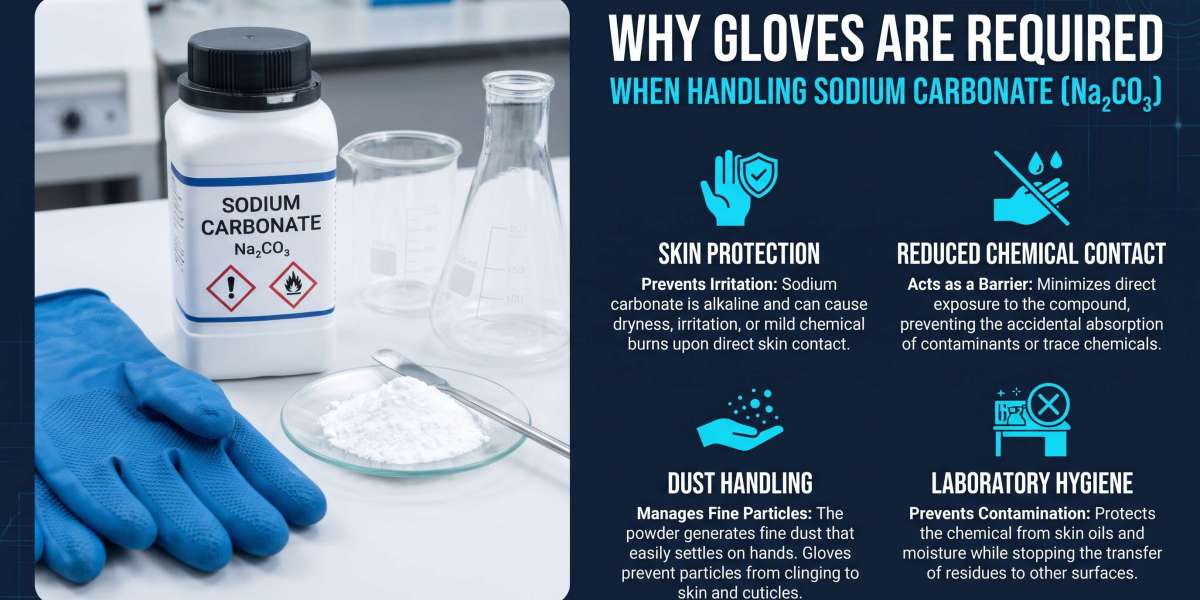

Why do we need gloves for sodium carbonate? Gloves are important when handling sodium carbonate because they help protect the skin from irritation, dryness, and discomfort caused by contact with the chemical. Sodium carbonate, also known as soda ash or washing soda, is commonly used in laboratories, cleaning products, manufacturing, and water treatment. Although it has many useful applications, it is an alkaline substance that can irritate the skin, especially during prolonged contact or when it becomes wet. Wearing suitable chemical-resistant gloves helps reduce direct exposure and supports safer handling practices. Understanding the risks, choosing appropriate gloves, and following proper safety procedures can help prevent unnecessary skin irritation.
What Is Sodium Carbonate?
Sodium carbonate is an inorganic chemical compound commonly known as soda ash or washing soda. It usually appears as a white powder or granular substance and dissolves in water to form an alkaline solution. It is used in glass production, detergents, cleaning products, textile processing, water treatment, and various industrial processes. Sodium carbonate is also used in laboratories for chemical preparation and other controlled procedures. Although it is useful in many applications, its alkaline nature means that direct contact can irritate the skin and eyes. The level of risk depends on the concentration, amount of exposure, duration of contact, and conditions in which the chemical is handled.
Why Do We Need Gloves for Sodium Carbonate?
Gloves are needed when handling sodium carbonate because they create a protective barrier between the chemical and the skin. Sodium carbonate is alkaline and may cause redness, dryness, and irritation after contact, particularly when exposure is prolonged or repeated. Gloves are especially important when measuring the powder, preparing solutions, cleaning spills, or working with the chemical in a laboratory or industrial environment. They also help prevent contamination when transferring chemicals between containers. The type of gloves should be selected according to the product's safety data sheet and the conditions of use. Suitable gloves, combined with careful handling, reduce the risk of accidental exposure.
How Sodium Carbonate Affects the Skin
Sodium carbonate can affect the skin because it forms an alkaline solution when mixed with water. Contact with the dry powder may cause irritation, while a solution can remain on the skin and continue causing discomfort if it is not washed away. Symptoms may include redness, dryness, itching, and irritation, especially in people with sensitive skin. Repeated or prolonged contact can increase the risk of skin problems. Wearing suitable gloves helps minimize direct exposure, but gloves should not replace good hygiene practices. If sodium carbonate gets onto the skin, remove contaminated clothing where necessary and rinse the affected area thoroughly with plenty of water. Seek medical advice if irritation continues or becomes severe.
Which Gloves Are Best for Sodium Carbonate?
Chemical-resistant gloves are generally recommended when handling sodium carbonate. Nitrile, natural rubber, neoprene, and polyvinyl chloride gloves may be suitable, depending on the task and the manufacturer's chemical compatibility information. Nitrile gloves are a common choice for laboratory work because they offer useful chemical resistance and flexibility. However, no glove material should be assumed suitable for every concentration, exposure duration, or working condition. Check the product safety data sheet and the glove manufacturer's recommendations before choosing protective equipment. Gloves should fit properly, remain intact during use, and provide enough dexterity to handle containers safely. Replace damaged or contaminated gloves promptly to maintain effective protection.
Why Are Gloves Important in Laboratories?
Gloves are important in laboratories because sodium carbonate is often measured, transferred, dissolved, or mixed with other substances. These activities can increase the chance of accidental contact with the powder or its solution. Wearing suitable gloves helps protect laboratory workers and students while supporting good chemical hygiene. Gloves also reduce the possibility of transferring chemical residues onto equipment, work surfaces, or other materials. However, laboratory users should never rely on gloves alone. Safety goggles, appropriate clothing, clean work surfaces, and proper handling procedures are also important. Following laboratory instructions and the relevant safety data sheet helps ensure that sodium carbonate is handled responsibly.
Why Should You Wear Gloves When Mixing Sodium Carbonate With Water?
Gloves are useful when mixing sodium carbonate with water because the resulting solution is alkaline and can irritate the skin. During preparation, splashes may occur while adding the powder, stirring the mixture, or transferring the solution into another container. Suitable gloves reduce the chance of direct skin contact and help make these tasks safer. It is also important to add and mix the material carefully to minimize splashing and dust formation. Use appropriate containers and follow the recommended preparation procedure for the specific application. If the solution spills onto your gloves, follow the workplace procedure for removing or cleaning them safely, and avoid touching your face or other surfaces with contaminated gloves.
How to Handle Sodium Carbonate Safely
Safe handling begins with reading the product label and safety data sheet before using sodium carbonate. Wear suitable chemical-resistant gloves, protective clothing, and safety goggles when required by the task. Handle the powder carefully to avoid creating airborne dust, and work in an appropriately ventilated area. Keep containers closed when the material is not being used, and avoid eating, drinking, or touching your face during chemical handling. Use clean, suitable equipment for measuring and transferring the material. After completing the task, remove gloves carefully to avoid transferring residue to your hands, wash your hands thoroughly, and clean the work area according to established safety procedures.
What Happens If You Touch Sodium Carbonate Without Gloves?
Touching sodium carbonate without gloves does not automatically mean serious injury will occur, but it increases the possibility of skin irritation. The effects depend on the amount of chemical, the duration of contact, whether the skin is wet or dry, and the sensitivity of the person exposed. Brief contact may cause little noticeable discomfort, while repeated contact can lead to dryness or irritation. If you accidentally touch the powder or solution, rinse the affected skin thoroughly with plenty of water and remove contaminated clothing if necessary. Do not ignore persistent redness, pain, or other symptoms. Seek medical advice when irritation continues or when a significant exposure has occurred.
Why Is Eye Protection Also Necessary?
Eye protection is important because sodium carbonate can cause significant eye irritation if dust or splashes enter the eyes. Gloves protect the hands but do not prevent particles from reaching the face. Safety goggles that provide appropriate protection should be worn when handling powders, preparing solutions, or performing tasks where splashing is possible. Avoid rubbing your eyes while working with chemicals, even if you are wearing gloves, because contaminated gloves can transfer residue. If sodium carbonate enters the eyes, rinse cautiously with plenty of clean water for several minutes and seek medical advice, particularly if pain or irritation persists. Suitable eye protection should always be selected according to the task and the product's safety guidance.
How to Choose the Right Chemical-Resistant Gloves
Choosing the right gloves requires more than selecting a material by name. Consider the chemical formulation, its concentration, the expected duration of contact, the possibility of splashes, and whether the work involves abrasion or other physical hazards. Check the glove manufacturer's compatibility information and any recommendations in the sodium carbonate safety data sheet. Make sure the gloves fit comfortably and do not restrict the movements needed to perform the task safely. Inspect them before use for holes, tears, or other damage. Disposable gloves should be replaced according to the applicable instructions, while reusable gloves should be cleaned, stored, and maintained as recommended by their manufacturer.
Common Mistakes to Avoid When Wearing Gloves
One common mistake is assuming that any glove provides adequate chemical protection. Household gloves or thin disposable gloves may not be suitable for every task, so compatibility should always be checked. Another mistake is continuing to wear gloves after they become torn, damaged, or contaminated on the inside. Touching door handles, phones, personal items, or the face with contaminated gloves can also spread chemical residue. Users should avoid removing gloves carelessly because this may transfer the substance to the skin. After use, follow the appropriate disposal or cleaning procedure and wash your hands. Good glove practices are an essential part of chemical safety rather than a replacement for it.
What Other Safety Equipment Is Needed?
In addition to gloves, sodium carbonate handling may require safety goggles, protective clothing, and suitable ventilation. The equipment needed depends on the quantity being handled, the amount of dust produced, and the working environment. When handling large amounts of powder or carrying out tasks that create airborne dust, additional dust-control measures and suitable respiratory protection may be necessary. Respiratory equipment should be selected according to the relevant risk assessment and safety instructions. Keep the work area organized, use appropriate containers, and make sure the necessary washing facilities are accessible. Following the product's safety data sheet helps workers select the correct protective equipment for the specific task.
How to Store and Dispose of Sodium Carbonate Safely
Sodium carbonate should be stored in a suitable, clearly labeled container in a dry and well-ventilated area. Keep the container securely closed when not in use and protect the material from contamination or accidental spills. Store it according to the product's safety instructions and keep it away from incompatible substances. If a spill occurs, prevent unnecessary dust formation and follow the established cleanup procedure while wearing suitable protective equipment. Do not sweep up the material in a way that spreads dust into the air. Dispose of unwanted material and contaminated packaging according to local requirements and workplace procedures. Proper storage and disposal help protect workers and maintain a clean working environment.
Frequently Asked Questions
Why Do We Need Gloves for Sodium Carbonate?
Gloves help protect the skin from direct contact with sodium carbonate, which can cause irritation, redness, and dryness. They are particularly important during repeated handling, powder transfer, solution preparation, and industrial or laboratory work. Select gloves that are suitable for the chemical and the working conditions.
Can Sodium Carbonate Burn the Skin?
Sodium carbonate is generally considered a skin irritant rather than a substance that routinely causes severe chemical burns. However, prolonged or repeated exposure may cause skin irritation and dermatitis. The actual risk depends on the formulation and exposure conditions, so appropriate gloves and careful handling are recommended.
Are Nitrile Gloves Suitable for Sodium Carbonate?
Nitrile gloves are commonly recommended for handling sodium carbonate, but suitability depends on the specific glove product, concentration, and duration of exposure. Always check the glove manufacturer's chemical compatibility information and the safety data sheet before use.
What Should You Do If Sodium Carbonate Touches Your Skin?
Rinse the affected skin thoroughly with plenty of water and remove contaminated clothing if necessary. Avoid rubbing the area, and seek medical advice if irritation persists or becomes severe. Follow the emergency instructions provided in the product's safety data sheet.
Do You Need Gloves When Using Washing Soda at Home?
Gloves can be helpful when using washing soda for cleaning, especially during prolonged contact or when handling concentrated solutions. Follow the product label, avoid direct contact with the eyes and skin, and wash your hands after use. Household products should always be used according to their instructions.
Are Gloves Enough to Protect You From Sodium Carbonate?
Gloves protect the hands but do not protect the eyes or respiratory system. Depending on the task, safety goggles, protective clothing, adequate ventilation, and dust-control measures may also be necessary. Choose protective equipment based on the product's safety information and the conditions of use.
Can You Reuse Gloves After Handling Sodium Carbonate?
Reusable gloves may be used again only if they are designed for reuse and can be cleaned and maintained according to the manufacturer's instructions. Disposable gloves should be replaced as directed. Never reuse damaged gloves or gloves contaminated on the inside.
Why Is Sodium Carbonate Used in Laboratories?
Sodium carbonate is used in laboratories for preparing solutions, adjusting alkalinity, and carrying out various chemical procedures. It is also used in manufacturing, cleaning, and water treatment. Appropriate protective equipment helps reduce exposure during these activities.
Conclusion
Gloves are important when handling sodium carbonate because they help protect the skin from irritation, dryness, and other effects associated with direct chemical contact. Although sodium carbonate has many useful applications in laboratories, cleaning, manufacturing, and water treatment, its alkaline nature makes careful handling necessary. Suitable chemical-resistant gloves, including compatible nitrile or other recommended materials, can reduce exposure when selected and used correctly. Safety goggles, appropriate clothing, good ventilation, and proper hygiene provide additional protection. Always check the product's safety data sheet, inspect gloves before use, and wash exposed skin promptly. Following these precautions helps make sodium carbonate handling safer and more responsible.