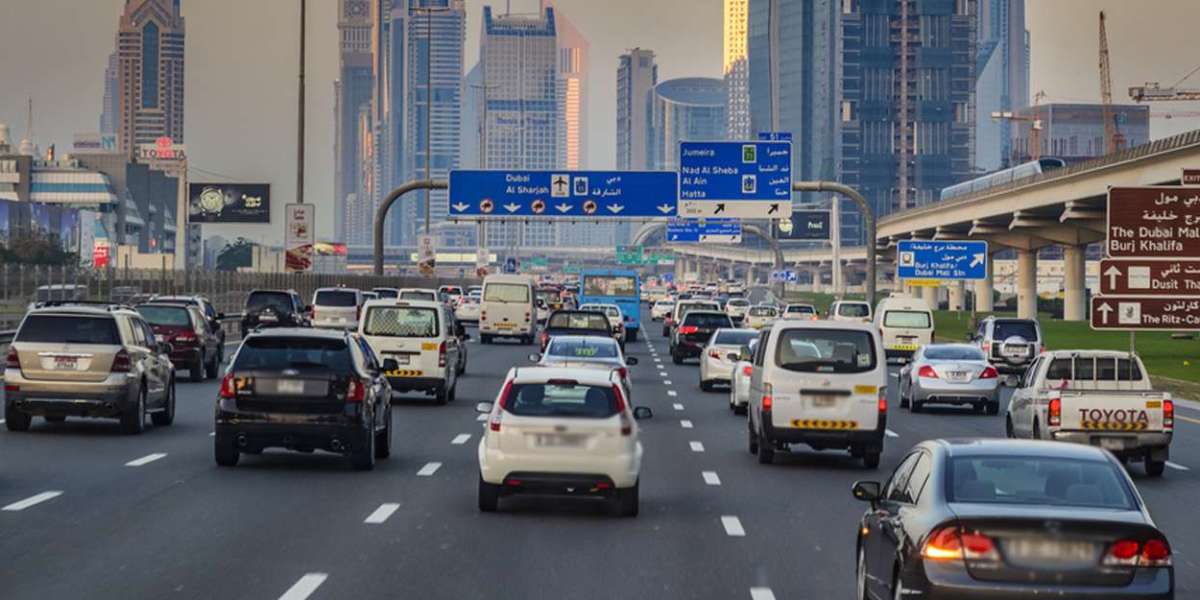

Driving in Abu Dhabi is straightforward when you understand the UAE's traffic laws, follow posted speed limits and prepare for local road conditions. Visitors should know which driving licences they can use, how roundabouts and traffic signals work, where to park and how to avoid common violations. This guide explains the essential rules for driving in Abu Dhabi, whether you plan to explore the city, visit Yas Island, travel to Saadiyat Island or take a longer road trip across the UAE.
1. Which Driving Licence Do Visitors Need in Abu Dhabi?
Tourists need a valid driving licence recognised in the UAE. Depending on their nationality and licence, some visitors may also need an International Driving Permit (IDP).
Before driving, confirm that your licence is accepted by the UAE authorities and your car rental provider. Licence requirements differ according to the country that issued the licence and the driver's residency status. UAE residents generally need a UAE driving licence rather than relying on a foreign tourist licence.
If you plan to hire a vehicle, prepare the following documents as applicable:
A valid driving licence accepted in the UAE.
An International Driving Permit, if required.
A passport and valid UAE entry documentation.
A payment card and any additional documents required by the rental company.
Check the latest requirements on the official UAE Government road safety and traffic information before travelling. Confirm the rental company's minimum-age rules, insurance conditions and licence requirements before collecting your vehicle.
2. Speed Limits in Abu Dhabi
Follow the speed limit displayed on road signs. Abu Dhabi enforces posted speed limits, and drivers should not assume that a traditional speed-camera tolerance applies.
Speed limits vary according to road design, traffic conditions and location. Roads around residential areas, school zones and busy urban districts may have lower limits than major highways.
The following table provides general examples of limits you may encounter, not a definitive list of current limits for every road.
Road type | Illustrative speed limit | What drivers should do |
Residential and local streets | 25–40 km/h | Watch for pedestrians and parked vehicles. |
Urban roads | 40–80 km/h | Follow the posted limit and lane markings. |
Major roads and expressways | 80–100 km/h | Maintain a safe following distance. |
Highways | 100–140 km/h, depending on the road | Check signs regularly and adjust your speed. |
These ranges are for orientation only. The actual posted limit always takes precedence, and some roads have different limits in different sections.
Abu Dhabi removed the general speed-buffer assumption that drivers historically associated with some UAE roads. Do not treat a speed limit of 100 km/h as permission to drive at 120 km/h. Speed cameras and traffic enforcement help monitor compliance.
Practical tip: Use navigation apps to anticipate turns and junctions, but rely on official road signs for speed limits. Reduce your speed when visibility deteriorates, traffic becomes congested or road conditions change.
3. Essential Road Rules Every Visitor Should Know
Short answer: Drive on the right-hand side, wear seat belts, obey traffic signals and never use a handheld phone while driving.
Abu Dhabi has modern roads, multi-lane junctions and clearly marked exits. However, visitors should learn the local driving conventions before entering busy traffic.
Keep right and overtake safely
Vehicles travel on the right-hand side of the road. On multi-lane roads, keep to an appropriate lane and use the left lane for overtaking when safe and permitted. Avoid weaving between vehicles or making sudden lane changes.
Check mirrors and blind spots before moving across lanes. Use indicators early enough to communicate your intentions to other drivers.
Wear seat belts
Drivers and passengers must wear seat belts. Ensure children use suitable child restraints in accordance with UAE requirements. Never allow children to travel unsecured.
Follow traffic signals
Stop at red lights and proceed only when the signal permits. Do not assume that you can turn right at a red light; do so only where the road layout and applicable signs or signals explicitly permit it.
Watch for pedestrian crossings and give pedestrians the right of way where required.
Avoid mobile phone distractions
Do not hold or operate your phone while driving. Set your navigation before starting the journey and use a suitable hands-free system when necessary.
Never drink and drive
The UAE applies strict rules against driving under the influence of alcohol or drugs. The safest approach is not to consume alcohol at all before driving.
For further details, review the UAE Government's official traffic and road safety guidance.
4. Understanding Traffic Fines in Abu Dhabi
Short answer: Speeding, mobile phone use, seat-belt violations and dangerous driving can result in fines and additional penalties.
Abu Dhabi uses traffic cameras and police enforcement to identify violations. The consequences depend on the offence, its severity and the applicable regulations.
The following examples are based on published UAE traffic penalty information. Check the current rules before travelling because regulations and enforcement procedures can change.
Traffic violation | Published fine or consequence |
Exceeding the speed limit by up to 20 km/h | AED 300 |
Exceeding the speed limit by up to 30 km/h | AED 600 |
Exceeding the speed limit by up to 40 km/h | AED 700 |
Exceeding the speed limit by up to 50 km/h | AED 1,000 |
Using a mobile phone while driving | AED 800 and 4 black points |
Failing to wear a seat belt | AED 400 and 4 black points |
Jumping a red traffic signal | Serious penalties, including a fine, black points and possible vehicle impoundment |
Speeding penalties increase with the amount by which a driver exceeds the permitted limit. Additional penalties may apply to serious offences, including dangerous driving and excessive speeding.
You can check and pay eligible traffic fines through the Abu Dhabi Police official website. If you use a rental car, ask the provider how it handles traffic fines, administrative charges and notifications received during your rental period.
5. Parking Rules and Toll Gates
Short answer: Use designated parking spaces, pay applicable parking charges and check toll arrangements before driving through toll gates.
Abu Dhabi has paid parking areas, residential parking restrictions and designated spaces near shopping centres, attractions and business districts. Parking rules can differ by location and time.
Parking in the city
When parking, check the signs for payment methods, operating hours, maximum stay and permit requirements. Avoid blocking entrances, pedestrian crossings, emergency access points or spaces reserved for authorised users.
Popular destinations such as Abu Dhabi Corniche, Yas Mall and areas around Al Maryah Island can become busy during weekends and events. Allow extra time to find a legal parking space.
Understanding Darb tolls
Abu Dhabi's Darb toll system applies to designated toll gates under the relevant operating rules. Charges and exemptions depend on the current policy, vehicle category and applicable conditions.
Before travelling, check the official Darb toll system for registration, fees and current operating arrangements. If you hire a car, ask whether toll charges are billed directly to you or processed by the rental company.
6. Driving in Abu Dhabi's Roundabouts and Busy Junctions
Approach junctions carefully, follow lane markings and give way according to traffic signs and applicable road rules.
Roundabouts and multi-lane junctions can confuse visitors who are unfamiliar with local road layouts. Choose your intended exit early and position your vehicle in the appropriate lane.
Use these practical steps:
Reduce speed as you approach a roundabout.
Follow the signs and give-way markings.
Check mirrors and blind spots before changing lanes.
Signal clearly when exiting where appropriate.
Avoid stopping suddenly unless traffic or an emergency requires it.
At large junctions, navigation instructions may arrive close to the exit. Review the route before moving off and avoid abrupt manoeuvres if you miss a turn. Continue safely and let your navigation system calculate another route.
7. What Should Visitors Know About Driving a Rental Car?
Short answer: Choose a vehicle that suits your itinerary, check the rental agreement and understand the insurance, mileage and toll conditions before departure.
A rental car can help visitors travel between Abu Dhabi's attractions without depending entirely on taxis or fixed transport schedules. However, the right vehicle depends on your route, passenger numbers, luggage and budget.
For example, an economy car may suit city sightseeing, while an SUV can provide additional passenger and luggage space for family travel. A luxury vehicle may appeal to visitors who prioritise premium comfort.
Visitors comparing options can explore economy car rental in Abu Dhabi for everyday journeys or consider an SUV for trips involving more passengers and luggage. Great Dubai is one provider to compare when checking vehicle availability, rental periods and booking conditions.
Before collecting your car, inspect the vehicle for existing damage and photograph its condition. Confirm that the registration and insurance documents are valid, check the fuel policy and ask what to do after an accident or breakdown.
If your visit lasts several days, compare weekly car rental in Abu Dhabi with daily rates. For a longer stay, compare the total cost of a monthly rental, including mileage limits, insurance terms and any additional fees.
8. Essential Tips for Long Drives and Changing Weather
Plan your route, check the vehicle and allow extra time for traffic, heat, fog or unexpected delays.
Abu Dhabi's road network connects the city with destinations such as Al Ain, Dubai and the western region. Longer journeys require more preparation than short trips between hotels, shopping centres and attractions.
Follow these precautions:
Check tyre condition, fuel level, lights and air conditioning before departure.
Carry drinking water and keep your phone charged.
Maintain a safe following distance, especially at highway speeds.
Reduce speed in fog, heavy rain or poor visibility.
Avoid sudden braking and lane changes.
Never stop in a live traffic lane to take photographs or check directions.
Extreme heat can place additional demands on a vehicle, so pay attention to warning lights and signs of overheating. If your vehicle develops a serious fault, move to a safe location when possible and contact roadside assistance.
During fog, use the appropriate vehicle lights and avoid high beams that can worsen visibility. If conditions become unsafe, find a suitable safe place to stop rather than continuing at an inappropriate speed.
9. What to Do After a Road Accident
Protect yourself and other road users, contact emergency services when necessary and follow the official accident-reporting procedure.
Even careful drivers can encounter an accident or vehicle breakdown. Knowing what to do can reduce confusion and help you meet your legal and insurance obligations.
Stop safely and assess whether anyone needs urgent medical assistance.
Call 999 for police when required, or 998 for an ambulance in a medical emergency.
Follow police instructions and the applicable accident-reporting procedure.
Document relevant vehicle damage and exchange the required information when safe and appropriate.
Notify your rental company and insurer promptly.
Do not admit liability or arrange repairs without following the required reporting and insurance process.
For a minor collision, use the applicable official reporting channel and follow its instructions. Do not leave an accident scene without complying with the relevant legal requirements.
10. Frequently Asked Questions About Driving in Abu Dhabi
Is driving in Abu Dhabi difficult for tourists?
Driving is manageable for many visitors who are comfortable with multi-lane roads, roundabouts and highway driving. Learning the road signs and planning routes in advance can make journeys easier.
Can tourists drive from Abu Dhabi to Dubai?
Yes, visitors can generally drive between the two emirates if they have the required licence and a vehicle they are authorised to use. Check your rental agreement for mileage restrictions, insurance coverage and any cross-emirate conditions.
Are speed cameras common in Abu Dhabi?
Speed cameras and other traffic enforcement systems operate across the road network. Follow posted speed limits rather than relying on assumptions about camera locations or speed buffers.
Can visitors use a foreign driving licence?
Some foreign licences are accepted for visitors, while other drivers need an International Driving Permit. Requirements depend on the licence-issuing country and the driver's status in the UAE.
What is the safest way to avoid traffic fines?
Obey posted speed limits, use seat belts, avoid phone distractions, stop at red lights and park only where permitted. Check official traffic guidance if you are unsure about a rule.
Final Thoughts
Driving in Abu Dhabi gives visitors flexibility to explore the capital, from the Corniche and Sheikh Zayed Grand Mosque to Yas Island and Saadiyat Island. The key is to understand the local rules before setting off, pay attention to road signs and allow enough time for each journey.
Keep your documents valid, avoid distractions and never assume that a rule from another country applies in the UAE. With sensible preparation and responsible driving, you can travel around Abu Dhabi with greater confidence and reduce the risk of avoidable fines or delays.