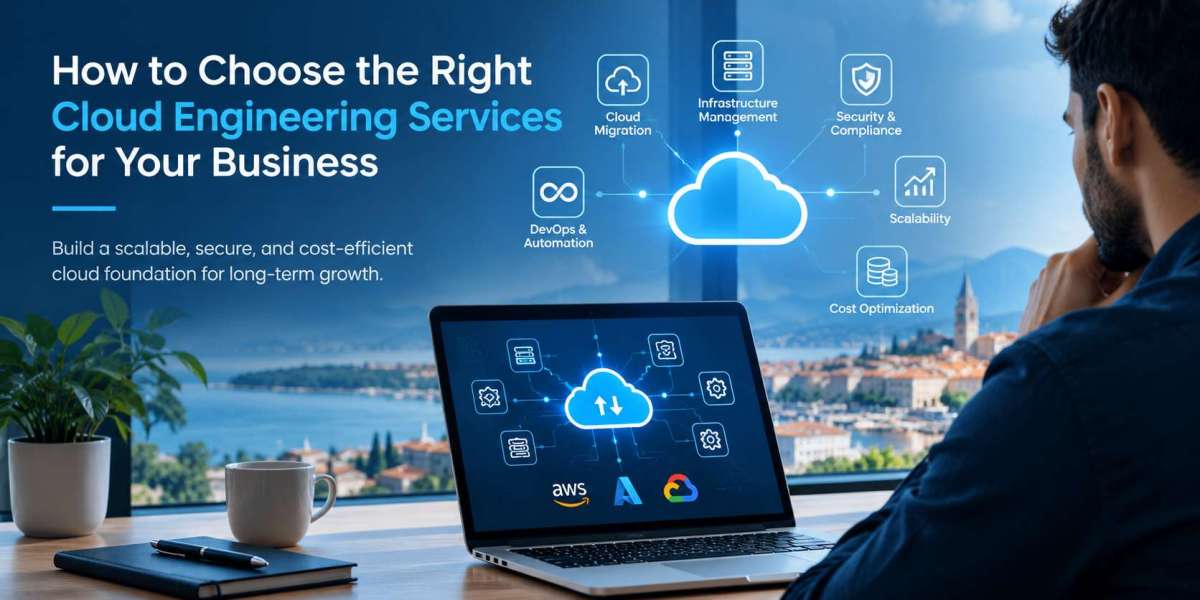

Cloud technology has become an important part of how modern businesses operate, innovate, and compete. From managing customer information to running complex applications, cloud infrastructure provides organizations with the flexibility and computing resources needed to support changing business demands. However, moving workloads to the cloud does not automatically guarantee better performance, security, or cost efficiency.
Businesses need the right engineering expertise to design, implement, and maintain cloud environments that support their long-term objectives. Choosing the right cloud engineering services is therefore an important decision for startups, growing companies, and established enterprises.
With numerous providers offering cloud migration, infrastructure management, DevOps, and platform engineering, understanding what to look for can help businesses make more informed decisions.
1. Understand Your Business Requirements Before Choosing a Provider
The first step in selecting cloud engineering services is identifying what your organization actually needs. Every business has different technical requirements, operational challenges, and growth objectives.
For example, a startup launching its first digital product may need scalable cloud infrastructure with minimal initial investment. An established organization, on the other hand, may need to modernize legacy applications, improve infrastructure security, or migrate existing workloads without disrupting daily operations.
Before contacting potential providers, consider the following questions:
Does your business need a complete cloud migration or infrastructure modernization?
Are your existing applications experiencing performance or scalability issues?
Do you need better infrastructure security and compliance controls?
Is your current cloud environment becoming difficult to manage?
Are infrastructure expenses increasing without clear visibility?
Having clear answers will help you identify the services that matter most and avoid investing in unnecessary solutions.
2. Evaluate the Provider's Cloud Platform Expertise
Different cloud platforms offer different capabilities, pricing structures, and technical advantages. A suitable engineering partner should understand the major cloud ecosystems and help businesses select an environment based on their actual requirements.
The three widely used cloud platforms include:
Amazon Web Services (AWS)
AWS provides a broad range of infrastructure, storage, networking, database, and application services. It is commonly used by organizations that require flexible infrastructure and extensive cloud capabilities.
Microsoft Azure
Azure offers cloud infrastructure and services that integrate with Microsoft's enterprise ecosystem. It can be a suitable option for businesses already using Microsoft technologies and enterprise applications.
Google Cloud Platform (GCP)
Google Cloud provides infrastructure, data analytics, artificial intelligence, and machine learning capabilities. It is particularly relevant for organizations working with data-intensive applications and modern digital platforms.
Rather than choosing a provider simply because it specializes in one platform, look for engineering expertise that matches your existing technology stack and future business requirements.
3. Look Beyond Basic Cloud Migration
Cloud migration is often one of the first steps in a company's cloud journey, but it should not be the entire strategy.
Simply transferring applications and databases to cloud infrastructure does not necessarily improve their architecture or performance. In some cases, migrating outdated systems without modernization can introduce additional complexity and operational costs.
A capable engineering partner should provide services beyond migration, including:
Cloud architecture design and assessment.
Application modernization and workload optimization.
Infrastructure provisioning and automation.
Containerization and orchestration.
Cloud security implementation.
Performance monitoring and reliability engineering.
Businesses should also understand the difference between rehosting, replatforming, and refactoring.
Rehosting moves applications with minimal modifications, while replatforming introduces selected improvements to the existing environment. Refactoring involves more substantial architectural changes to take advantage of cloud-native capabilities.
The right approach depends on application complexity, business priorities, available resources, and migration risks.
4. Prioritize Security and Compliance
Security should be a fundamental part of every cloud engineering strategy. As organizations move sensitive information and business-critical applications to cloud environments, they must ensure that appropriate security controls are implemented.
When evaluating a cloud engineering provider, examine its approach to:
Identity and Access Management
Access permissions should be assigned according to individual responsibilities. Role-based access controls and least-privilege policies help reduce unnecessary exposure.
Data Encryption
Sensitive information should be protected through encryption during transmission and storage. Proper key management is equally important.
Network Security
Cloud networks should be designed with appropriate segmentation, firewall policies, private connections, and restricted access to critical resources.
Monitoring and Auditing
Continuous monitoring, security logs, and audit trails help organizations identify suspicious activities and investigate potential incidents.
Businesses operating in regulated industries should also consider applicable compliance requirements before selecting a provider.
A strong cloud engineering partner should integrate security into architecture and deployment processes rather than treating it as an additional task after implementation.
5. Assess DevOps and Automation Capabilities
Cloud infrastructure requires consistent deployment, configuration, monitoring, and maintenance. Managing these processes manually can slow down development and increase the possibility of human error.
This is where DevOps practices become important.
A provider with strong DevOps capabilities can help businesses automate infrastructure provisioning, application deployment, testing, and operational workflows.
Some important capabilities to evaluate include:
Continuous integration and continuous deployment (CI/CD).
Infrastructure as Code (IaC).
Automated testing and deployment.
Configuration management.
Container orchestration.
Monitoring and incident response.
Automation also makes it easier to maintain consistency across development, testing, and production environments.
For businesses looking to improve software delivery alongside their cloud infrastructure, exploring specialized DevOps and release automation solutions can provide a clearer understanding of how automated delivery processes support reliable releases.
6. Consider Scalability and Long-Term Performance
A cloud environment should support current workloads while providing enough flexibility to accommodate future growth.
As businesses expand, application traffic, database activity, storage requirements, and computing demands can increase significantly. Infrastructure that works well for a small operation may become inefficient when the organization begins serving more customers.
A cloud engineering partner should understand how to design infrastructure that can adapt to changing workloads.
Important considerations include:
Auto-scaling capabilities.
Load balancing and traffic distribution.
Database performance optimization.
High availability and disaster recovery.
Infrastructure redundancy.
Application performance monitoring.
Scalability is not simply about adding more computing resources. It also involves designing systems that use resources efficiently and maintain consistent performance during periods of increased demand.
7. Understand Cloud Cost Management
Cloud services operate through different pricing models, and infrastructure expenses can increase when resources are not properly monitored.
Unused computing instances, oversized databases, unnecessary storage, and inefficient workloads can contribute to higher operational costs.
Businesses should look for engineering providers that understand cloud cost optimization, commonly known as FinOps.
A practical cost management strategy may include:
Reviewing current infrastructure expenses.
Identifying unused or underutilized resources.
Matching computing capacity to actual workloads.
Implementing budgets and spending alerts.
Monitoring resource consumption regularly.
Evaluating pricing commitments where appropriate.
The objective should not be to minimize spending at any cost. Instead, organizations should focus on achieving the right balance between infrastructure performance, reliability, security, and operational expenses.
8. Evaluate Communication, Support, and Service Flexibility
Technical expertise is important, but successful cloud engineering projects also depend on effective communication and ongoing collaboration.
Before selecting a provider, understand how its team approaches project management, technical documentation, reporting, and post-deployment support.
Consider asking potential providers:
Who will manage the engineering project?
How will technical progress be communicated?
What documentation will be provided?
How will infrastructure issues be handled?
What support options are available after deployment?
Can the engagement scale as business requirements change?
A transparent working relationship helps businesses understand project progress, identify potential risks, and maintain better control over their technology investments.
9. Review Relevant Experience and Technical Capabilities
Past experience can help businesses evaluate whether a provider is capable of handling their specific technical requirements.
However, instead of relying only on general claims or the number of completed projects, examine the provider's actual engineering capabilities.
Look for experience with similar workloads, application architectures, infrastructure environments, and operational challenges.
It is also useful to understand whether the provider can support related technical requirements, such as data engineering, application modernization, and machine learning operations.
For example, organizations building data-intensive applications may need reliable pipelines, governed storage, and production-ready machine learning infrastructure alongside their cloud environment. In such cases, data engineering and MLOps services can complement broader cloud engineering initiatives.
The goal is to find a partner that understands how different technology components work together rather than treating each requirement as an isolated project.
Final Thoughts: Choose a Cloud Engineering Partner That Supports Your Future Growth
Selecting cloud engineering services is not simply a technical purchasing decision. It is a long-term investment in the infrastructure that supports business operations, customer experiences, and digital innovation.
Organizations should prioritize providers that understand their business objectives, offer relevant platform expertise, integrate security into their engineering practices, and provide a clear approach to scalability and cost management.
It is equally important to consider how emerging technologies will influence future infrastructure requirements. As businesses increasingly explore artificial intelligence, automation, and intelligent applications, cloud environments must be capable of supporting these evolving workloads.
For organizations exploring AI-powered capabilities alongside their cloud initiatives, Denebly's AI Agent Development services offer another perspective on building intelligent solutions that can automate workflows and support business operations.
Ultimately, the right technology partner is one that helps your organization build a secure, reliable, and adaptable foundation for sustainable growth.