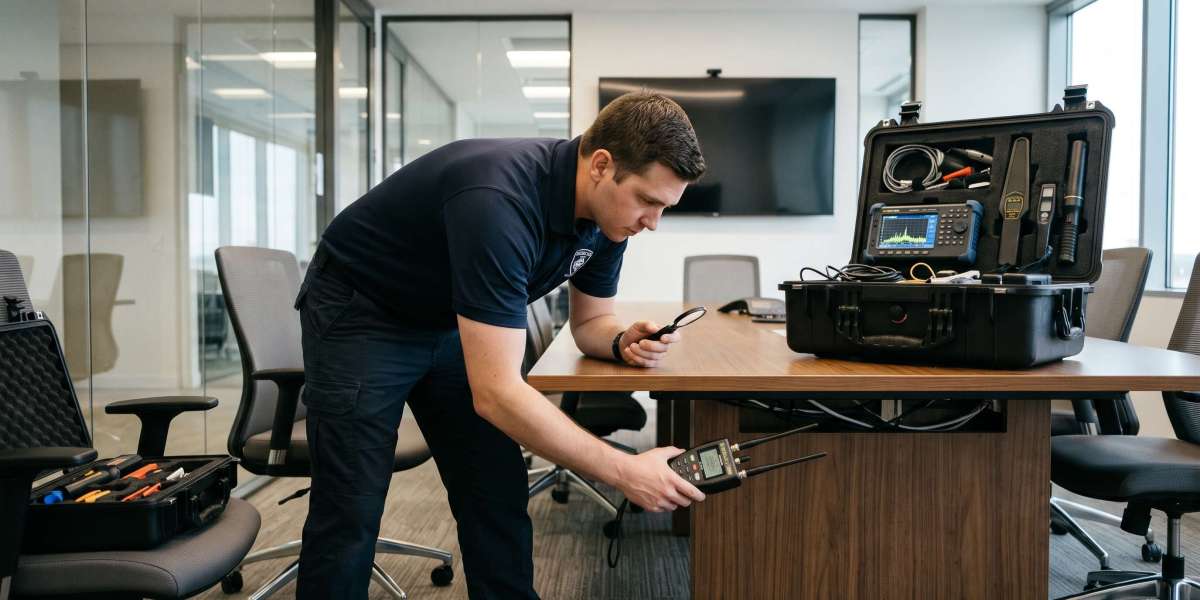

Business conversations often involve sensitive information, including financial records, confidential strategies, employee discussions, client details, and future business plans. Protecting this information is essential for maintaining trust and preventing unauthorized access. However, hidden audio surveillance devices can create privacy risks when confidential conversations are monitored without permission. A professional commercial hidden listening detection service can help businesses identify potential listening devices and address security concerns before sensitive information is compromised.
Modern surveillance technology has made audio monitoring equipment smaller and more difficult to recognize. Some devices can be concealed inside everyday office objects, electrical fittings, communication equipment, and other locations. As a result, a normal visual inspection may not be sufficient to identify suspicious equipment. Businesses that regularly handle confidential information should consider professional Technical Surveillance Countermeasures (TSCM) to assess their premises and reduce the risk of unauthorized monitoring.
Why Business Conversations Need Stronger Privacy Protection
Companies exchange sensitive information throughout the working day. Meetings between executives, financial discussions, legal consultations, and negotiations may contain information that should only be accessible to authorized individuals.
If such conversations are monitored without consent, the consequences can extend beyond a simple privacy concern. Confidential information could potentially be exposed to competitors, unauthorized third parties, or individuals seeking to exploit business operations.
Some common situations where business privacy is particularly important include:
Executive meetings: Strategic decisions, company developments, and future business plans must remain confidential.
Financial discussions: Revenue figures, investment plans, budgets, and financial records require appropriate protection.
Legal consultations: Conversations involving legal matters and sensitive documentation should be protected from unauthorized access.
Human resource meetings: Employee records, recruitment decisions, and internal investigations often involve private information.
Client negotiations: Commercial agreements and pricing strategies can be valuable to competing businesses.
When these discussions take place in potentially compromised environments, the confidentiality of business information may be placed at risk.
How Hidden Listening Devices Can Threaten Commercial Environments
Audio surveillance technology has evolved considerably. Certain listening devices are compact enough to be concealed within ordinary objects, making them difficult to identify through casual observation.
Depending on their design, these devices may record conversations locally, transmit audio remotely, or operate through different communication technologies.
Potential concealment locations may include:
Office furniture and decorative objects.
Electrical outlets and power-related fittings.
Meeting room equipment.
Telephone and communication systems.
Ceiling fixtures and other building components.
Personal or shared office accessories.
It is important to understand that unusual equipment or electronic signals do not automatically indicate surveillance. Legitimate wireless devices, office technology, and neighbouring communication systems can also produce signals during an inspection.
For this reason, professional assessment is important. Suspicious findings should be evaluated using appropriate technical methods rather than assumptions based on appearance alone.
What Is a Commercial Hidden Listening Detection Service?
A commercial hidden listening detection service is a specialist security assessment designed to identify potential unauthorized audio surveillance equipment within business premises.
These assessments are generally associated with Technical Surveillance Countermeasures (TSCM), a professional discipline focused on identifying and evaluating technical surveillance threats.
Unlike a standard security inspection, TSCM assessments involve specialized equipment, technical knowledge, and a systematic examination of the environment.
Depending on the scope of the engagement, an assessment may involve:
1. Physical Inspection of Business Premises
A physical examination is performed to identify unusual objects, unauthorized modifications, unfamiliar equipment, and other potential indicators of surveillance activity.
Particular attention may be given to areas where confidential discussions regularly take place, including:
Boardrooms and executive offices.
Conference and meeting rooms.
Private consultation areas.
Financial departments.
Legal and management offices.
2. Electronic Signal Assessment
Specialized electronic testing equipment may be used to assess the surrounding environment for suspicious radio frequency activity.
The purpose is to identify signals that require further investigation and determine whether they are associated with unauthorized electronic equipment.
However, not every detected signal represents a security threat. Professional interpretation is required to distinguish normal electronic activity from potentially suspicious findings.
3. Examination of Audio-Related Equipment
Existing communication systems, electronic equipment, and other relevant devices may be examined as part of the assessment.
This helps security professionals evaluate whether unfamiliar equipment or unexpected modifications could present a potential surveillance concern.
4. Findings and Security Recommendations
After an assessment, findings should be documented and explained to the client.
Where concerns are identified, recommendations may include additional technical investigation, equipment evaluation, access control improvements, or other appropriate security measures.
Which Businesses Should Consider Professional TSCM Inspections?
Not every organization faces the same level of surveillance risk. However, businesses that regularly exchange valuable or confidential information may benefit from periodic technical security assessments.
A professional commercial hidden listening detection service may be particularly relevant to the following industries:
Corporate Offices
Large organizations frequently discuss internal strategies, financial performance, acquisitions, and future developments. Protecting these discussions can help reduce exposure to unauthorized information gathering.
Financial Institutions
Banks, investment companies, and financial service providers handle sensitive client and commercial information. Confidentiality is an important part of maintaining customer trust and protecting business operations.
Legal Firms
Lawyers regularly discuss private client matters, legal strategies, settlements, and sensitive case information. Confidential meeting environments are therefore particularly important.
Healthcare Organizations
Medical administrators and healthcare management teams may discuss confidential operational, employee, and patient-related information. Appropriate privacy safeguards should be maintained throughout their facilities.
Government Contractors
Organizations working on sensitive government projects may have additional confidentiality and security requirements. Technical security assessments can support broader information protection measures.
Real Estate and Investment Companies
Property acquisitions, negotiations, investment decisions, and financial arrangements can involve commercially valuable information that should not be exposed to unauthorized parties.
Signs That Your Business May Need a Technical Surveillance Assessment
A suspected surveillance concern should never be treated as confirmed evidence without proper investigation. Nevertheless, certain situations may justify requesting a professional security assessment.
Consider arranging an inspection when:
Unfamiliar electronic equipment is discovered in a restricted office area.
Unauthorized individuals have accessed confidential meeting spaces.
Sensitive business information appears to have been disclosed unexpectedly.
Office equipment shows unexplained modifications.
A company is preparing for a confidential acquisition or major negotiation.
Security concerns arise after office relocation, renovation, or contractor access.
Management requires additional assurance regarding the privacy of executive meeting rooms.
These situations do not necessarily indicate that listening devices are present. Instead, they represent circumstances in which a professional technical evaluation may help clarify potential risks.
How Regular TSCM Inspections Support Business Security
Business security should not depend entirely on cameras, alarms, passwords, and physical access restrictions. Although these measures are valuable, they do not address every potential technical surveillance concern.
TSCM assessments can complement existing security arrangements by focusing on threats that may otherwise remain unnoticed.
Some important benefits include:
Protection of Confidential Discussions
Potential surveillance concerns can be investigated before important business meetings take place. This supports a more secure environment for management, employees, and clients.
Reduced Risk of Information Exposure
When unauthorized monitoring equipment is identified and appropriately addressed, opportunities for confidential information to be exposed may be reduced.
Improved Security Awareness
Technical inspections can help management understand weaknesses in existing security arrangements and identify areas that require additional attention.
Greater Confidence During Important Meetings
Executive teams can have greater confidence when appropriate security measures have been implemented and sensitive meeting spaces have been professionally assessed.
Support for Internal Security Policies
TSCM inspections can form part of a broader corporate security strategy alongside access management, employee awareness, physical protection, and information security procedures.
Choosing the Right Commercial Hidden Listening Detection Professionals
Selecting an experienced security provider is an important part of protecting business premises. Not all security inspections offer the same technical capabilities, and a basic visual examination should not be confused with a comprehensive TSCM assessment.
Before choosing a provider, businesses should consider several factors:
Relevant TSCM experience: Ask about previous commercial security assessments and the types of environments covered.
Technical capabilities: Understand what inspection methods and specialized equipment are included.
Clear assessment scope: The provider should explain which rooms, systems, and areas will be examined.
Professional reporting: Findings should be communicated clearly, with appropriate recommendations for addressing identified concerns.
Confidentiality: Sensitive business information and inspection details should be handled responsibly.
Practical recommendations: Security professionals should explain the next steps without making unsupported claims or creating unnecessary alarm.
A reliable provider should also explain the limitations of an inspection. No single assessment can guarantee that every possible surveillance threat has been identified or eliminated.
Build a More Secure Business Environment with Proactive Security Measures
Professional technical inspections are most effective when combined with everyday security practices. Businesses should establish clear procedures for protecting sensitive meeting spaces and controlling access to important areas.
Some practical measures include:
Restrict access to executive offices and confidential meeting rooms.
Maintain records of contractors and external personnel entering sensitive areas.
Review unfamiliar equipment before it is connected to business networks or electrical systems.
Establish clear procedures for reporting suspicious equipment or unauthorized access.
Schedule appropriate technical security assessments based on business risks.
Review office security arrangements following renovations, relocations, or significant operational changes.
Ensure employees understand the importance of protecting confidential discussions.
These measures can help create a stronger security culture and reduce opportunities for unauthorized access to sensitive business environments.
Final Thoughts
Confidential business conversations are an important part of successful commercial operations. From executive decisions and financial planning to legal consultations and client negotiations, sensitive discussions must be protected from unauthorized access. A professional commercial hidden listening detection service can help organizations evaluate potential audio surveillance risks through specialized TSCM inspections and appropriate technical assessments. Rather than waiting for a suspected privacy incident to become a serious business concern, organizations should take a proactive approach to protecting their premises. By combining professional inspections with effective internal security procedures, businesses can strengthen confidentiality, protect valuable information, and maintain greater confidence in their working environments.