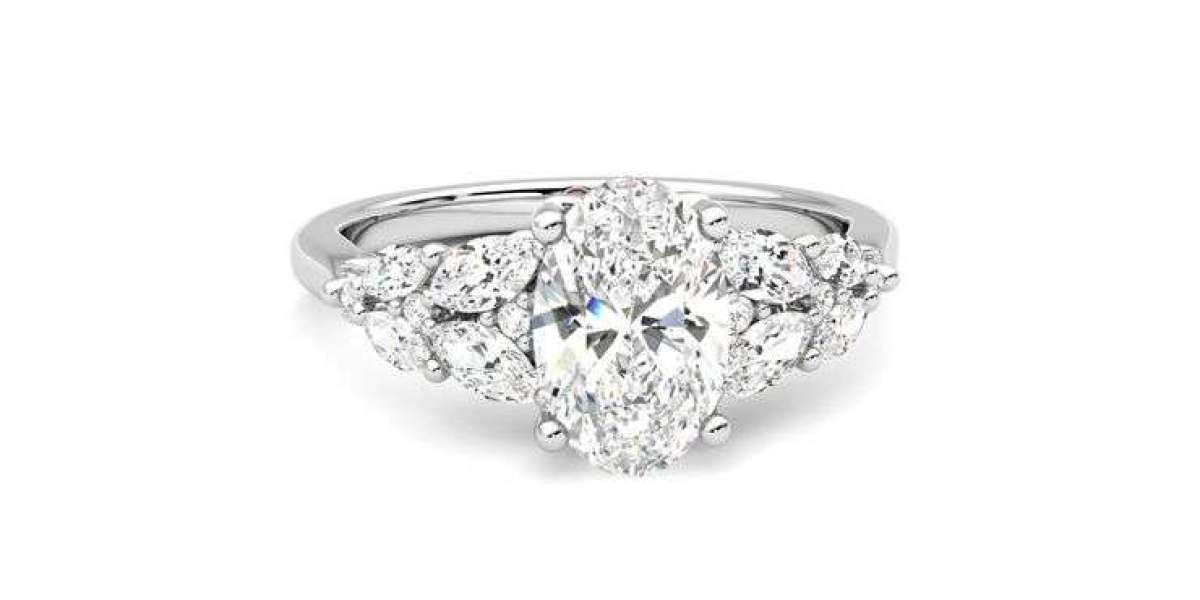

Choosing an engagement ring is one of the most meaningful decisions a couple makes before starting a new chapter together. It represents love, commitment, and a promise to build a future together. Among the many styles available today, lab grown oval engagement rings have become a popular choice for couples who appreciate elegant designs, beautiful sparkle, and modern diamond options. Their elongated shape creates a graceful appearance, while their brilliant faceting allows them to reflect light beautifully. Whether someone prefers a simple solitaire or a more detailed setting, oval-shaped lab grown diamonds offer plenty of opportunities to find a ring that matches personal taste.
Why Are Oval Engagement Rings So Popular?
Oval engagement rings have gained attention because they combine traditional diamond beauty with a distinctive shape. Unlike round diamonds, which have a symmetrical circular appearance, oval diamonds feature an elongated design that creates a softer and more sophisticated look.
Their popularity is influenced by several practical and visual advantages.
Elegant appearance: The elongated shape gives the ring a refined and graceful appearance.
Visual finger coverage: Oval diamonds can appear larger than round diamonds of similar carat weight because of their elongated surface.
Brilliant sparkle: Their faceting pattern allows light to reflect across the diamond, creating attractive brilliance.
Versatile styling: Oval diamonds work beautifully with classic, vintage-inspired, and contemporary ring settings.
These qualities make oval engagement rings suitable for people who want something timeless without choosing an overly traditional design.
What Makes Lab Grown Diamonds Different?
Lab grown diamonds are real diamonds created through advanced technological processes rather than being extracted from the earth. They have essentially the same chemical composition, crystal structure, physical properties, and optical characteristics as mined diamonds.
Two commonly used production methods are Chemical Vapor Deposition (CVD) and High Pressure High Temperature (HPHT).
Chemical Vapor Deposition (CVD)
The CVD process involves placing a diamond seed inside a controlled chamber containing carbon-rich gases. Through carefully managed conditions, carbon atoms gradually accumulate on the seed, allowing the diamond crystal to develop.
This method is widely used to produce high-quality laboratory-created diamonds with different characteristics depending on the production process.
High Pressure High Temperature (HPHT)
The HPHT method recreates the high-pressure and high-temperature conditions associated with natural diamond formation. A carbon source is exposed to controlled pressure and heat, allowing a diamond crystal to develop.
Both methods can produce genuine diamonds that are suitable for engagement rings. However, every stone should be independently evaluated for its quality and characteristics.
How to Choose the Right Oval Lab Grown Diamond
Selecting a diamond involves more than simply choosing an attractive shape. Its cut, color, clarity, and carat weight all influence its overall appearance and value.
When shopping for lab grown oval engagement rings, understanding these factors can help buyers make a more informed decision.
1. Diamond Cut and Proportions
Cut quality plays an important role in how a diamond interacts with light. Oval diamonds do not have a single universally accepted cut grading system equivalent to the standard round brilliant cut scale.
Buyers should pay attention to the diamond's overall proportions, symmetry, brightness, and light performance.
A well-proportioned oval diamond should display:
Consistent brightness across its surface.
Balanced and symmetrical outlines.
Attractive light reflection.
Minimal distracting dark areas.
The bow-tie effect is another feature worth considering. It appears as a darker area across the center of some oval diamonds. A slight bow-tie can be normal, but a very noticeable one may affect the stone's overall appearance.
2. Diamond Color
Diamond color refers to how much yellow or brown tint is visible in a stone. Many buyers prefer diamonds in the near-colorless or colorless ranges because they provide a bright and clean appearance.
The choice can also depend on the ring setting.
White gold and platinum settings often complement colorless and near-colorless diamonds.
Yellow gold settings can create a warm and attractive contrast.
Rose gold settings offer a softer appearance that suits different diamond styles.
The best color grade depends on the buyer's visual preferences and budget.
3. Diamond Clarity
Clarity describes the presence of internal characteristics called inclusions and external characteristics called blemishes.
A diamond with fewer visible imperfections may receive a higher clarity grade. However, buyers do not always need to select the highest available grade.
An eye-clean diamond can provide an attractive appearance without requiring the additional cost of a higher clarity grade.
4. Carat Weight
Carat refers to the weight of a diamond, not its physical dimensions. Oval diamonds often provide an elongated face-up appearance, which can create the impression of greater size.
When comparing diamonds, buyers should consider the actual measurements alongside carat weight.
For example, two diamonds with identical carat weights may look different because of variations in their length, width, and overall proportions.
Popular Settings for Oval Engagement Rings
The setting influences how the diamond looks and how comfortably the ring can be worn. Different settings can highlight different features of an oval diamond.
Solitaire Setting
<PRIVATE_PERSON> A solitaire setting features a single central diamond without additional stones surrounding it. This design allows the oval diamond to remain the main attraction.
It is particularly suitable for people who appreciate minimal jewellery and classic styling.
Hidden Halo Setting
A hidden halo features smaller diamonds positioned beneath the main centre stone. These additional diamonds create extra sparkle when viewed from certain angles without changing the clean appearance of the ring from above.
This style offers a balance between simplicity and decorative detail.
Halo Setting
A halo setting surrounds the centre diamond with smaller accent diamonds. The additional stones create a brighter overall appearance and can make the centre diamond appear more prominent.
It is a suitable option for buyers who prefer a more detailed and eye-catching design.
Three-Stone Setting
Three-stone engagement rings feature a central oval diamond accompanied by two smaller stones on either side.
This design is often associated with the past, present, and future of a relationship, making it a meaningful choice for an engagement ring.
Are Lab Grown Oval Engagement Rings a Good Investment?
Lab grown diamonds offer an alternative for buyers who want the appearance and physical properties of a real diamond at a different price point from comparable mined diamonds.
However, it is important to understand the difference between purchasing jewellery and making a financial investment.
Diamonds, including lab grown diamonds, should not automatically be considered investment assets. Their resale value can be significantly lower than their original retail purchase price, and the market for laboratory-grown diamonds continues to evolve.
The main advantages for jewellery buyers include:
Greater purchasing flexibility: Buyers may be able to select a larger centre stone within their budget.
Design freedom: More budget flexibility can make premium settings and additional diamond details accessible.
Verified diamond characteristics: Grading reports can help buyers understand the quality of the stone.
Modern production: Diamonds can be created through controlled technological processes.
For most couples, the real value of an engagement ring comes from its personal meaning, appearance, and suitability for everyday wear rather than its potential resale price.
What to Check Before Purchasing an Engagement Ring
Before purchasing an oval engagement ring, buyers should carefully review the diamond specifications and the quality of the finished jewellery.
A few important details should be considered:
Diamond grading report: Look for an independent grading report from a recognised gemological laboratory, such as IGI or GIA.
Diamond measurements: Check the length-to-width ratio to understand the oval shape.
Setting quality: Examine the prongs, metal finish, and overall construction.
Ring metal: Choose between platinum, white gold, yellow gold, or rose gold according to personal preference.
Return policy: Review the seller's exchange, return, and resizing conditions.
Warranty and maintenance: Check whether cleaning, inspections, and repairs are offered.
It is also recommended that buyers view high-quality photographs or videos of the actual diamond before making a final decision. This can provide a better understanding of its sparkle, symmetry, and bow-tie effect.
Final Thought
An engagement ring should reflect the relationship, personality, and preferences of the people who will wear it. Lab grown oval engagement rings offer an appealing combination of elegant design, genuine diamond characteristics, and modern production methods. From classic solitaire settings to detailed halo designs, there are numerous ways to create a ring that feels personal and meaningful. By understanding diamond quality, comparing different settings, and reviewing independent grading reports, couples can make a confident purchasing decision. Ultimately, the right engagement ring is not simply defined by its size or price but by the memories and commitment it represents.