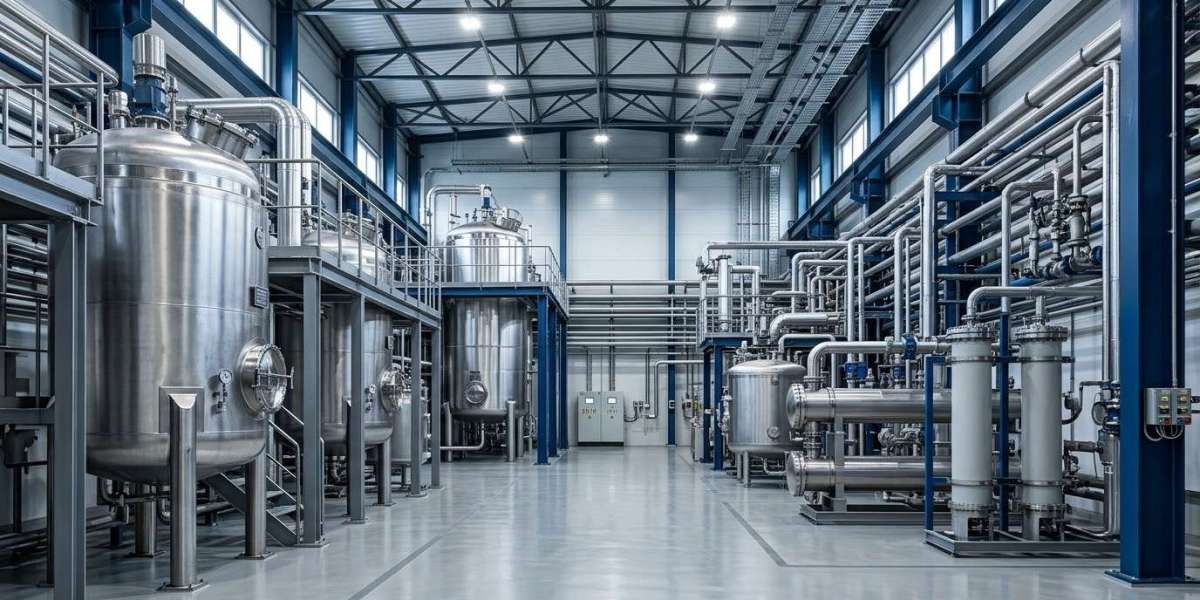

Industrial facilities often produce airborne dust, fumes, particles, and other contaminants during manufacturing and processing activities. These substances can affect workplace air quality, equipment performance, product quality, and the surrounding environment. A properly designed heavy industrial air filtration control system helps manage airborne contaminants through suitable filtration equipment, monitoring devices, and control mechanisms.
Different industries generate different types and concentrations of pollutants. Metalworking facilities may produce fine particles and process fumes, while cement plants and material handling operations can release large quantities of dust. Chemical processing environments may require specialized solutions based on the characteristics of the substances being handled. As a result, filtration equipment must be selected according to the actual operating conditions rather than relying on a single standard design.
An effective system combines appropriate filtration technology with suitable airflow, reliable controls, regular inspections, and a planned maintenance program. Each part contributes to the overall performance of the installation.
Why Industrial Air Filtration Matters
Airborne contaminants can create challenges across several areas of industrial operations. Dust may accumulate on machinery, electrical components, work surfaces, and production equipment. Over time, this buildup can contribute to maintenance problems and affect the reliability of sensitive components.
Poorly controlled airborne particles can also create uncomfortable working conditions. Depending on the material involved, exposure may present occupational health concerns that require specific control measures and professional assessment.
Air filtration systems are designed to capture or separate contaminants from an air stream. Their purpose and configuration depend on the pollutant type, particle size, airflow volume, operating temperature, humidity, and other process conditions.
Filtration is not a replacement for eliminating contaminants at their source. Industrial facilities should consider source control, suitable ventilation, enclosure design, and other engineering measures as part of a complete air quality strategy.
Main Components of an Industrial Filtration System
An industrial filtration installation may contain several connected components. The exact arrangement depends on the application and the technology selected.
Air Intake and Ductwork
Ductwork collects and transports contaminated air from the relevant production areas to the filtration equipment. Its dimensions, layout, material, and configuration influence airflow performance.
Poorly designed ductwork can create pressure losses, uneven air distribution, and areas where dust accumulates. Engineers must consider the required airflow, duct length, bends, branches, and the characteristics of the material being transported.
Filtration Equipment
The filtration unit separates airborne contaminants from the air stream. Common industrial technologies include cartridge collectors, baghouse filters, panel filters, and other specialized filtration arrangements.
Each technology has different operating characteristics. The correct option depends on the particle size, dust loading, temperature, moisture content, and required collection efficiency.
Fans and Air Movement Equipment
Fans provide the pressure and airflow needed to move air through the ductwork and filtration equipment. Their selection must account for system resistance, operating conditions, and the required air volume.
An unsuitable fan can lead to inadequate airflow or unnecessary energy consumption. Proper sizing and system balancing are important for maintaining consistent performance.
Dust Collection and Discharge
Collected material must be removed from the filtration equipment in a controlled manner. Depending on the design, this may involve hoppers, rotary valves, sealed containers, or other discharge arrangements.
The collection and disposal process should account for the properties of the material. Certain industrial dusts may require specialized handling procedures.
Understanding Filtration Technologies
Different industrial processes require different filtration methods. Selecting the correct technology is essential for achieving the required air quality and operating performance.
Baghouse Filtration
Baghouse systems use fabric filter bags to capture particles from an air stream. They are commonly used in applications involving substantial dust loads, including cement production, metal processing, and bulk material handling.
The filter media must be suitable for the operating temperature, moisture level, chemical characteristics, and particle properties. Cleaning mechanisms help remove accumulated dust from the filter surfaces and maintain airflow.
Cartridge Filtration
Cartridge collectors use compact filter elements that provide a substantial filtration surface within a relatively small space. They are used in several industrial applications where fine dust collection is required.
Cartridge selection depends on particle characteristics, airflow requirements, filter media, and the operating environment. Maintenance access and replacement requirements should also be considered during system design.
Panel and Pre-Filtration Systems
Panel filters and pre-filters may be used to capture larger particles before air reaches more sensitive filtration stages. This arrangement can help protect downstream equipment and support a multi-stage filtration strategy.
The choice of pre-filtration depends on the incoming air quality and the requirements of the main filtration unit.
The Role of Control Systems
Filtration equipment requires suitable controls to operate consistently. A heavy industrial air filtration control system can coordinate fans, filter-cleaning mechanisms, monitoring instruments, alarms, and other equipment according to the installation's design.
Control arrangements may use programmable logic controllers, variable frequency drives, pressure sensors, temperature sensors, and other instruments. These components help operators monitor equipment conditions and manage system operation.
Differential Pressure Monitoring
Differential pressure measurement indicates the pressure difference across a filter or filtration stage. A rising reading may suggest that dust is accumulating on the filter media or that airflow resistance is increasing.
Operators can use this information to review filter condition and cleaning performance. The correct operating range should be established according to the equipment manufacturer's guidance and the system design.
Fan Speed Control
Variable frequency drives can adjust fan speed to meet changing airflow requirements. This may be useful in facilities where production schedules or process conditions vary.
Fan speed adjustments should be based on engineering calculations and suitable monitoring. Operating a fan outside its approved limits can affect performance and equipment life.
Automated Filter Cleaning
Some filtration systems use automated cleaning cycles to remove accumulated dust from filter media. The cleaning method may involve pulse-jet air, mechanical shaking, or another technology depending on the equipment.
Control settings should match the filter design and operating conditions. Excessive or insufficient cleaning can affect filter life and system performance.
Alarms and Equipment Protection
Control systems may provide alarms for abnormal pressure, high temperature, fan faults, hopper conditions, or other monitored parameters.
Alarm thresholds should be established during system commissioning and reviewed as operating conditions change. Clear alarm procedures help operators respond appropriately when equipment does not perform as expected.
Designing a System for Industrial Requirements
Industrial filtration design begins with understanding the process. Engineers need reliable information about the source of contamination, the type of pollutant, expected concentration, temperature, moisture, and required airflow.
The physical layout of the facility is another important consideration. Equipment location, duct routes, available space, maintenance access, and discharge arrangements can influence the final design.
A suitable design should also account for future production changes. If a facility plans to increase capacity or introduce additional equipment, the filtration system may need sufficient flexibility to accommodate those changes.
A detailed engineering assessment helps identify the required filtration technology, fan capacity, duct dimensions, control instruments, and maintenance arrangements.
Energy Efficiency and Operating Performance
Industrial filtration systems can consume significant energy because fans must move air through ducts and filter media. Pressure losses, leakage, poor balancing, and unnecessary operation can increase energy demand.
Facilities can review airflow requirements, fan selection, filter condition, and operating schedules to identify potential improvements. Variable frequency drives may help adjust airflow when process demand changes, provided the system is designed to support this control method.
Filter maintenance also affects energy consumption. As filter resistance increases, fans may need to work harder to maintain the required airflow. Timely inspection and replacement can help maintain the intended operating conditions.
Energy efficiency should be assessed alongside filtration performance. Reducing fan speed or airflow without verifying process requirements may compromise contaminant capture.
Maintenance and Inspection Requirements
A planned maintenance program helps keep industrial filtration equipment operating reliably. Inspection frequency depends on the equipment type, operating hours, dust characteristics, and manufacturer recommendations.
Common maintenance activities include:
Checking filter elements for damage, wear, and excessive dust buildup.
Inspecting ductwork, access doors, seals, and connections for leakage.
Reviewing differential pressure readings and airflow measurements.
Checking fans, motors, bearings, and drive components.
Inspecting dust hoppers and discharge equipment.
Testing alarms, sensors, and control functions.
Recording maintenance activities and unusual operating conditions.
Maintenance personnel should follow appropriate isolation procedures and safety instructions before accessing equipment. Some collected dusts may require special handling, so facilities should follow relevant risk assessments and disposal requirements.
Common Challenges in Industrial Air Filtration
Several issues can affect filtration performance. One common problem is selecting filter media that does not match the process conditions. Temperature, moisture, chemical exposure, and particle characteristics can all influence filter suitability.
Incorrect airflow design can also create problems. Insufficient airflow may reduce contaminant capture, while excessive airflow can increase energy use and place additional demands on the filtration equipment.
Leaks in ductwork or filter housings can affect system efficiency. Poor maintenance may allow damaged filters, blocked discharge arrangements, or malfunctioning cleaning mechanisms to remain unnoticed.
Control settings can create further challenges if they do not match the equipment's operating requirements. Regular monitoring, commissioning checks, and technical support can help identify these problems.
Safety and Environmental Considerations
Industrial air filtration must be designed with the characteristics of the contaminants in mind. Some dusts may be combustible, corrosive, toxic, or otherwise hazardous. These conditions require appropriate engineering assessment and equipment selection.
Where combustible dust hazards may exist, facilities should obtain a specialist assessment and follow applicable safety standards. Depending on the process, additional measures such as explosion protection, isolation, grounding, or specialized collection arrangements may be required.
Environmental requirements also influence system design. Facilities should review applicable emission limits, testing obligations, and local regulations. Filtration performance should be verified using appropriate measurement methods rather than assumed from equipment specifications alone.
Selecting a Suitable Filtration Solution
Choosing an industrial filtration solution requires a clear understanding of the process and its operating environment. Businesses should review contaminant characteristics, required airflow, filtration efficiency, temperature, moisture, maintenance access, energy demand, and available installation space.
The control system should also match the facility's operating needs. Monitoring instruments, alarms, fan controls, and filter-cleaning functions should work together as part of a coordinated design.
A properly specified heavy industrial air filtration control system can support reliable contaminant collection and consistent process operation when it is correctly installed, commissioned, monitored, and maintained.
Frequently Asked Questions
What is an industrial air filtration control system?
It is an arrangement of filtration equipment and control components used to collect airborne contaminants and manage system operation. Depending on the design, it may include filters, fans, sensors, programmable controllers, alarms, and automated cleaning functions.
Which filtration technology is used in heavy industries?
Common options include baghouse filters, cartridge collectors, and multi-stage filtration arrangements. The appropriate technology depends on the contaminant, particle size, airflow, temperature, moisture, and process requirements.
Why is differential pressure monitoring important?
Differential pressure helps operators understand the resistance across filter media. Changes in the reading can indicate dust buildup, filter condition changes, or airflow problems that may require inspection.
How often should industrial filters be replaced?
Replacement intervals depend on the filter type, operating conditions, contaminant load, and manufacturer guidance. Facilities should use inspection results and performance measurements rather than relying on one fixed interval for every application.
Can automated controls improve filtration performance?
Automated controls can help coordinate fan operation, filter cleaning, alarms, and monitoring. Their effectiveness depends on correct system design, commissioning, settings, and ongoing maintenance.