
Why Creative Professionals Keep Returning to Dharamshala and Jaipur
The creative block is one of the most professionally costly experiences in a knowledge economy career that depends on the consistent generation of original work. The writer who can't find the thread of the next project. The photographer whose recent work feels technically accomplished but emotionally empty. The designer whose concepts are competent but not inspired. The filmmaker who has the technical skills but can't locate the story worth telling with them.
The remedies most commonly prescribed — rest, new input, change of routine — are correct in principle and inadequate in practice when applied within the same environment that produced the block. The studio or home office where the block emerged continues to carry its associations — the ambient reminder of the work that isn't coming, the familiar visual environment that produces familiar thinking, the social obligations that prevent the sustained solitude that creative recovery often requires.
What actually breaks creative blocks, consistently, is a significant change of environment — one that is distinctive enough to genuinely displace the blocked environment's associations, rich enough in new input to stimulate the pattern-making that creative work requires, and quiet enough to allow the sustained solitary attention that creative processing needs. India has many distinctive environments. It has very few that combine genuine visual and cultural richness with the private residential quiet that serious creative retreats require.
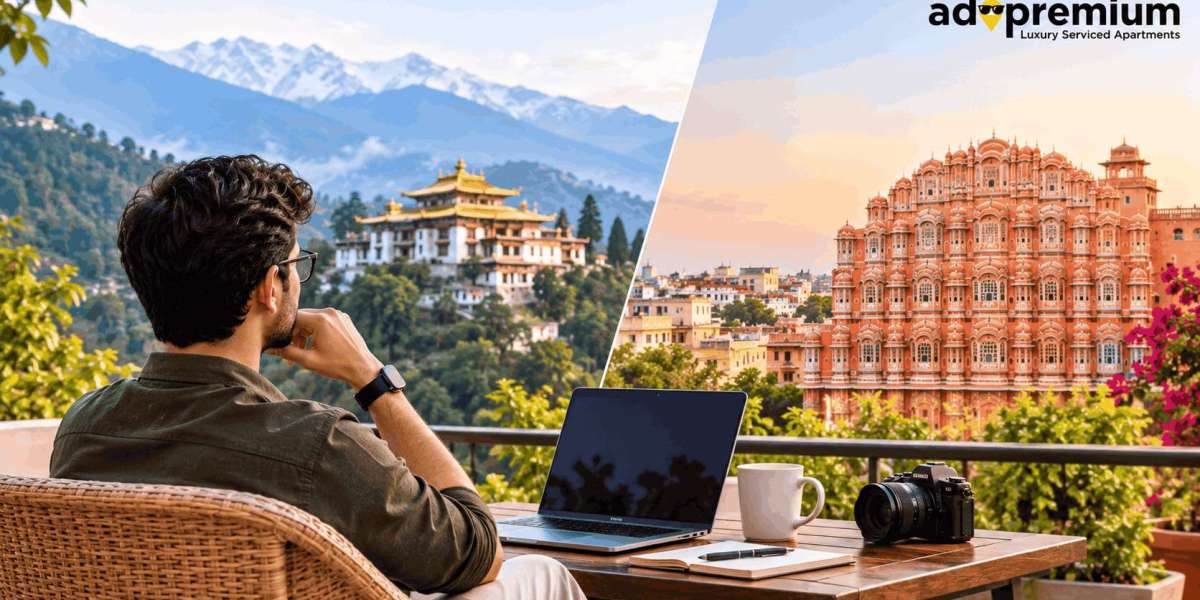
Dharamshala and Jaipur are the two that consistently produce creative breakthroughs for the creative professionals who use them as retreat destinations — and they produce these breakthroughs for different reasons, serving different creative disciplines and different creative needs.
Dharamshala — For the Inward Creative Work
Dharamshala's creative value is not primarily visual in the way that a scenic destination is visual. Its value is atmospheric — the combination of mountain environment, contemplative cultural context, and physical removal from ordinary life creates the conditions that inward creative work specifically requires.
Writing benefits most directly from this atmospheric quality. The novelist working through a structurally complex chapter, the essayist trying to articulate something that hasn't been said clearly before, the poet working in a form that requires genuine attention to language — all of these creative tasks require the kind of sustained, uninterrupted internal attention that ordinary environments with their social obligations, notifications, and ambient noise consistently prevent. Dharamshala's private villa environment, with the Dhauladhar range's presence as the constant visual anchor and the town's contemplative atmosphere as the social context, produces writing sessions of a quality and duration that the home studio rarely matches.
The Tibetan visual tradition — the thangka paintings with their elaborate iconographic precision, the monastery architecture's proportional relationships, the colour and form vocabulary of Buddhist sacred art — provides visual input that is genuinely unfamiliar to most Indian creative professionals and that stimulates new aesthetic thinking precisely because it operates within a completely different visual grammar from the modernist design influences that dominate most contemporary creative work.
Filmmakers and documentary photographers find Dharamshala particularly productive for the research and pre-production phases of work that requires understanding a subject before filming it. The town's complexity — the exile political dimension, the living tradition's philosophical depth, the mountain landscape's visual drama — provides more creative material per square kilometre than most Indian cities manage across their full geography.
For creative professionals planning an inward creative retreat, the villas in Dharamshala format provides the private residential base that serious creative work requires — the studio desk with the mountain view, the morning walks that productive creative sessions are built around, and the private environment that allows the long, undisturbed working days that major creative projects sometimes need to find their form.
Jaipur — For the Outward Creative Work
Jaipur's creative value is primarily visual and aesthetic — the city provides more high-quality visual input per day of active exploration than any other accessible Indian city, and the creative professional who arrives with open eyes and adequate time to absorb what they're seeing returns with a visual vocabulary that the work they produce afterward reflects.
Photographers find Jaipur extraordinary in a way that requires articulating beyond the obvious — it's not simply that the monuments are photogenic, though the Amber Fort at dawn is among the most compelling photographic subjects in India. It's that the city's human life and its built environment interact in ways that produce visual combinations that aren't available elsewhere. The women in Rajasthani dress against the Pink City's ochre walls. The rhythmic geometry of jali screens filtering afternoon light onto courtyard floors. The Hawa Mahal's honeycombed facade as an architectural response to the specific social condition that produced it — the purdah observance that required an entire palace facade to allow observation without being observed.
Designers — textile designers, product designers, graphic designers — find Jaipur's living craft tradition directly useful for the aesthetic input it provides. The block printing process's approach to repeat pattern generation, the blue pottery's handling of cobalt and white in a specific visual proportion, the embroidery traditions' relationship to textile ground — these are aesthetic approaches that have been refined across generations and that carry creative intelligence that contemporary design education often doesn't transmit.
Writers find Jaipur productive for the research-intensive phases of historically-grounded fiction, historical non-fiction, and the kind of cultural journalism that requires understanding a place from the inside rather than from a tourist's surface engagement. The city's living connection to its Rajput past — in the food, the architecture, the craft economy, and the social practices that the Rajput tradition continues to shape — provides primary material that archive research alone doesn't provide.
For creative professionals planning an outward, research-intensive creative retreat, the luxury villas in jaipur format provides the private base from which active daily exploration of the city's creative resources is sustainable across several days — returning each evening to a private environment where the day's visual input can be processed, sketched, written about, or simply absorbed without the social stimulation of hotel common areas competing with the creative processing that the day's experience generated.
Why Private Villas Serve Creative Retreats Better Than Any Alternative
Creative work requires conditions that managed hospitality consistently fails to provide — and that the private villa format provides structurally.
The working schedule of a creative retreat doesn't align with hotel service schedules. The writer who reaches creative momentum at 11pm doesn't want to stop because the hotel restaurant has closed and they need to eat. The photographer who wants to leave at 4:30am to reach the Amber Fort before sunrise doesn't want to navigate hotel checkout logistics in the dark. The designer who needs six uninterrupted hours of studio time in the afternoon doesn't want to manage around room service timing or housekeeping schedules. The private villa's self-determined rhythm makes all of these working patterns possible rather than awkward.
The kitchen dimension serves creative retreats specifically through the food-as-fuel dimension that intensive creative work makes relevant. The creative professional in the middle of a productive sprint often needs to eat at odd hours, simply, without interruption — a meal prepared in a private kitchen in fifteen minutes between creative sessions rather than a restaurant experience that consumes an hour and breaks the creative momentum that took the morning to build.
And the private acoustic environment — no adjacent hotel rooms, no lobby noise, no other guests' conversations filtering through walls — provides the sustained quiet that inward creative work specifically requires. Dharamshala's forest villa environment and Jaipur's heritage property retreat both offer this acoustic private quality in their respective geographical contexts.
Adopremium has developed villa portfolios in both Dharamshala and Jaipur that serve the creative professional's retreat requirements — properties selected for their environmental character, their workspace potential, and the private residential quality that serious creative work across several days requires.
Choosing the Retreat for the Work in Progress
The creative professional's choice between Dharamshala and Jaipur depends on what the current creative project requires.
Work that is inward, structurally uncertain, or requiring the contemplative processing of difficult material benefits from Dharamshala's atmospheric quality and mountain solitude. Work that is outward, aesthetically driven, or requiring rich visual and cultural input benefits from Jaipur's extraordinary visual richness and living craft traditions.
Both produce creative breakthroughs. Both are best experienced from private villa accommodation that gives the creative professional the schedule autonomy, acoustic privacy, and unhurried residential quality that genuine creative work requires. The choice is which creative need this particular retreat needs to serve.