
Introduction
Maintaining proper airflow efficiency is essential for creating a clean, hygienic, and controlled environment in modern gynaecological operating theatres. Procedures such as hysterectomy, laparoscopic surgery, fibroid removal, and other complex gynaecological operations require carefully managed ventilation and air filtration to support surgical environment control. An appropriately designed airflow system helps manage airborne particles, maintain suitable environmental conditions, and support hospital infection-control practices.
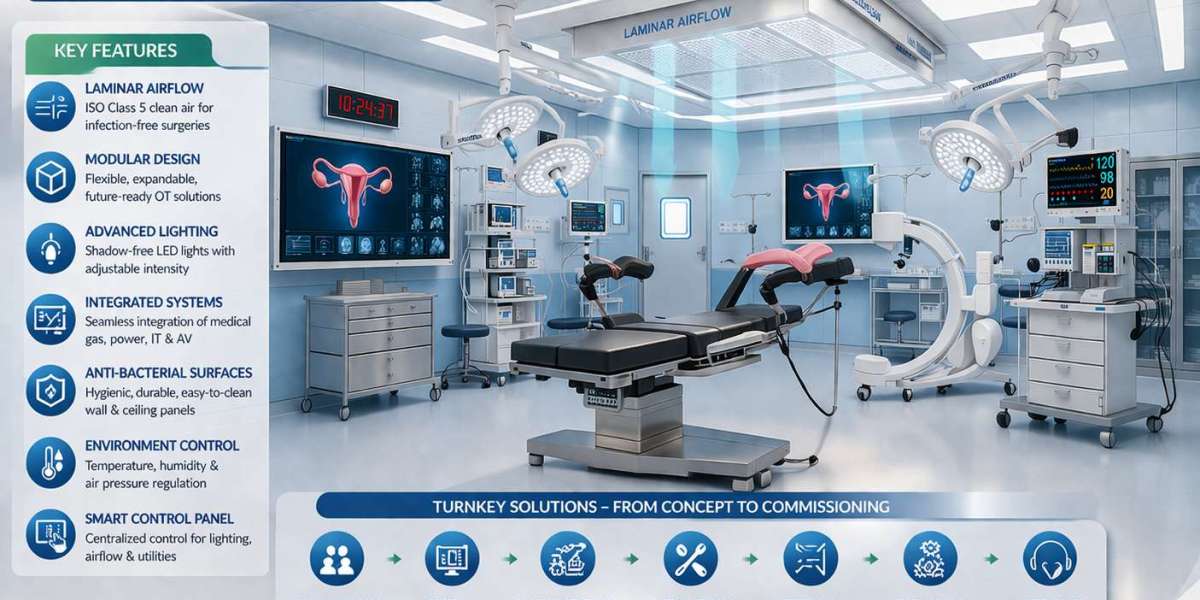
A Gynaec Modular OT With Laminar Airflow combines advanced air filtration, controlled air distribution, HVAC technology, and modular infrastructure to establish a suitable operating environment. However, airflow efficiency does not depend on filtration equipment alone. Factors such as airflow velocity, ceiling design, equipment positioning, room pressure, temperature, humidity, and regular system maintenance also influence overall performance.
Understanding these factors helps hospitals, healthcare planners, and engineering professionals develop operating theatres that meet clinical requirements and support efficient surgical workflows.
1. Understanding Airflow Efficiency in Gynaecological Operating Theatres
Airflow efficiency refers to how effectively an operating theatre's ventilation system supplies, distributes, and removes air while maintaining the intended environmental conditions.
In gynaecological operating theatres, proper airflow management is important because surgical procedures require a controlled environment with appropriate ventilation and filtration.
A laminar airflow arrangement is designed to deliver filtered air in a controlled direction over the critical surgical zone. Its effectiveness depends on the coordination of several components, including HEPA filters, air handling units, ceiling-mounted supply systems, return air arrangements, and monitoring equipment.
A properly engineered system helps minimize uncontrolled air movement and supports consistent environmental management.
2. HEPA Filtration Efficiency and Air Quality
HEPA filtration is one of the most important factors influencing airflow efficiency. These filters are designed to capture airborne particles and provide filtered air to the operating theatre.
In a gynaecological modular OT, filtration systems help manage airborne particulate contamination and support the delivery of clean air to the surgical environment.
Several considerations influence filtration performance.
Filter quality: Appropriate HEPA filter selection is necessary to meet the operating theatre's filtration requirements.
Installation quality: Incorrect installation or gaps around filter frames can allow unfiltered air to bypass the filtration system.
Filter integrity: Regular inspection and integrity testing help identify damage, leakage, or deterioration.
Maintenance schedules: Timely maintenance and replacement according to manufacturer recommendations help maintain system performance.
Hospitals should ensure that filtration equipment is selected and tested according to the applicable healthcare engineering requirements.
3. Airflow Velocity and Direction
Airflow velocity and direction directly influence how filtered air moves throughout the operating theatre.
A properly designed laminar airflow arrangement aims to provide controlled air distribution over the designated surgical area. Incorrect airflow velocity or poorly positioned air outlets can create turbulence and affect the intended airflow pattern.
The engineering team should consider:
Air supply outlet dimensions and positioning.
Airflow velocity across the designated clean zone.
Return air grille locations.
Ceiling-mounted equipment arrangements.
Surgical table positioning.
Potential airflow obstructions.
The objective is to establish a suitable airflow pattern that supports the intended environmental classification and operational requirements of the theatre.
4. HVAC System Design and Performance
Heating, ventilation, and air conditioning systems play a central role in maintaining airflow efficiency.
The HVAC system controls filtered air supply, ventilation, temperature, humidity, and pressure relationships within the operating theatre.
An effective HVAC design should consider the theatre's dimensions, ceiling height, equipment heat loads, occupancy, ventilation requirements, and surgical activities.
Important HVAC components include air handling units, filtration stages, ducting, cooling systems, control panels, and air distribution outlets.
Poor HVAC design can result in uneven air distribution, temperature fluctuations, and inadequate pressure control.
Therefore, hospitals should prioritize coordinated HVAC engineering during the initial modular OT planning stage.
5. Positive Pressure Management
Positive pressure is another important factor in maintaining the intended airflow conditions of a gynaecological operating theatre.
A positively pressurized operating theatre maintains higher air pressure than designated adjacent spaces. This helps limit the entry of less-clean air through door openings and other potential leakage paths.
However, positive pressure must be properly designed and monitored.
The engineering team should evaluate:
Pressure differences between connected rooms.
Door opening frequency.
Air supply and exhaust balance.
Room sealing arrangements.
Pressure monitoring equipment.
Maintaining appropriate pressure relationships helps support the overall ventilation strategy and environmental separation of the operating theatre.
6. Operating Theatre Layout and Equipment Positioning
The layout of a modular gynaecological operating theatre can significantly influence airflow distribution.
Medical equipment, surgical lights, ceiling pendants, anesthesia workstations, and monitoring systems may obstruct or disturb the intended airflow pattern if they are not positioned correctly.
For example, large ceiling-mounted equipment placed within the primary clean-air supply zone may create airflow disturbances.
Proper planning should consider the movement of surgical teams, accessibility of equipment, positioning of the operating table, and location of ventilation outlets.
A coordinated equipment layout helps maintain an organized surgical workspace while reducing unnecessary airflow obstructions.
7. Temperature and Humidity Control
Temperature and humidity are essential environmental parameters in operating theatre management.
An appropriately designed HVAC system helps maintain suitable temperature and relative humidity conditions according to the hospital's operational requirements and applicable standards.
Temperature control supports the comfort of surgeons, nurses, and patients during surgical procedures.
Humidity management also helps avoid unsuitable environmental conditions that may affect room materials, equipment, and operational hygiene.
The system should include suitable sensors and monitoring controls to identify variations and maintain consistent environmental conditions.
8. Modular OT Interior Design and Airflow Management
Modular construction contributes to the overall hygiene and operational efficiency of a gynaecological operating theatre.
The selection of interior materials and construction methods can influence cleaning practices, dust accumulation, and the management of room leakage.
Important modular OT design features include:
Seamless wall panels: Smooth surfaces help reduce dust accumulation and simplify routine cleaning.
Hygienic flooring: Suitable healthcare flooring supports cleaning and disinfection activities.
Integrated ceiling systems: Properly designed ceilings accommodate filtration units, surgical lights, and other essential installations.
Sealed joints: Properly finished joints help reduce unwanted air leakage and difficult-to-clean gaps.
Flush-mounted equipment: Integrated service outlets and control panels support a cleaner and more organized interior.
These design elements should be coordinated with the ventilation arrangement to maintain the intended airflow performance.
9. Return Air Arrangement and Air Distribution
Air return arrangements are often overlooked during operating theatre planning, but they are essential for maintaining effective ventilation.
Return air grilles help remove air from the room and support the circulation pattern established by the HVAC system.
Their location and size should be determined through appropriate engineering calculations and airflow design.
Poorly positioned return grilles can contribute to uneven air distribution and unwanted circulation patterns.
A properly coordinated supply and return air arrangement helps maintain the intended airflow direction and supports the operating theatre's ventilation requirements.
10. Importance of Airflow Testing and Validation
Airflow installation must be followed by proper testing and commissioning to verify that the system operates according to its design specifications.
Hospitals should evaluate airflow performance before the operating theatre becomes operational.
Important testing activities include:
Airflow velocity measurements.
Airflow direction and distribution assessment.
HEPA filter integrity testing.
Air change rate verification.
Differential pressure measurements.
Temperature and relative humidity monitoring.
Air cleanliness assessment.
HVAC system performance checks.
These activities help identify installation issues and verify that the operating theatre meets its intended environmental requirements.
Periodic testing is also important because ventilation performance can change with equipment use, filter loading, maintenance conditions, and building operations.
11. Common Factors That Reduce Airflow Efficiency
Even an advanced laminar airflow system may experience performance issues if important engineering and maintenance requirements are overlooked.
Some common challenges include:
Blocked airflow outlets: Equipment or improperly positioned installations can interfere with air distribution.
Damaged HEPA filters: Filter damage or leakage can affect filtration performance.
Poor ductwork design: Incorrect duct dimensions or installation problems may result in uneven air supply.
Inadequate room sealing: Gaps around doors, panels, and service installations can affect pressure relationships.
Incorrect equipment placement: Large equipment can disturb the intended airflow pattern.
Insufficient maintenance: Neglecting filter inspections and HVAC servicing may reduce system performance.
Improper air balancing: An imbalance between supply and return air can affect ventilation and room pressure.
Addressing these issues through professional engineering, commissioning, and preventive maintenance helps maintain reliable airflow performance.
12. How Can Hospitals Improve Airflow Efficiency in Gynaec Modular OTs?
Hospitals can improve airflow efficiency by combining proper engineering design with regular performance monitoring.
The following practices are important:
First, select an appropriate filtration system based on the intended operating theatre requirements. Ensure that filters are correctly installed and tested.
Second, coordinate airflow outlets, surgical lights, ceiling pendants, and medical equipment during the design stage. This helps avoid unnecessary airflow obstructions.
Third, implement suitable HVAC controls for temperature, humidity, ventilation, and room pressure.
Fourth, ensure that wall panels, ceilings, doors, and service installations are properly sealed and finished.
Finally, establish a preventive maintenance schedule that includes filter inspection, airflow measurements, pressure monitoring, and HVAC performance evaluation.
These measures help hospitals maintain the intended environmental conditions throughout the operating theatre's operational life.
13. What Should Hospitals Consider When Selecting a Gynaec Modular OT Manufacturer?
Selecting an experienced manufacturer is important for developing an operating theatre with properly integrated airflow and modular infrastructure.
Hospitals should evaluate the manufacturer's understanding of healthcare engineering, filtration technology, HVAC systems, and specialized surgical requirements.
Important considerations include:
Experience in modular gynaecological OT projects.
Knowledge of laminar airflow system design.
HEPA filtration selection and installation capabilities.
HVAC engineering and air balancing expertise.
Quality of modular wall and ceiling materials.
Electrical and medical gas integration.
Equipment coordination and installation.
Testing, commissioning, and maintenance support.
A reliable manufacturer should understand the hospital's clinical requirements and coordinate all essential engineering systems within the operating theatre.
14. Future Developments in Gynaecological OT Airflow Technology
Healthcare infrastructure is increasingly adopting advanced monitoring systems and integrated environmental controls.
Modern operating theatres can incorporate digital monitoring for temperature, humidity, pressure differentials, and filtration system performance.
Automation can help facility teams identify environmental variations and respond to ventilation issues more efficiently.
Improved HVAC controls and carefully planned modular construction also support operational flexibility and future equipment integration.
As healthcare facilities continue modernizing their surgical infrastructure, airflow engineering and environmental monitoring will remain important considerations in operating theatre development.
Conclusion
Airflow efficiency in a gynaecological operating theatre depends on the combined performance of filtration systems, airflow velocity, HVAC engineering, pressure management, temperature control, equipment positioning, and modular interior construction.
A properly engineered Gynaec Modular OT With Laminar Airflow brings these elements together to support controlled air distribution, effective filtration, and hygienic surgical conditions.
Hospitals should also prioritize airflow validation, regular inspections, and preventive maintenance to ensure that the installed system continues to operate according to its design requirements.
Altus Airflow provides modular operation theatre solutions focused on advanced laminar airflow integration, specialized OT infrastructure, and coordinated engineering. With appropriate planning, installation, and commissioning, hospitals can develop modern gynaecological operating theatres that support organized surgical workflows and effective environmental management.
Frequently Asked Questions (FAQs)
1. What factors influence airflow efficiency in Gynaec Modular OT With Laminar Airflow?
Airflow efficiency in Gynaec Modular OT With Laminar Airflow depends on HEPA filtration quality, airflow velocity, air distribution, HVAC design, positive pressure management, temperature, humidity, equipment positioning, and regular system maintenance. Coordinating these factors helps maintain the intended surgical environment.
2. Why is HEPA filtration important in a gynaecological modular OT?
HEPA filtration helps capture airborne particles before filtered air enters the operating theatre. It supports air quality management and helps reduce airborne particulate contamination around the surgical area.
3. How does equipment positioning affect laminar airflow efficiency?
Incorrectly positioned surgical lights, ceiling pendants, and medical equipment can obstruct airflow and create turbulence. Proper equipment planning helps maintain the intended airflow distribution.
4. Why is positive pressure required in a modular gynaecological operating theatre?
Positive pressure helps reduce the entry of less-clean air from surrounding areas into the operating theatre. It supports environmental separation when combined with suitable ventilation and infection-control practices.
5. How often should airflow performance be tested in a modular OT?
Airflow performance should be tested during commissioning and periodically according to applicable standards, manufacturer recommendations, and hospital maintenance protocols. Additional testing may be required after major HVAC modifications or equipment changes.