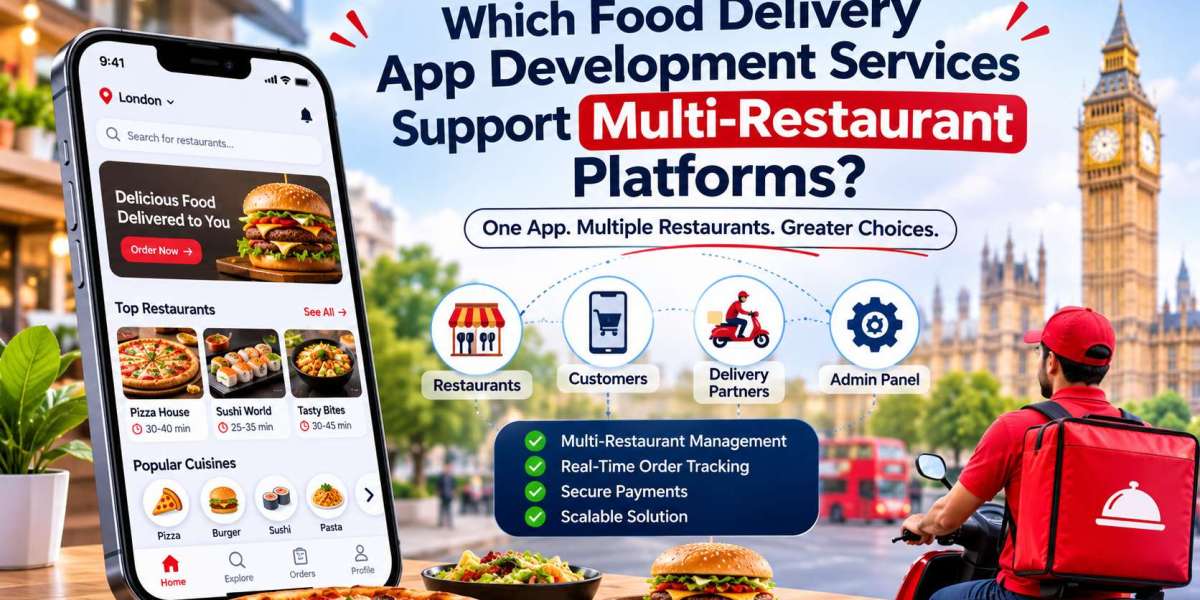

The growing demand for online food ordering has changed how restaurants connect with customers and manage their delivery operations. Consumers increasingly prefer digital platforms that allow them to explore multiple restaurants, compare menus, place orders, and receive food at their preferred locations. This shift has created new opportunities for businesses planning to launch multi-restaurant food delivery platforms.
Unlike single-restaurant applications, multi-restaurant platforms bring several restaurants together within one digital marketplace. They allow customers to browse different food outlets while providing restaurant owners with tools to manage menus, incoming orders, payments, and delivery activities. However, building such a platform requires more than basic ordering functionality. Businesses need a well-connected application ecosystem that supports customers, restaurant partners, delivery personnel, and administrators.
Choosing the right food delivery app development services is essential for creating a platform that can manage multiple restaurant operations efficiently. From custom application design and restaurant management dashboards to payment integration and real-time order tracking, each component contributes to the overall performance of the platform.
Understanding these development services can help businesses identify the right features, technologies, and solutions before investing in a multi-restaurant food delivery application.
Why Should Businesses Invest in Multi-Restaurant Food Delivery App Development?
Multi-restaurant food delivery platforms provide a centralized marketplace where customers can discover different restaurants and order meals through a single application. This business model creates opportunities for entrepreneurs, restaurant aggregators, and food service companies looking to establish an online presence.
Instead of developing separate applications for individual restaurants, businesses can create one platform that connects multiple food outlets with customers and delivery partners.
Some important benefits include:
Multiple Restaurant Listings: Allows customers to explore different restaurants, cuisines, menus, and pricing options.
Centralized Order Management: Helps administrators monitor orders received from different restaurant partners.
Wider Customer Reach: Enables participating restaurants to connect with a larger audience through a shared platform.
Convenient Ordering Experience: Allows customers to compare food options and place orders from one application.
Revenue Opportunities: Supports business models based on delivery charges, restaurant commissions, subscriptions, or promotional placements.
Operational Management: Provides tools to manage restaurant registrations, menus, orders, and delivery activities.
For startups and established food businesses, investing in multi-restaurant app development can provide a flexible foundation for building and expanding an online food delivery marketplace.
What Food Delivery App Development Services Are Required to Build a Multi-Restaurant Platform?
A successful multi-restaurant application requires several interconnected development services. Each service supports a specific part of the platform and ensures that customers, restaurants, delivery partners, and administrators can perform their activities without unnecessary complications.
Businesses should understand these components before selecting a development company.
1. Customer Application Development
The customer application is the primary interface through which users discover restaurants, browse menus, and place orders. Its design and functionality directly influence the overall ordering experience.
Important customer-side features include:
User registration and secure login.
Restaurant listings and category-based browsing.
Food menus with images, descriptions, and prices.
Search and food filtering options.
Shopping cart and order customization.
Multiple payment options.
Real-time order tracking.
Ratings, reviews, and order history.
Push notifications and promotional offers.
A professional development team should focus on creating a simple interface that allows customers to complete their ordering journey with minimal effort.
2. Restaurant Partner App Development
Restaurant partners need a dedicated application or dashboard to manage their activities on the platform. It allows restaurant owners and staff to handle incoming orders, update menus, manage availability, and monitor their performance.
Some essential restaurant-side features include:
Restaurant registration and profile management.
Menu creation and editing.
Food availability management.
Order acceptance and rejection.
Preparation time updates.
Pricing and promotional management.
Sales reports and order history.
Restaurant ratings and customer feedback.
For example, a restaurant operating in London can use its partner dashboard to update menu availability during busy hours and manage incoming orders without depending on the platform administrator for every change.
3. Delivery Partner App Development
Delivery personnel play an important role in the multi-restaurant food delivery ecosystem. A dedicated delivery application helps drivers receive assignments, navigate to restaurants, collect orders, and complete deliveries.
A reliable delivery partner application may include:
Driver registration and verification.
Delivery assignment notifications.
GPS-based location tracking.
Integrated navigation.
Order pickup and delivery status updates.
Customer contact options.
Digital proof of delivery.
Delivery history and earnings reports.
Connecting the delivery application with customer and restaurant systems helps maintain better communication throughout the delivery process.
4. Admin Panel Development
The administration panel provides centralized control over the entire food delivery marketplace. It allows platform owners to manage restaurant partners, customers, delivery personnel, transactions, and platform-related activities.
Important administrative capabilities include restaurant approval, commission management, user account control, order monitoring, payment records, promotional campaigns, and business analytics.
A well-designed admin panel helps platform owners monitor different operations from one location and maintain better visibility across the marketplace.
Which Advanced Features Should You Include in Multi-Restaurant Food Delivery App Development?
The functionality of a multi-restaurant platform determines how effectively it handles customer orders, restaurant operations, and delivery management. Businesses should select features according to their marketplace model, target audience, and operational requirements.
Apart from basic ordering functionality, advanced features can help improve platform usability and simplify daily management.
Some important features to consider include:
Multi-Restaurant Management: Allows customers to access multiple restaurant profiles and menus through one platform.
Smart Restaurant Search: Helps users discover restaurants based on cuisine, location, ratings, and availability.
Real-Time Order Tracking: Provides delivery progress updates through GPS integration.
Multiple Payment Options: Supports online payments, digital wallets, and other suitable payment methods.
Automated Order Assignment: Helps distribute orders to available delivery partners based on defined business rules.
Restaurant Commission Management: Allows administrators to configure commission structures for restaurant partners.
Customer Reviews and Ratings: Helps users evaluate restaurants based on previous customer experiences.
Promotional Campaign Management: Supports discounts, coupons, loyalty rewards, and special offers.
Businesses can also consider personalized food recommendations, AI-powered search, and automated customer support to create more engaging ordering experiences.
How Can Custom Food Ordering App Development Improve Restaurant Marketplace Management?
Custom food ordering app development allows businesses to create platform functionality according to their specific marketplace requirements. Every food delivery business operates differently, so a flexible application can be more suitable than a generic solution.
For example, a platform connecting independent restaurants may require simple restaurant registration and order management. However, a large food delivery marketplace may need advanced commission management, restaurant analytics, delivery allocation, and multiple administrative roles.
Custom development can support different business requirements through:
Customized restaurant onboarding workflows.
Flexible menu and category management.
Restaurant-specific pricing and commission settings.
Multiple delivery management options.
Customized customer loyalty programs.
Business-specific reporting dashboards.
Integration with existing restaurant management systems.
A customized solution also allows businesses to introduce additional features as their marketplace expands. This flexibility is particularly useful for startups planning to begin with a limited number of restaurants and gradually increase their partner network.
Which Payment Gateway Integration Services Are Essential for Multi-Restaurant Food Delivery Apps?
Payment integration is an important part of a multi-restaurant food delivery platform because customers need convenient and secure ways to complete their orders.
A professional development team should understand the platform's payment workflow and integrate suitable payment providers based on its target market.
Important payment capabilities include:
Credit and debit card payments.
Digital wallet integration.
Cash-on-delivery options where applicable.
Secure transaction processing.
Automatic payment status updates.
Restaurant payout management.
Refund and cancellation handling.
Commission and transaction fee calculations.
For example, when a customer places an order, the platform should record the payment status, update the order information, and calculate the applicable restaurant commission according to its business model.
Businesses should also consider payment security requirements, transaction records, and applicable financial regulations before selecting a payment integration solution.
How Does Real-Time Order Tracking Improve Multi-Restaurant Food Delivery App Development?
Real-time tracking is an important feature for platforms that coordinate orders from multiple restaurants and delivery partners. It helps customers understand the progress of their orders while allowing administrators to monitor delivery activities.
Without proper tracking functionality, customers may have difficulty knowing whether an order has been accepted, prepared, collected, or delivered.
A well-integrated tracking system can provide:
Restaurant order acceptance notifications.
Food preparation status updates.
Delivery partner assignment details.
Live driver location information.
Estimated delivery time.
Order completion notifications.
For example, when a customer orders food from a restaurant, the application can display the preparation status first and then provide driver location updates once the order is collected.
GPS integration, mapping services, and automated notifications help connect different stages of the delivery process.
What Technology Stack Should You Choose for Multi-Restaurant Food Delivery App Development?
Selecting the right technology stack is important for developing a reliable and scalable food delivery marketplace. The technologies used for frontend development, backend infrastructure, databases, and integrations can influence application performance and future maintenance.
Businesses should choose technologies based on application requirements rather than following trends without considering their technical needs.
Frontend and Mobile App Technologies
For mobile application development, businesses can consider native or cross-platform technologies.
Kotlin: Commonly used for Android application development.
Swift: Used to build native iOS applications.
Flutter: Supports cross-platform development through a shared codebase.
React Native: Allows developers to build applications for Android and iOS using JavaScript and React.
Backend and Database Technologies
The backend manages restaurant information, customer accounts, orders, transactions, and other application activities.
Technologies such as Node.js, Python, Java, and suitable database systems can be used depending on the application's architecture and requirements.
Cloud infrastructure can also support application hosting, data management, and scalability.
Third-Party Integration Technologies
A multi-restaurant platform may require integrations with:
Google Maps and GPS services.
Payment gateway providers.
Push notification services.
Restaurant management software.
Analytics and reporting platforms.
Customer relationship management systems.
An experienced development company can recommend an appropriate technology combination based on the platform's expected users, features, and business objectives.
How to Choose the Right Food Delivery App Development Company for a Multi-Restaurant Platform?
Selecting the right development partner is essential because multi-restaurant applications involve several interconnected systems. Businesses should evaluate an agency's technical capabilities, previous experience, and understanding of food delivery operations before making a hiring decision.
When comparing food delivery app development companies, consider the following factors:
Industry Experience: Check whether the company has developed restaurant ordering, food delivery, or marketplace applications.
Technical Expertise: Evaluate its knowledge of Android, iOS, Flutter, React Native, backend technologies, and APIs.
Portfolio Quality: Review previous applications and their functionality.
Customization Capabilities: Confirm whether the agency can develop features according to your business model.
Integration Expertise: Check its experience with payment gateways, GPS services, and restaurant management systems.
Security Practices: Understand how the development team protects customer information and payment-related data.
Communication and Project Management: Look for transparent development processes and regular progress updates.
Post-Launch Support: Confirm whether the company provides maintenance, troubleshooting, and future improvements.
Businesses should also discuss project scope, development timelines, ownership of source code, and maintenance arrangements before signing an agreement.
How Much Does Multi-Restaurant Food Delivery App Development Cost?
The cost of developing a multi-restaurant food delivery application depends on its functionality, design requirements, technical complexity, and number of integrated systems.
A basic marketplace with restaurant listings, menus, and ordering functionality will generally require fewer development resources than an advanced platform with separate customer, restaurant, driver, and administrator applications.
Several factors influence the overall development cost:
Number of Applications: Customer, restaurant, delivery partner, and admin applications increase the overall development scope.
Feature Complexity: Advanced functionality such as automated dispatching, live tracking, and analytics requires additional development.
UI/UX Design: Customized interfaces and user journeys influence design requirements.
Backend Infrastructure: Database architecture, server management, and application logic affect development resources.
Payment Integrations: Multiple payment methods and restaurant payout workflows add technical requirements.
Third-Party Services: Mapping, notifications, and external software integrations can influence the budget.
Maintenance Requirements: Security updates, bug fixes, and future enhancements contribute to long-term expenses.
Businesses should request a detailed quotation from a development company after defining the application requirements. Comparing the scope and deliverables of different proposals can help identify a suitable investment approach.
Why Should Businesses Choose Scalable Food Delivery App Development Services?
A multi-restaurant marketplace may start with a small group of restaurant partners, but its technical requirements can change as the business grows. More restaurants, customers, delivery partners, and transactions place additional demands on the application's infrastructure.
Scalable development helps businesses prepare for these changes without requiring major architectural modifications every time the platform expands.
Important scalability considerations include:
Flexible backend architecture.
Cloud-based infrastructure where appropriate.
Efficient database management.
Modular application development.
Secure API integrations.
Performance monitoring.
Support for additional restaurant partners and locations.
For example, a food delivery startup operating in one city may later expand into multiple regions. Its platform may need location-based restaurant discovery, regional delivery settings, additional payment options, and separate operational dashboards.
A scalable architecture makes it easier to introduce these capabilities while maintaining application performance and reliability.
What Security and Maintenance Services Should You Expect from a Food Delivery App Development Company?
Security and ongoing maintenance are important for any food delivery marketplace because the platform handles customer information, restaurant records, delivery details, and payment-related transactions.
Businesses should select a development partner that considers security throughout the application lifecycle.
Important security practices include:
Secure customer and restaurant authentication.
Data encryption during transmission and storage.
Role-based access management.
Protected API communication.
Secure payment gateway integration.
Regular vulnerability assessments.
Database backups and recovery procedures.
Post-launch maintenance is equally important. It helps businesses address technical issues, maintain compatibility with updated operating systems, and introduce new features as customer requirements change.
Before hiring a development agency, businesses should understand its maintenance packages, support availability, and service-level commitments.
Conclusion
Building a successful multi-restaurant food delivery platform requires the right combination of mobile application development, restaurant management functionality, delivery coordination, and secure payment integration. Businesses need solutions that connect customers, restaurant partners, delivery personnel, and administrators through a centralized digital ecosystem.
From customer application development and restaurant dashboards to real-time order tracking and automated order management, every component contributes to the platform's overall performance.
Choosing experienced food delivery app developers can help businesses identify suitable technologies, develop customized features, and create scalable platforms that support future expansion.
For startups, restaurant aggregators, and established food businesses, investing in the right food delivery app development services can provide a strong foundation for building a competitive multi-restaurant marketplace.
Frequently Asked Questions (FAQs)
1. What is a multi-restaurant food delivery application?
A multi-restaurant food delivery application is an online platform that connects multiple restaurants with customers through a single marketplace. Customers can explore different menus, place orders, make payments, and track deliveries through one application.
2. What services are required to develop a multi-restaurant food delivery app?
The main services include customer app development, restaurant partner app development, delivery partner app development, admin panel development, backend development, payment integration, GPS tracking, and ongoing maintenance.
3. How much does it cost to develop a multi-restaurant food delivery app?
The development cost depends on the number of applications, feature complexity, UI/UX design, backend infrastructure, payment integrations, and technical requirements. A customized quotation is recommended for accurate budgeting.
4. What features should a multi-restaurant food delivery app include?
Important features include restaurant listings, menu management, online payments, order tracking, delivery partner management, restaurant dashboards, customer reviews, push notifications, and administrative controls.
5. Which technology is best for multi-restaurant food delivery app development?
Flutter and React Native are popular options for cross-platform development, while Kotlin and Swift are used for native Android and iOS applications. The best choice depends on the platform's functionality, performance requirements, and budget.
6. Can a multi-restaurant food delivery app support multiple locations?
Yes. With suitable location-based functionality, businesses can allow customers to discover restaurants, check delivery availability, and place orders according to their selected locations.
7. How long does it take to develop a multi-restaurant food delivery application?
The timeline depends on application complexity, the number of user panels, integrations, design requirements, and testing. A basic platform generally takes less time than a feature-rich marketplace with advanced management functionality.