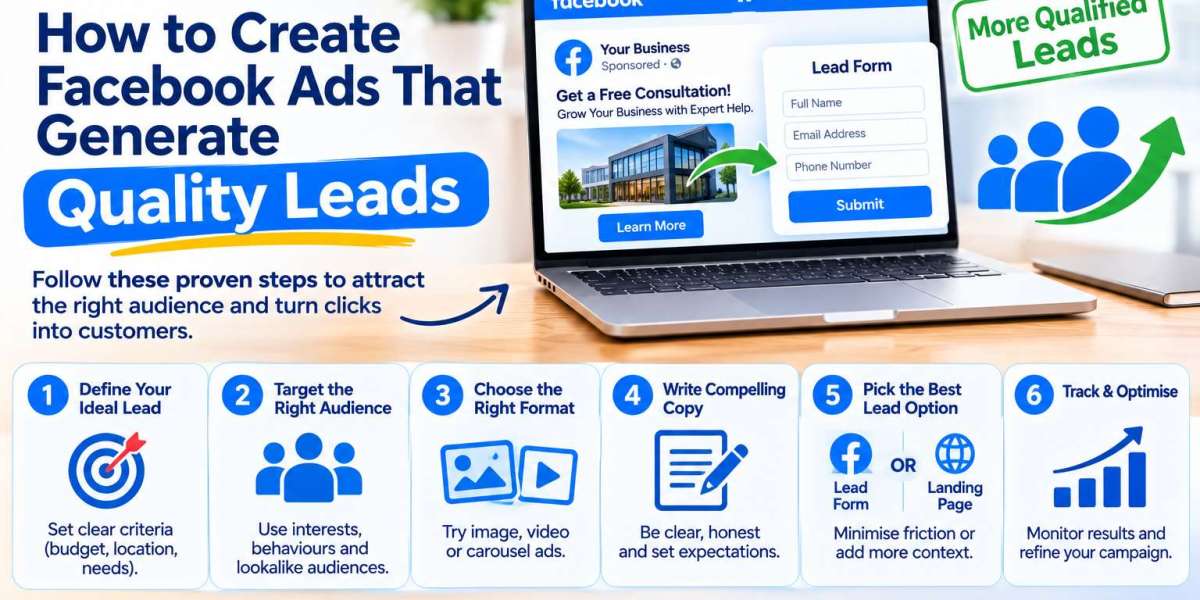

Generating leads on Facebook is relatively easy. Generating quality leads — people who are a genuine fit, ready to engage with a real sales process rather than people who tapped a form out of passing curiosity — takes a more deliberate approach. The gap between these two outcomes usually comes down to decisions made well before an ad ever goes live: who it's shown to, what it actually asks for, and how clearly it sets expectations about what happens next.
This guide walks through the practical process of building a Facebook ad campaign specifically designed to produce quality leads, from defining the right audience through to the follow-up process that determines whether those leads actually convert.
Start by Defining Exactly Who a Quality Lead Looks Like
Before building anything in Ads Manager, it's worth writing down, in specific terms, what actually makes a lead worth having for this particular business. This might include a realistic budget range, a specific geographic area, a particular stage of need or readiness, or specific characteristics that distinguish a genuinely promising enquiry from one that will likely go nowhere.
This definition matters because every subsequent decision — audience targeting, ad messaging, qualifying questions — should actively work toward attracting more of exactly this kind of lead, rather than simply maximising the total number of form submissions regardless of fit. Skipping this step often leads to a campaign optimised purely for volume, producing plenty of activity but a disappointing conversion rate once those leads actually reach a sales conversation.
Build an Audience Around Genuine Fit, Not Maximum Reach
With a clear picture of the ideal lead in mind, audience targeting should reflect that specificity rather than casting the widest possible net. This means choosing interests, behaviours, and demographics that genuinely correlate with the defined ideal customer, rather than broad categories chosen simply because they're loosely related to the industry.
For businesses with existing customer data, building a lookalike audience based on genuinely best-fit past customers — rather than all past customers indiscriminately — tends to produce a more precisely targeted new audience than a lookalike built from an unfiltered customer list that includes some poor-fit or low-value past leads alongside the genuinely good ones.
Choose an Ad Format That Suits the Offer
Facebook supports several ad formats, and matching the format to the specific offer meaningfully affects both engagement and lead quality. A single image ad works well for a clear, simple offer that can be communicated effectively with one strong visual and concise copy. Video ads tend to perform particularly well for services that benefit from demonstration or storytelling, capturing attention more effectively while providing more opportunity to communicate genuine value and build trust before asking for contact details.
Carousel ads, showing multiple images or cards within a single ad, work well for businesses wanting to showcase a range of services, before-and-after results, or a short visual sequence that builds a case progressively. Choosing a format genuinely suited to how the offer is best communicated, rather than defaulting to whatever feels easiest to produce, tends to improve both the volume and the quality of resulting leads.
Write Copy That Sets Honest Expectations
Ad copy plays a significant role in lead quality, not just click volume. Copy that clearly, honestly communicates what the offer actually involves — rather than being deliberately vague or overly broad to maximise clicks — tends to attract people genuinely interested in that specific offer, rather than people clicking based on a mismatched or inflated expectation.
Including concrete, specific details — pricing indicators, service area, eligibility requirements, or what the next step actually involves — helps pre-qualify interest before someone even clicks through. This might modestly reduce total click volume compared to vaguer, broader copy, but it typically improves the overall quality of the resulting leads, since fewer clicks come from people who misunderstood what was actually being offered.
Decide Between Instant Forms and a Dedicated Landing Page
This decision has a direct, measurable effect on lead quality. Instant forms, which open within Facebook itself with pre-filled user information, minimise friction and typically produce a higher volume of leads at a lower cost per lead, but the minimal effort involved can sometimes result in lower average intent among those who submit.
A dedicated external landing page introduces more friction — leaving the platform, waiting for a page to load, manually entering information rather than relying on pre-filled fields — but this additional effort naturally filters out some lower-commitment interest, often producing a smaller volume of leads with somewhat stronger average intent. For higher-value offers in particular, where lead quality matters more than raw volume, a dedicated landing page is often the better choice despite the typically higher cost per lead.
Add Genuinely Useful Qualifying Questions
Whether using an instant form or an external landing page, including a small number of targeted qualifying questions — rather than only asking for basic contact details — allows immediate assessment of fit once a lead comes in. Useful qualifying questions might include budget range, timeline, specific situation details, or anything else directly relevant to determining whether this particular lead matches the ideal customer profile defined earlier.
This needs to be balanced against conversion rate, since each additional question introduces some friction and potential drop-off. Choosing a small number of genuinely high-value questions — rather than an exhaustive list — tends to strike the right balance between meaningful qualification and maintaining a reasonable completion rate.
Build Trust Within the Ad Itself
Because Facebook traffic is frequently cold — people encountering the business for the first time, without the implicit trust signal of having actively searched for it — building credibility within the ad and any accompanying landing content matters significantly. Specific, genuine trust signals — real review counts and ratings, recognisable client examples, concrete numbers or results, years in operation — help establish legitimacy quickly, encouraging higher-quality engagement from people who might otherwise scroll past an unfamiliar business without a second thought.
Authentic testimonials or genuine customer stories, where available, often outperform generic claims about quality or service, since specific, relatable detail tends to feel more credible than broad, unverifiable statements.
Test Systematically Rather Than Guessing
Assumptions about which audience, creative, or messaging will produce the highest-quality leads are frequently wrong, even for experienced marketers. Running structured tests — comparing different audiences, ad formats, or messaging angles against each other with a consistent budget and timeframe — allows genuine performance data to reveal what actually works for a specific business's audience, rather than relying on instinct alone.
Importantly, testing for lead quality requires looking beyond just cost per lead or click-through rate, which only measure how many people engage. Tracking which specific audience segments, ad variations, or creative angles produce leads that actually progress further through the sales process — a consultation booked, a quote accepted — provides a far more meaningful measure of genuine quality than surface-level engagement metrics alone.
Exclude Audiences That Won't Help
Just as important as who a campaign targets is who it deliberately excludes. Excluding existing customers, recent converters, or employees from acquisition-focused lead generation campaigns ensures budget isn't wasted showing ads to people who don't represent genuinely new, qualified opportunities. For businesses operating in a specific service area, excluding geographic regions outside realistic reach prevents spend on leads that can never actually be served, regardless of how genuinely interested they might be.
Connect the Ad to a Fast, Genuine Follow-Up Process
Lead quality isn't determined solely by the ad and targeting — what happens immediately after a lead submits matters just as much. A genuinely well-targeted, well-qualified lead can still be lost if follow-up is slow or generic, since even a well-matched prospect's interest can fade quickly without a prompt, relevant response.
Ensuring whoever handles lead follow-up has immediate access to the qualifying information submitted — and uses it to personalise that initial contact rather than relying on a generic, one-size-fits-all script — helps convert genuinely well-qualified leads into actual conversations and, ultimately, customers, rather than losing them to slow or impersonal follow-up after the advertising has already done its job of generating genuine interest.
Review and Refine Based on Downstream Results
The clearest signal of whether a Facebook Ads campaign is genuinely producing quality leads comes from what happens after the lead form, not from the advertising metrics alone. Regularly reviewing which campaigns, audiences, and creative are producing leads that convert into real consultations, quotes, or sales — rather than judging performance purely by cost per lead — allows ongoing refinement toward genuinely higher-quality results over time, even if that sometimes means accepting a higher cost per individual lead in exchange for meaningfully stronger downstream conversion rates.
Final Thoughts
Creating Facebook ads that generate quality leads requires treating lead quality as a deliberate design goal from the very beginning, not an afterthought to be sorted out once leads start arriving. Defining what a genuinely good lead looks like, building audiences and creative around that specific definition, choosing the right balance between instant forms and more deliberate landing pages, including meaningful qualifying questions, and connecting the whole process to fast, informed follow-up all work together to shift a campaign's focus from raw lead volume toward leads that genuinely convert into real business.
Businesses willing to accept a somewhat smaller, more deliberately filtered pool of leads in exchange for meaningfully stronger quality typically find this trade-off pays off considerably in actual sales outcomes, compared to chasing the largest possible number of form submissions regardless of how many of them were ever likely to become genuine customers.